



O documento discute as atitudes essenciais de uma equipe auto-organizável, incluindo comunicação aberta, respeito mútuo, foco compartilhado na meta, e confiança para permitir que a equipe se organize de forma independente e eficiente.
Atitudes de uma
Equipeauto-Organizável
Ester Lima de Campos
Projeto Capacitar - GPE
Março 2013
2.
Time (Equipe)
“Asmall, cross-functional collection of
diverse, collaborating people who are
aligned to a common purpose and goal.
Team members trust each other and work
together to achieve the goal, holding
themselves mutually accountable for the
outcome.” 1
3.
Por que trabalharem equipe?
Aprender uns com os outros
Descobrir mais de si e dos outros
Compartilhar propósitos
Dar apoio um ao outro
E se divertir!
Agilidade
“Build projects aroundmotivated individuals.
Give them the environment
and support they need,
and trust them to get the job done.”
Manifesto Ágil (3)
Auto-Organização
10.
Auto-organização
“Self-organization isthe process where a
structure or pattern appears in a system
without a central authority or external
element imposing it through planning”4
“Self-organization is a process of attraction
and repulsion in which the internal
organization of a system, normally an open
system, increases in complexity without
being guided or managed by an outside
source.”5
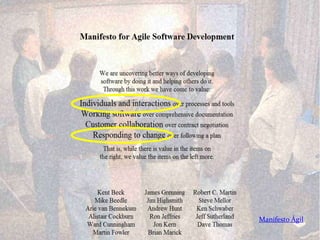
Princípio Manifesto Ágil
“Themost efficient and effective method of
conveying information to and within a
development
team is face-to-face conversation.”
Manifesto ágil (3)
Referências
1. Essential Scrum:A practical Guide to the Most Popular Agile Process
– Kenneth S. Rubin
2. http://teamgold105.wordpress.com/2012/09/21/tuckmans-theory-of-group-
development/
3. http://agilemanifesto.org/
4. Management 3.0 – Jurgen Appelo
5. http://en.wikipedia.org/wiki/Self-organization
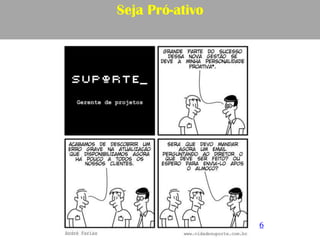
6. http://vidadesuporte.com.br/wp-content/uploads/2010/11/Suporte_103.jpg
Notas do Editor
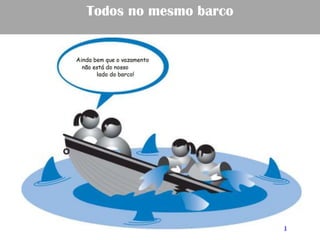
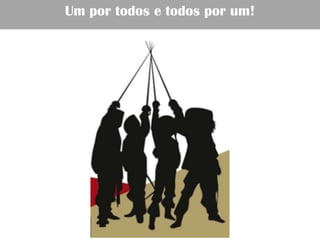
#6 Atitude dos 3 mosqueteiros:reforça o ponto de que a coletividade do time tem a responsabilidade de dar o trabalhocomo pronto.Vence-se como time oufracassamcomo time.
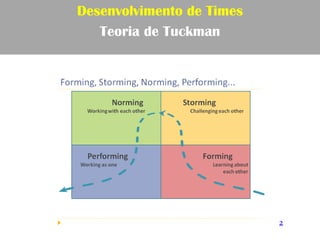
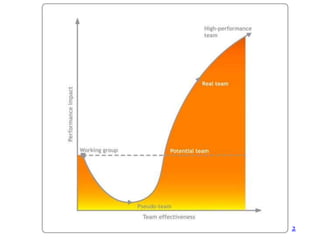
#8 Psicólogo Bruce Tuckmanlançou a frasememorável: "forming, storming, norming, and performing" em 1965. Ele a utilizouparadescrever o caminhopara a altaprodutividadequemuitasequipes (times) percorrem.Futuramenteeleadicionou um quinteestágiochamado"adjourning" (outroschamam de "mourning").
#9 Gráficoqueapresentacomocadafasedateoria de Tuckmanafeta a performance do time (diretamenteassociado a produtividade).
#14 Sinta-se parte dasolução!Auto-organizaçãonãohágerentes,cadamembro se responsabilizaporalgumaação, organizando-se paradefinirquemfaz o quê.
#16 Nãobastaapenastransparecer o queestáfazendo.Transpareçatudo!
#18 Certifique-se de nãoestar indo para o ladoerrado.
#28 Sejaverbalmente, sejapeloexemplo.Nemtodosdaequipepossuem o mesmograu de conhecimento.Então, se tens maisconhecimentoensineosquemenos tem.
#29 Nãoesperechegarnaretrospectivaparafalardeterminadascoisasquepodem ser ditas no momentoemqueocorrem.Dar e receber feedback constantementefortalece a confiança e a moral do time.