Review I
Pronouns
Present Simple
Profª Maria Glalcy Fequetia Dalcim
mariaglalcy@gmail.com
 Conhecer e usar língua(s) estrangeira(s)
moderna(s) como instrumento de acesso
a informações e a outras culturas e
grupos sociais.
 H5 – Associar vocábulos e expressões de
um texto em LEM ao seu tema.
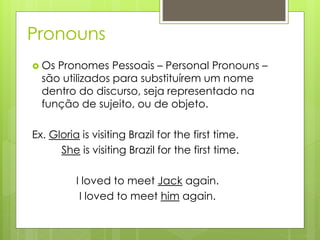
Pronouns
 Os Pronomes Pessoais – Personal Pronouns –
são utilizados para substituírem um nome
dentro do discurso, seja representado na
função de sujeito, ou de objeto.
Ex. Gloria is visiting Brazil for the first time.
She is visiting Brazil for the first time.
I loved to meet Jack again.
I loved to meet him again.
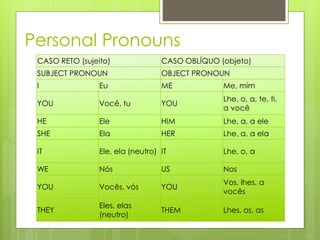
Personal Pronouns
CASO RETO (sujeito) CASO OBLÍQUO (objeto)
SUBJECT PRONOUN OBJECT PRONOUN
I Eu ME Me, mim
YOU Você, tu YOU
Lhe, o, a, te, ti,
a você
HE Ele HIM Lhe, a, a ele
SHE Ela HER Lhe, a, a ela
IT Ele, ela (neutro) IT Lhe, o, a
WE Nós US Nos
YOU Vocês, vós YOU
Vos, lhes, a
vocês
THEY
Eles, elas
(neutro)
THEM Lhes, os, as
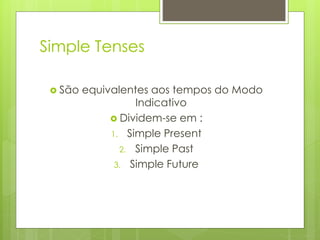
Simple Tenses
 São equivalentes aos tempos do Modo
Indicativo
 Dividem-se em :
1. Simple Present
2. Simple Past
3. Simple Future
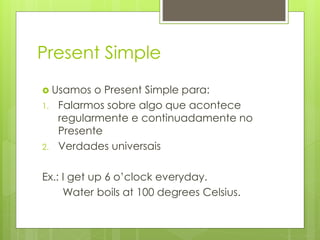
Present Simple
 Usamos o Present Simple para:
1. Falarmos sobre algo que acontece
regularmente e continuadamente no
Presente
2. Verdades universais
Ex.: I get up 6 o’clock everyday.
Water boils at 100 degrees Celsius.
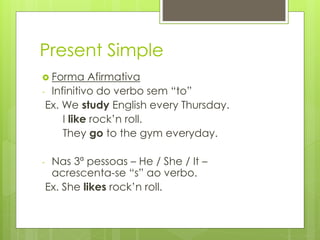
Present Simple
 Forma Afirmativa
- Infinitivo do verbo sem “to”
Ex. We study English every Thursday.
I like rock’n roll.
They go to the gym everyday.
- Nas 3ª pessoas – He / She / It –
acrescenta-se “s” ao verbo.
Ex. She likes rock’n roll.
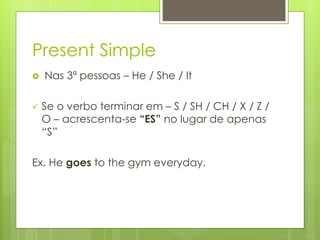
Present Simple
 Nas 3ª pessoas – He / She / It
 Se o verbo terminar em – S / SH / CH / X / Z /
O – acrescenta-se “ES” no lugar de apenas
“S”
Ex. He goes to the gym everyday.
Present Simple
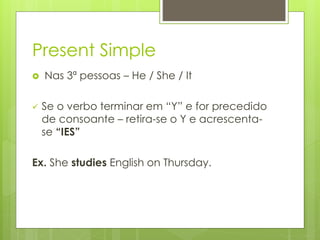
 Nas 3ª pessoas – He / She / It
 Se o verbo terminar em “Y” e for precedido
de consoante – retira-se o Y e acrescenta-
se “IES”
Ex. She studies English on Thursday.
Present Simple
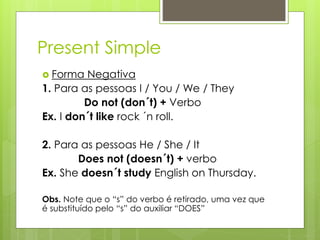
 Forma Negativa
1. Para as pessoas I / You / We / They
Do not (don´t) + Verbo
Ex. I don´t like rock ´n roll.
2. Para as pessoas He / She / It
Does not (doesn´t) + verbo
Ex. She doesn´t study English on Thursday.
Obs. Note que o “s” do verbo é retirado, uma vez que
é substituído pelo “s” do auxiliar “DOES”
Present Simple
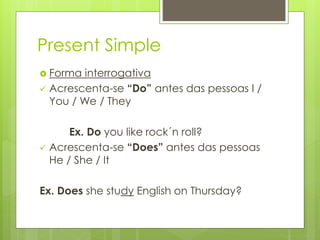
 Forma interrogativa
 Acrescenta-se “Do” antes das pessoas I /
You / We / They
Ex. Do you like rock´n roll?
 Acrescenta-se “Does” antes das pessoas
He / She / It
Ex. Does she study English on Thursday?
Present Simple
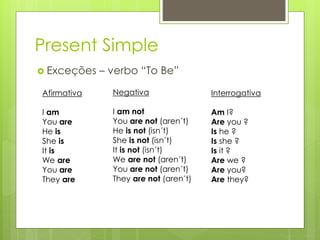
 Exceções – verbo “To Be”
Afirmativa
I am
You are
He is
She is
It is
We are
You are
They are
Negativa
I am not
You are not (aren´t)
He is not (isn´t)
She is not (isn´t)
It is not (isn´t)
We are not (aren´t)
You are not (aren´t)
They are not (aren´t)
Interrogativa
Am I?
Are you ?
Is he ?
Is she ?
Is it ?
Are we ?
Are you?
Are they?
Present Simple
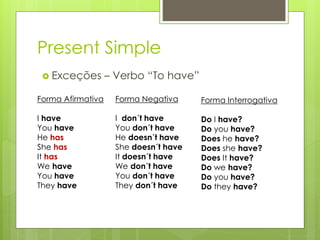
 Exceções – Verbo “To have”
Forma Afirmativa
I have
You have
He has
She has
It has
We have
You have
They have
Forma Negativa
I don´t have
You don´t have
He doesn´t have
She doesn´t have
It doesn´t have
We don´t have
You don´t have
They don´t have
Forma Interrogativa
Do I have?
Do you have?
Does he have?
Does she have?
Does It have?
Do we have?
Do you have?
Do they have?
Present Simple
 Releia o texto “The International Language”.
 Você consegue reconhecer as marcas do
uso do Present Simple no texto? Se sim, retire
do texto alguns exemplos e justifique o uso
desse tempo no contexto.
 Busque em músicas de sua preferência, o
reconhecimento das marcas do Simple
Present e dos Personal Pronouns.

Review - Simple Present and Personal Pronouns

  • 1.
    Review I Pronouns Present Simple ProfªMaria Glalcy Fequetia Dalcim mariaglalcy@gmail.com
  • 2.
     Conhecer eusar língua(s) estrangeira(s) moderna(s) como instrumento de acesso a informações e a outras culturas e grupos sociais.  H5 – Associar vocábulos e expressões de um texto em LEM ao seu tema.
  • 3.
    Pronouns  Os PronomesPessoais – Personal Pronouns – são utilizados para substituírem um nome dentro do discurso, seja representado na função de sujeito, ou de objeto. Ex. Gloria is visiting Brazil for the first time. She is visiting Brazil for the first time. I loved to meet Jack again. I loved to meet him again.
  • 4.
    Personal Pronouns CASO RETO(sujeito) CASO OBLÍQUO (objeto) SUBJECT PRONOUN OBJECT PRONOUN I Eu ME Me, mim YOU Você, tu YOU Lhe, o, a, te, ti, a você HE Ele HIM Lhe, a, a ele SHE Ela HER Lhe, a, a ela IT Ele, ela (neutro) IT Lhe, o, a WE Nós US Nos YOU Vocês, vós YOU Vos, lhes, a vocês THEY Eles, elas (neutro) THEM Lhes, os, as
  • 5.
    Simple Tenses  Sãoequivalentes aos tempos do Modo Indicativo  Dividem-se em : 1. Simple Present 2. Simple Past 3. Simple Future
  • 6.
    Present Simple  Usamoso Present Simple para: 1. Falarmos sobre algo que acontece regularmente e continuadamente no Presente 2. Verdades universais Ex.: I get up 6 o’clock everyday. Water boils at 100 degrees Celsius.
  • 7.
    Present Simple  FormaAfirmativa - Infinitivo do verbo sem “to” Ex. We study English every Thursday. I like rock’n roll. They go to the gym everyday. - Nas 3ª pessoas – He / She / It – acrescenta-se “s” ao verbo. Ex. She likes rock’n roll.
  • 8.
    Present Simple  Nas3ª pessoas – He / She / It  Se o verbo terminar em – S / SH / CH / X / Z / O – acrescenta-se “ES” no lugar de apenas “S” Ex. He goes to the gym everyday.
  • 9.
    Present Simple  Nas3ª pessoas – He / She / It  Se o verbo terminar em “Y” e for precedido de consoante – retira-se o Y e acrescenta- se “IES” Ex. She studies English on Thursday.
  • 10.
    Present Simple  FormaNegativa 1. Para as pessoas I / You / We / They Do not (don´t) + Verbo Ex. I don´t like rock ´n roll. 2. Para as pessoas He / She / It Does not (doesn´t) + verbo Ex. She doesn´t study English on Thursday. Obs. Note que o “s” do verbo é retirado, uma vez que é substituído pelo “s” do auxiliar “DOES”
  • 11.
    Present Simple  Formainterrogativa  Acrescenta-se “Do” antes das pessoas I / You / We / They Ex. Do you like rock´n roll?  Acrescenta-se “Does” antes das pessoas He / She / It Ex. Does she study English on Thursday?
  • 12.
    Present Simple  Exceções– verbo “To Be” Afirmativa I am You are He is She is It is We are You are They are Negativa I am not You are not (aren´t) He is not (isn´t) She is not (isn´t) It is not (isn´t) We are not (aren´t) You are not (aren´t) They are not (aren´t) Interrogativa Am I? Are you ? Is he ? Is she ? Is it ? Are we ? Are you? Are they?
  • 13.
    Present Simple  Exceções– Verbo “To have” Forma Afirmativa I have You have He has She has It has We have You have They have Forma Negativa I don´t have You don´t have He doesn´t have She doesn´t have It doesn´t have We don´t have You don´t have They don´t have Forma Interrogativa Do I have? Do you have? Does he have? Does she have? Does It have? Do we have? Do you have? Do they have?
  • 14.
    Present Simple  Releiao texto “The International Language”.  Você consegue reconhecer as marcas do uso do Present Simple no texto? Se sim, retire do texto alguns exemplos e justifique o uso desse tempo no contexto.  Busque em músicas de sua preferência, o reconhecimento das marcas do Simple Present e dos Personal Pronouns.