Web 2.0  é o futuro da educação Steve Hargadon www.stevehargadon.com
Estamos prestes a iniciar  a maior discussão sobre  educação em décadas, talvez mais.
Como aprendemos? Qual o propósito das escolas?
Por que agora?
 
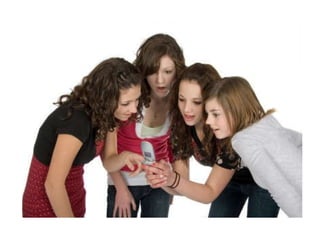
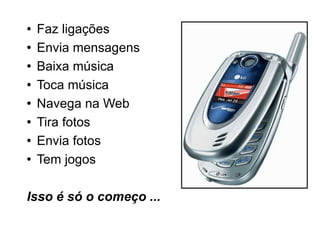
Faz ligações Envia mensagens Baixa música Toca música Navega na Web Tira fotos Envia fotos Tem jogos Isso é só o começo ...
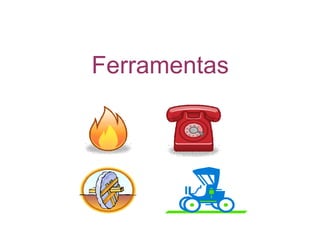
Ferramentas
Web 2.0 A Internet está se tornando uma plataforma de criatividade sem paralelos.
E *nós* estamos  criando o novo  conteúdo da Web.
Dez tendências  da Web 2.0 que terão um impacto profundo  na educação
(1) Uma nova revolução na publicação
 
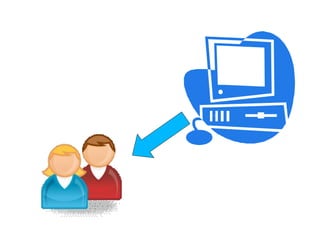
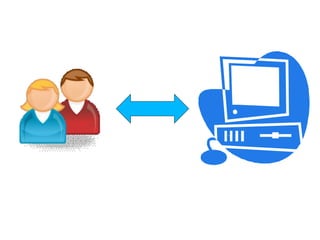
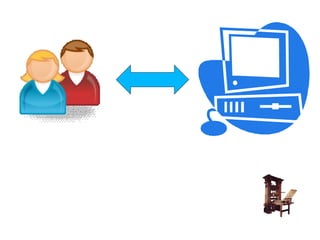
Princípios da Web 1.0 Ler Receber Pesquisar
 
Princípios da Web 2.0 Contribuir Colaborar Criar
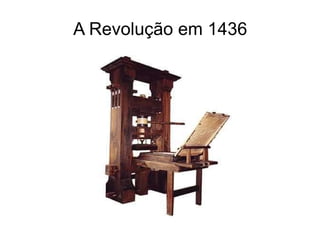
A Revolução em 1436
 
 
(2) A onda de informação
 
 
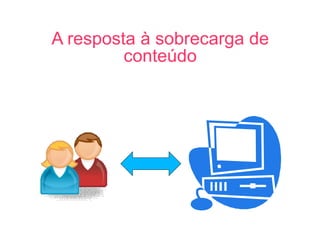
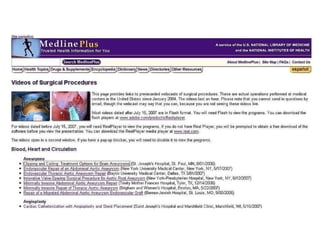
A resposta à sobrecarga de conteúdo The Answers to
(3) A Cultura da Abertura


(4) A Cultura da  Participação
 
 
(5) A Era da  Colaboração
 
(5) The Age of the Collaborator Períodos históricos traços específicos
(5) The Age of the Collaborator
HARGADON'S WEB 2.0 LAW: The wisdom of the group replaces the expert
(6) Uma explosão de inovação
 
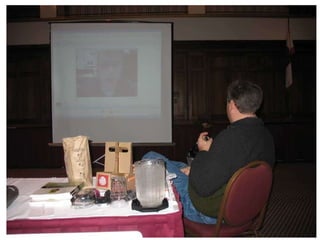
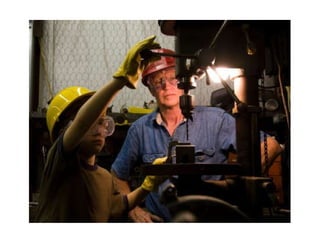
Mudando a maneira de fazer as coisas... Profissional + Amador = Cultura ProAm  Produtor + Consumidor = Cultura ProSumidor
 
 
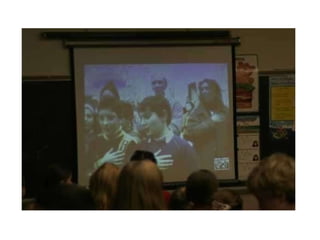
(7)  O mundo está ficando mais plano e mais rápido
 
 
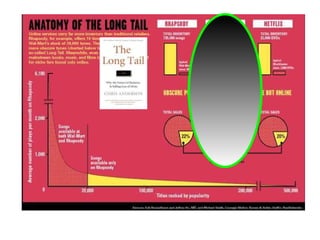
(8) A Cauda Longa


(9)   Aprendizagem Social move-se rumo ao palco central
 
 
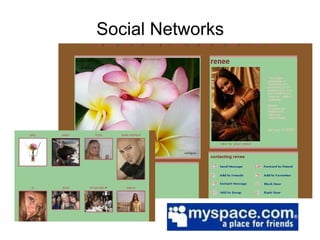
(10) Redes Sociais
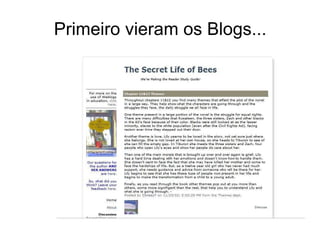
Primeiro vieram os Blogs...
 
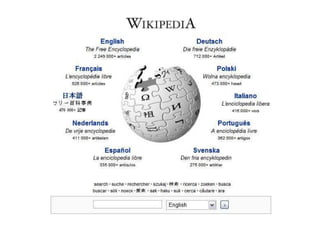
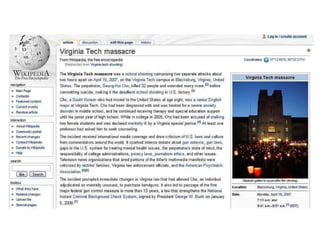
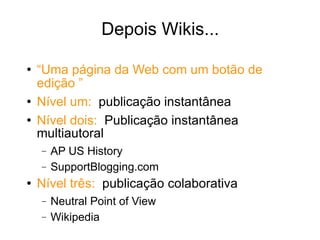
Depois Wikis... “ Uma página da Web com um botão de edição  ” Nível um:  publicação instantânea Nível dois:   Publicação instantânea multiautoral AP US History SupportBlogging.com Nível três:   publicação colaborativa Neutral Point of View Wikipedia
 
Social Networks
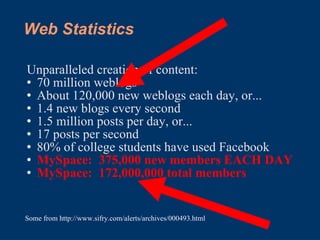
Web Statistics Unparalleled creation of content: 70 million weblogs About 120,000 new weblogs each day, or... 1.4 new blogs every second 1.5 million posts per day, or... 17 posts per second 80% of college students have used Facebook MySpace:  375,000 new members EACH DAY MySpace:  172,000,000 total members Some from http://www.sifry.com/alerts/archives/000493.html
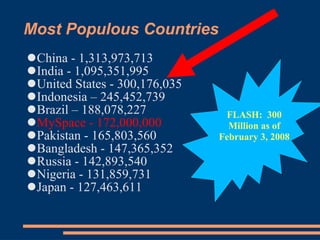
Most Populous Countries China - 1,313,973,713 India - 1,095,351,995 United States - 300,176,035 Indonesia – 245,452,739 Brazil – 188,078,227 MySpace - 172,000,000 Pakistan - 165,803,560 Bangladesh - 147,365,352 Russia - 142,893,540 Nigeria - 131,859,731 Japan - 127,463,611  FLASH:  300 Million as of February 3, 2008
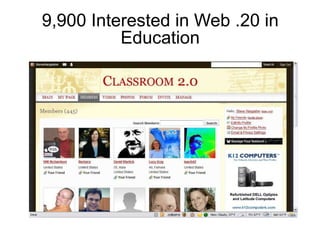
9,900 Interested in Web .20 in Education
Por que tudo isso importa
Aprendizagem está mudando Educação precisa mudar
O modelo fábrica de escolarização está mudando Customização, Colaboração e Criação são o novo modelo
The Danger: RIAA & Music Schools & Learning
O que você pode fazer?
Estudantes Precisam  de Você Mais do Que Nunca
Aprenda sobre Web 2.0 Espreite Participe Digira esta ideia: a resposta para a sobrecarga de informação é gerar mais informação. Ensine produção de conteúdo Transforme a educação em uma discussão pública Ajude a construir o novo

Have a Great Day Today, and Happy Learning! Steve Hargadon www.SteveHargadon.com  [email_address] 916-899-1400
Photo Credits Girls and cell phone:  istockphoto Tidal Wave:  Clarke M. Smith, http://www.timeaxismedia.com/portfolio/TidalWave.html, by permission Dam releasing water:  istockphoto Collaborating hands:  istockphoto Astronomers:  http://upload.wikimedia.org/wikipedia/commons/2/22/Astronomy_Amateur_3_V2.jpg Student video conference:  http://www.prizery.com/Leverano/images/_MG_8234.JPG Apprentice:  istockphoto Lecture hall:  istockphoto Study group:  istockphoto Juggling:  http://upload.wikimedia.org/wikipedia/commons/1/1a/Juggling_Clubs_Manuel_and_Christoph_Mitasch_8_club_passing.jpg

Web 20-kb-mini-1216949509436115-8

  • 1.
    Web 2.0 é o futuro da educação Steve Hargadon www.stevehargadon.com
  • 2.
    Estamos prestes ainiciar a maior discussão sobre educação em décadas, talvez mais.
  • 3.
    Como aprendemos? Qualo propósito das escolas?
  • 4.
  • 5.
  • 6.
    Faz ligações Enviamensagens Baixa música Toca música Navega na Web Tira fotos Envia fotos Tem jogos Isso é só o começo ...
  • 7.
  • 8.
    Web 2.0 AInternet está se tornando uma plataforma de criatividade sem paralelos.
  • 9.
    E *nós* estamos criando o novo conteúdo da Web.
  • 10.
    Dez tendências da Web 2.0 que terão um impacto profundo na educação
  • 11.
    (1) Uma novarevolução na publicação
  • 12.
  • 13.
    Princípios da Web1.0 Ler Receber Pesquisar
  • 14.
  • 15.
    Princípios da Web2.0 Contribuir Colaborar Criar
  • 16.
  • 17.
  • 18.
  • 19.
    (2) A ondade informação
  • 20.
  • 21.
  • 22.
    A resposta àsobrecarga de conteúdo The Answers to
  • 23.
    (3) A Culturada Abertura
  • 24.
  • 25.
  • 26.
  • 27.
  • 28.
    (4) A Culturada Participação
  • 29.
  • 30.
  • 31.
    (5) A Erada Colaboração
  • 32.
  • 33.
    (5) The Ageof the Collaborator Períodos históricos traços específicos
  • 34.
    (5) The Ageof the Collaborator
  • 35.
    HARGADON'S WEB 2.0LAW: The wisdom of the group replaces the expert
  • 36.
    (6) Uma explosãode inovação
  • 37.
  • 38.
    Mudando a maneirade fazer as coisas... Profissional + Amador = Cultura ProAm Produtor + Consumidor = Cultura ProSumidor
  • 39.
  • 40.
  • 41.
    (7) Omundo está ficando mais plano e mais rápido
  • 42.
  • 43.
  • 44.
  • 45.
  • 46.
  • 47.
  • 48.
  • 49.
    (9) Aprendizagem Social move-se rumo ao palco central
  • 50.
  • 51.
  • 52.
  • 53.
  • 54.
  • 55.
    Depois Wikis... “Uma página da Web com um botão de edição ” Nível um: publicação instantânea Nível dois: Publicação instantânea multiautoral AP US History SupportBlogging.com Nível três: publicação colaborativa Neutral Point of View Wikipedia
  • 56.
  • 57.
  • 58.
    Web Statistics Unparalleledcreation of content: 70 million weblogs About 120,000 new weblogs each day, or... 1.4 new blogs every second 1.5 million posts per day, or... 17 posts per second 80% of college students have used Facebook MySpace: 375,000 new members EACH DAY MySpace: 172,000,000 total members Some from http://www.sifry.com/alerts/archives/000493.html
  • 59.
    Most Populous CountriesChina - 1,313,973,713 India - 1,095,351,995 United States - 300,176,035 Indonesia – 245,452,739 Brazil – 188,078,227 MySpace - 172,000,000 Pakistan - 165,803,560 Bangladesh - 147,365,352 Russia - 142,893,540 Nigeria - 131,859,731 Japan - 127,463,611 FLASH: 300 Million as of February 3, 2008
  • 60.
    9,900 Interested inWeb .20 in Education
  • 61.
    Por que tudoisso importa
  • 62.
    Aprendizagem está mudandoEducação precisa mudar
  • 63.
    O modelo fábricade escolarização está mudando Customização, Colaboração e Criação são o novo modelo
  • 64.
    The Danger: RIAA& Music Schools & Learning
  • 65.
    O que vocêpode fazer?
  • 66.
    Estudantes Precisam de Você Mais do Que Nunca
  • 67.
    Aprenda sobre Web2.0 Espreite Participe Digira esta ideia: a resposta para a sobrecarga de informação é gerar mais informação. Ensine produção de conteúdo Transforme a educação em uma discussão pública Ajude a construir o novo
  • 68.
    Have a GreatDay Today, and Happy Learning! Steve Hargadon www.SteveHargadon.com [email_address] 916-899-1400
  • 69.
    Photo Credits Girlsand cell phone: istockphoto Tidal Wave: Clarke M. Smith, http://www.timeaxismedia.com/portfolio/TidalWave.html, by permission Dam releasing water: istockphoto Collaborating hands: istockphoto Astronomers: http://upload.wikimedia.org/wikipedia/commons/2/22/Astronomy_Amateur_3_V2.jpg Student video conference: http://www.prizery.com/Leverano/images/_MG_8234.JPG Apprentice: istockphoto Lecture hall: istockphoto Study group: istockphoto Juggling: http://upload.wikimedia.org/wikipedia/commons/1/1a/Juggling_Clubs_Manuel_and_Christoph_Mitasch_8_club_passing.jpg

Notas do Editor

  • #17 The printing press's ability to quickly and uniformly disseminate knowledge aided in the propagation of Luther's Ninety-Five Theses and other works of the Protestant Reformation, the European rediscovery of the Greek and Roman Classics that helped spark the Renaissance, the decline of Latin and the ascent of the various vernaculars, and the development of scientific journals and their specialist vocabulary, or jargon. The level of importance of the printing press is rivaled by few other inventions, so much so that "the invention of the printing press" is often used as a reference to the social, political, and scientific change experienced by Europe after the press's introduction.