
   Os nomes (substantivos) carregam grande
    significado nos enunciados e na construção
    de um texto. Eles representam o elemento
    chave da discussão, ou seja, do que se trata o
    assunto.
   Os nomes se agrupam e se combinam com
    outros elementos modificando seus
    significados.
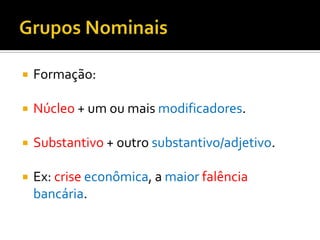
   Formação:

   Núcleo + um ou mais modificadores.

   Substantivo + outro substantivo/adjetivo.

   Ex: crise econômica, a maior falência
    bancária.
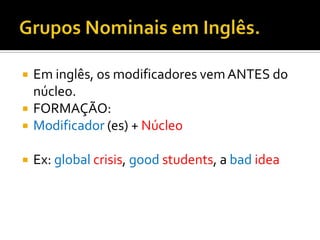
   Em inglês, os modificadores vem ANTES do
    núcleo.
   FORMAÇÃO:
   Modificador (es) + Núcleo

   Ex: global crisis, good students, a bad idea
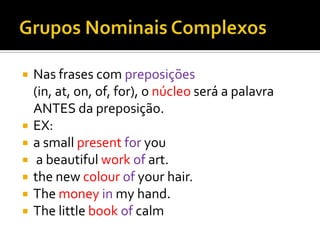
   Nas frases com preposições
    (in, at, on, of, for), o núcleo será a palavra
    ANTES da preposição.
   EX:
   a small present for you
    a beautiful work of art.
   the new colour of your hair.
   The money in my hand.
   The little book of calm
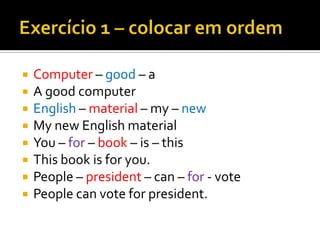
   Computer – good – a
   A good computer
   English – material – my – new
   My new English material
   You – for – book – is – this
   This book is for you.
   People – president – can – for - vote
   People can vote for president.
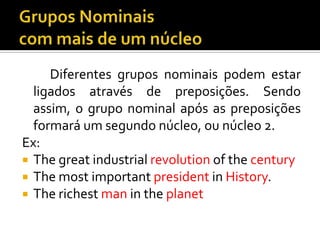
Diferentes grupos nominais podem estar
  ligados através de preposições. Sendo
  assim, o grupo nominal após as preposições
  formará um segundo núcleo, ou núcleo 2.
Ex:
 The great industrial revolution of the century
 The most important president in History.
 The richest man in the planet
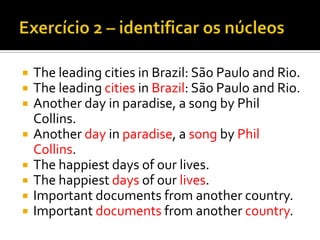
   The leading cities in Brazil: São Paulo and Rio.
   Another day in paradise, a song by Phil
    Collins.
   Another day in paradise, a song by Phil
    Collins.
   The happiest days of our lives.
   Important documents from another country.

Grupos nominais

  • 2.
    Os nomes (substantivos) carregam grande significado nos enunciados e na construção de um texto. Eles representam o elemento chave da discussão, ou seja, do que se trata o assunto.  Os nomes se agrupam e se combinam com outros elementos modificando seus significados.
  • 3.
    Formação:  Núcleo + um ou mais modificadores.  Substantivo + outro substantivo/adjetivo.  Ex: crise econômica, a maior falência bancária.
  • 4.
    Em inglês, os modificadores vem ANTES do núcleo.  FORMAÇÃO:  Modificador (es) + Núcleo  Ex: global crisis, good students, a bad idea
  • 5.
    Nas frases com preposições (in, at, on, of, for), o núcleo será a palavra ANTES da preposição.  EX:  a small present for you  a beautiful work of art.  the new colour of your hair.  The money in my hand.  The little book of calm
  • 6.
    Computer – good – a  A good computer  English – material – my – new  My new English material  You – for – book – is – this  This book is for you.  People – president – can – for - vote  People can vote for president.
  • 7.
    Diferentes grupos nominaispodem estar ligados através de preposições. Sendo assim, o grupo nominal após as preposições formará um segundo núcleo, ou núcleo 2. Ex:  The great industrial revolution of the century  The most important president in History.  The richest man in the planet
  • 8.
    The leading cities in Brazil: São Paulo and Rio.  The leading cities in Brazil: São Paulo and Rio.  Another day in paradise, a song by Phil Collins.  Another day in paradise, a song by Phil Collins.  The happiest days of our lives.  The happiest days of our lives.  Important documents from another country.  Important documents from another country.