Present
Continuous
Students: Ana L.

Daynara

Jaíne

Teacher: Lisane Schneider

Thiele

Viviane
• Present Continuous indica situação em
progresso “ing”.
• “ing”=“ando”, “endo”, “indo”.
• Composição do Present Continuous:
Sujeito + verbo to be + verbo com ing +
complemento.

• Para negação acrescenta-se “not” após o
verbo “to be”.
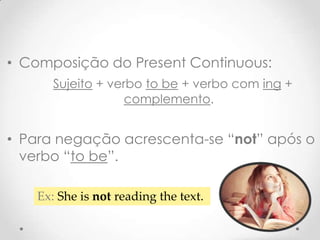
Ex: She is not reading the text.
• Frases interrogativas:
Coloca-se o verbo “to be” no início da frase

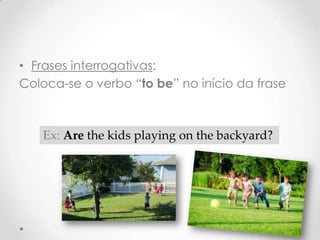
Ex: Are the kids playing on the backyard?
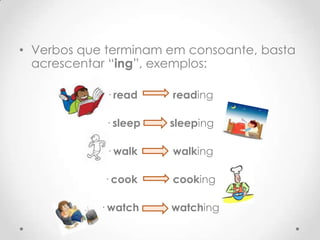
• Verbos que terminam em consoante, basta
acrescentar “ing”, exemplos:
· read

reading

· sleep

sleeping

· walk

walking

· cook

cooking

· watch

watching
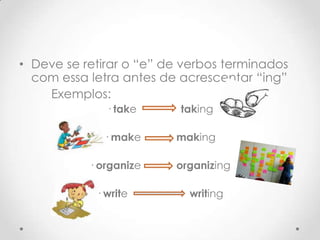
• Deve se retirar o “e” de verbos terminados
com essa letra antes de acrescentar “ing”
Exemplos:
· take

taking

· make

making

· organize

organizing

· write

writing
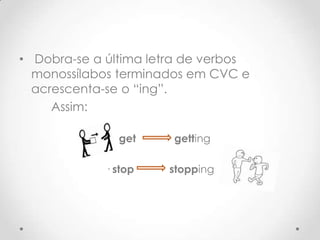
• Dobra-se a última letra de verbos
monossílabos terminados em CVC e
acrescenta-se o “ing”.
Assim:
· get

getting

· stop

stopping
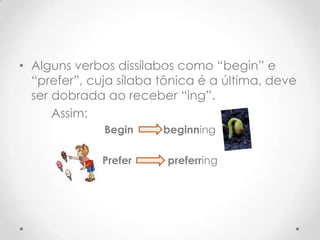
• Alguns verbos dissílabos como “begin” e
“prefer”, cuja sílaba tônica é a última, deve
ser dobrada ao receber “ing”.
Assim:
Begin

beginning

Prefer

preferring
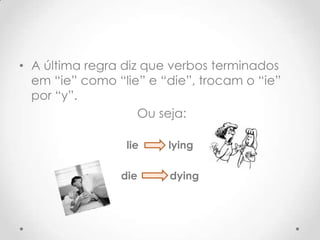
• A última regra diz que verbos terminados
em “ie” como “lie” e “die”, trocam o “ie”
por “y”.
Ou seja:
lie
die

lying
dying

Present continuous - Inglês

  • 1.
  • 2.
    • Present Continuousindica situação em progresso “ing”. • “ing”=“ando”, “endo”, “indo”.
  • 3.
    • Composição doPresent Continuous: Sujeito + verbo to be + verbo com ing + complemento. • Para negação acrescenta-se “not” após o verbo “to be”. Ex: She is not reading the text.
  • 4.
    • Frases interrogativas: Coloca-seo verbo “to be” no início da frase Ex: Are the kids playing on the backyard?
  • 5.
    • Verbos queterminam em consoante, basta acrescentar “ing”, exemplos: · read reading · sleep sleeping · walk walking · cook cooking · watch watching
  • 6.
    • Deve seretirar o “e” de verbos terminados com essa letra antes de acrescentar “ing” Exemplos: · take taking · make making · organize organizing · write writing
  • 7.
    • Dobra-se aúltima letra de verbos monossílabos terminados em CVC e acrescenta-se o “ing”. Assim: · get getting · stop stopping
  • 8.
    • Alguns verbosdissílabos como “begin” e “prefer”, cuja sílaba tônica é a última, deve ser dobrada ao receber “ing”. Assim: Begin beginning Prefer preferring
  • 9.
    • A últimaregra diz que verbos terminados em “ie” como “lie” e “die”, trocam o “ie” por “y”. Ou seja: lie die lying dying