SIMPLE PRESENT
LINGUA INGLESA
O Simple Present Tense é
equivalente, em Português, ao
nosso Presente.
Na língua Inglesa o Simple
Present é usado para expressar
ações que são feitas com uma
determinada frequência, como ir
à escola, trabalhar, ou seja
tarefas rotineiras, também
hobbies e eventos agendados.
O Simple Present é usado
para expressar eventos,
ações ou condições
rotineiras, permanentes.
Ex: She always remembers
my birthday.
Podemos usar o Simple Present
para afirmar ou negar uma
opinião, algo que acreditamos
ser verdadeiro ou não.
Ex.: Brazilians like beach.
Water boils at 100 degrees
centigrade.
Existem algumas
expressões indicadoras
deste tempo verbal, que
normalmente são: usually,
frequently, often, every
day, all the time, always.
Vamos observar a estrutura
de frases
AFIRMATIVAS,
NEGATIVAS E
INTERROGATIVAS
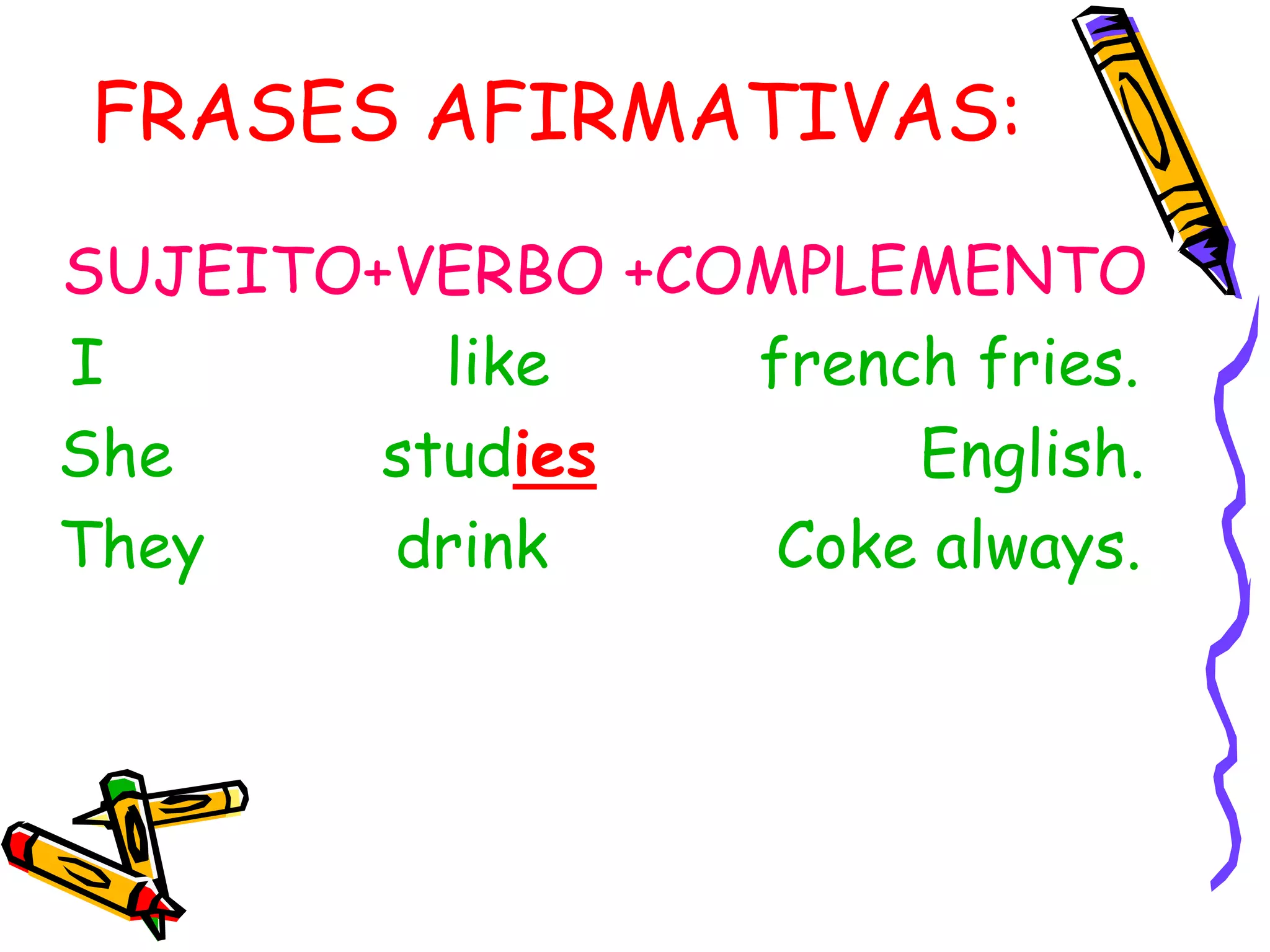
FRASES AFIRMATIVAS:
SUJEITO+VERBO +COMPLEMENTO
I like french fries.
She studies English.
They drink Coke always.
O QUE VOCÊ OBSERVOU ?
A ESTRURA FOI A MESMA
PARA TODAS AS FRASES,
MAS O VERBO FOI
CONJUGADO DIFERENTE
PARA A SEGUNDA FRASE:
DON’T FORGET:
Verbos conjugados na 3ª
pessoa do singular
HE , SHE ou IT , precisam de
atenção especial quanto a
conjugação do verbo.
VEJAMOS AS REGRAS A
SEGUIR:
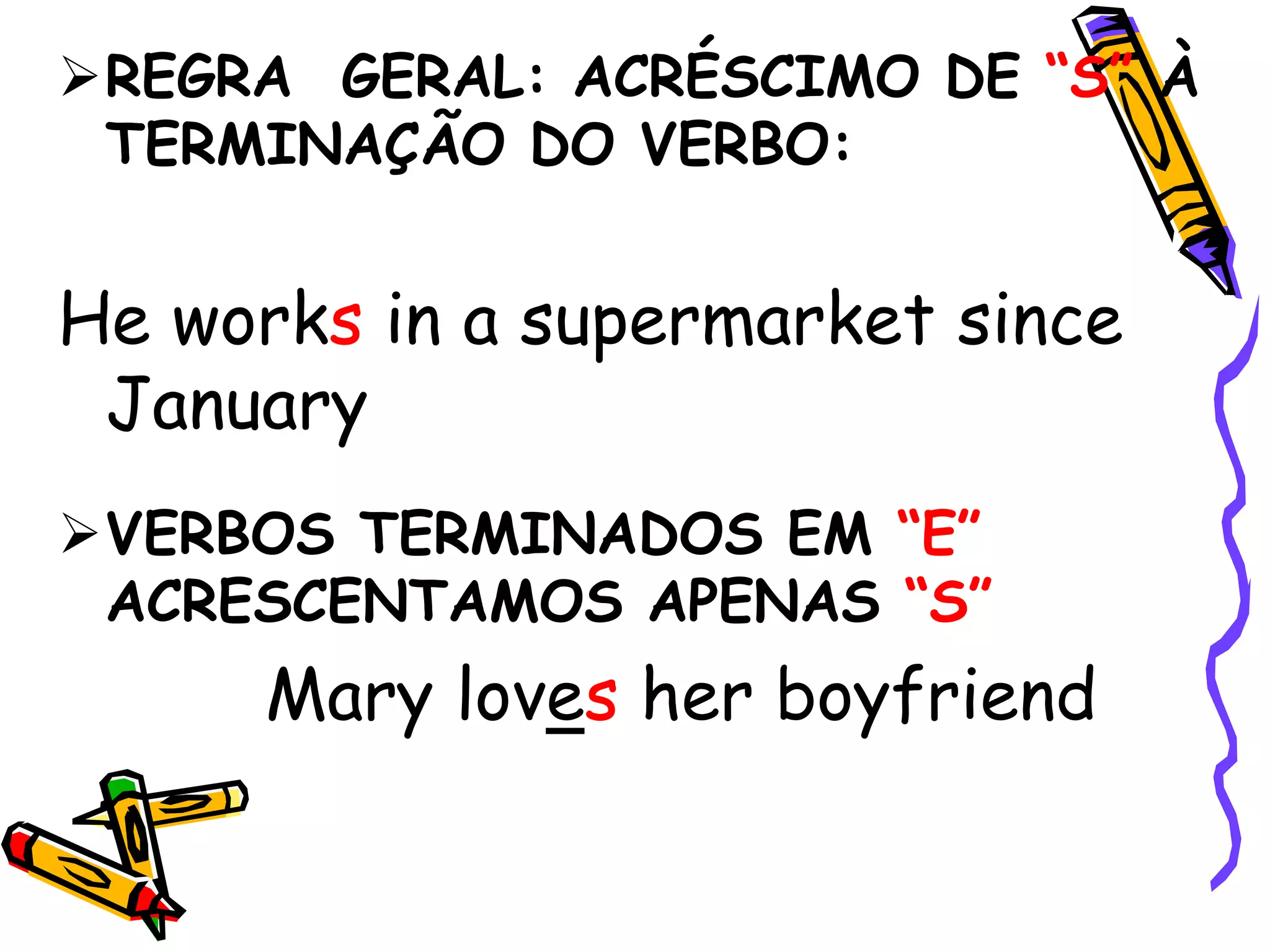
REGRA GERAL: ACRÉSCIMO DE “S” À
TERMINAÇÃO DO VERBO:
He works in a supermarket since
January
VERBOS TERMINADOS EM “E”
ACRESCENTAMOS APENAS “S”
Mary loves her boyfriend
VERBOS TERMINADOS EM S, SS ,
SH, CH, X, Z e O ACRESCENTAMOS
“ES” AO VERBO:
He watches TV in his home.
VERBOS TERMINADOS POR Y
PRECEDIDOS POR CONSOANTE,
RETIRA-SE O Y E ACRESCENTA-
SE IES.
She studies Spanish frequently.
VERBOS TERMINADOS POR “Y”
PRECEDIDOS POR VOGAL
ACRESCENTAMOS APENAS “S”
The man plays basketball .
PARA FRASES NEGATIVAS E
INTERROGATIVAS É
NECESSÁRIO USAR O
AUXILIAR DO ou DOES
DEPENDENDO DO SUJEITO
DA FRASE:
DO DOES
I HE
YOU SHE
WE IT
YOU
THEY
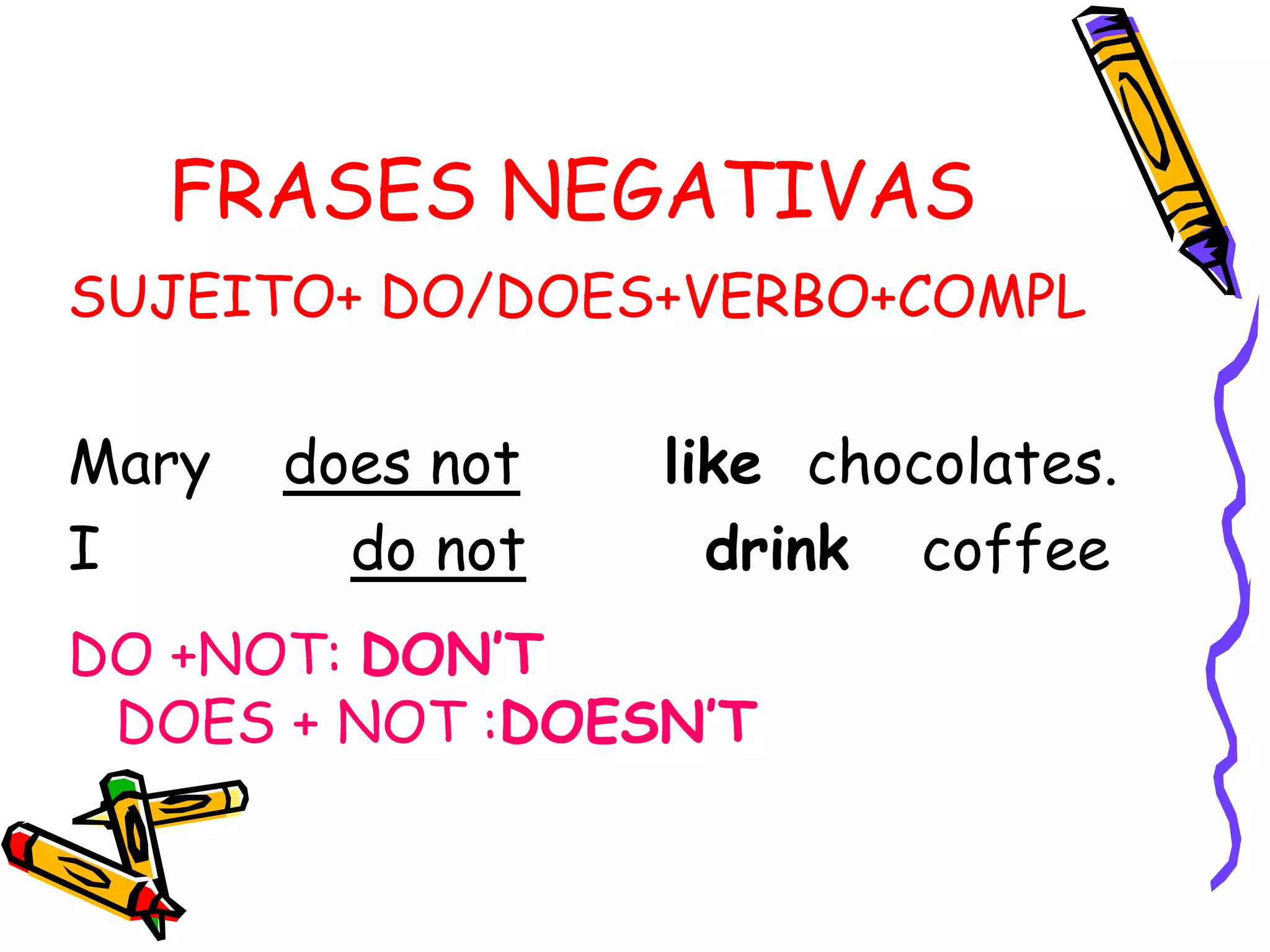
FRASES NEGATIVAS
SUJEITO+ DO/DOES+VERBO+COMPL
Mary does not like chocolates.
I do not drink coffee
DO +NOT: DON’T
DOES + NOT :DOESN’T
FRASES INTERROGATIVAS
DO/DOES+SUJ+VERBO+COMPLEM+
?
DO you drink coffee ?
DOES she work in a bank ?
O AUXILIAR É QUEM INICIA
UMA FRASE
INTERROGATIVA: SÓ
USAMOS O AUXILIAR PARA
NEGAR OU PERGUNTAR
SOBRE ALGO.
VEJA A CONJUGAÇÃO DE CRY:
AFIRMATIVA NEGATIVA INTERROG.
I cry I do not
cry
Do I cry?
YOU cry YOU do not
cry
Do you cry?
HE cries HE does not cry Does he cry?
SHE cries SHE does not cry Does she cry?
IT cries IT does not cry Does it cry?
WE cry WE do not cry Do we cry?
YOU cry YOU do not cry Do you cry?
THEY cry THEY do not cry Do they cry?
THE END

Simple present

  • 1.
  • 2.
    O Simple PresentTense é equivalente, em Português, ao nosso Presente. Na língua Inglesa o Simple Present é usado para expressar ações que são feitas com uma determinada frequência, como ir à escola, trabalhar, ou seja tarefas rotineiras, também hobbies e eventos agendados.
  • 3.
    O Simple Presenté usado para expressar eventos, ações ou condições rotineiras, permanentes. Ex: She always remembers my birthday.
  • 4.
    Podemos usar oSimple Present para afirmar ou negar uma opinião, algo que acreditamos ser verdadeiro ou não. Ex.: Brazilians like beach. Water boils at 100 degrees centigrade.
  • 5.
    Existem algumas expressões indicadoras destetempo verbal, que normalmente são: usually, frequently, often, every day, all the time, always.
  • 6.
    Vamos observar aestrutura de frases AFIRMATIVAS, NEGATIVAS E INTERROGATIVAS
  • 7.
    FRASES AFIRMATIVAS: SUJEITO+VERBO +COMPLEMENTO Ilike french fries. She studies English. They drink Coke always.
  • 8.
    O QUE VOCÊOBSERVOU ? A ESTRURA FOI A MESMA PARA TODAS AS FRASES, MAS O VERBO FOI CONJUGADO DIFERENTE PARA A SEGUNDA FRASE:
  • 9.
    DON’T FORGET: Verbos conjugadosna 3ª pessoa do singular HE , SHE ou IT , precisam de atenção especial quanto a conjugação do verbo. VEJAMOS AS REGRAS A SEGUIR:
  • 10.
    REGRA GERAL: ACRÉSCIMODE “S” À TERMINAÇÃO DO VERBO: He works in a supermarket since January VERBOS TERMINADOS EM “E” ACRESCENTAMOS APENAS “S” Mary loves her boyfriend
  • 11.
    VERBOS TERMINADOS EMS, SS , SH, CH, X, Z e O ACRESCENTAMOS “ES” AO VERBO: He watches TV in his home. VERBOS TERMINADOS POR Y PRECEDIDOS POR CONSOANTE, RETIRA-SE O Y E ACRESCENTA- SE IES. She studies Spanish frequently.
  • 12.
    VERBOS TERMINADOS POR“Y” PRECEDIDOS POR VOGAL ACRESCENTAMOS APENAS “S” The man plays basketball .
  • 13.
    PARA FRASES NEGATIVASE INTERROGATIVAS É NECESSÁRIO USAR O AUXILIAR DO ou DOES DEPENDENDO DO SUJEITO DA FRASE:
  • 14.
    DO DOES I HE YOUSHE WE IT YOU THEY
  • 15.
    FRASES NEGATIVAS SUJEITO+ DO/DOES+VERBO+COMPL Marydoes not like chocolates. I do not drink coffee DO +NOT: DON’T DOES + NOT :DOESN’T
  • 16.
    FRASES INTERROGATIVAS DO/DOES+SUJ+VERBO+COMPLEM+ ? DO youdrink coffee ? DOES she work in a bank ? O AUXILIAR É QUEM INICIA UMA FRASE INTERROGATIVA: SÓ USAMOS O AUXILIAR PARA NEGAR OU PERGUNTAR SOBRE ALGO.
  • 17.
    VEJA A CONJUGAÇÃODE CRY: AFIRMATIVA NEGATIVA INTERROG. I cry I do not cry Do I cry? YOU cry YOU do not cry Do you cry? HE cries HE does not cry Does he cry? SHE cries SHE does not cry Does she cry? IT cries IT does not cry Does it cry? WE cry WE do not cry Do we cry? YOU cry YOU do not cry Do you cry? THEY cry THEY do not cry Do they cry?
  • 18.