Tutorial [Introdutório]: Criando
 Pluging IronPython para c#


     Por: Eduardo dos Santos Pereira
            Dr. em Astrofísica
       pereira.somoza@gmail.com
Tutorial [Introdutório]: Criando
     Pluging IronPython para c#
   Instituto Nacional de Pesquisas Espaciais/DEA


Apresentado uma breve introdução de como
rodar um script IronPython dentro do C#, isso
permitiria a criação de plugins em IronPython
para projetos que originalmente forma escritos
em c#.
Materiais

   Nesse Tutorial é usado o IronPython 2.7, sendo
    que esse pode ser baixado no site
    www.ironpyton.net
   .Net 4.0
   Também será usado o Visual Studio 2010
    Express. É necessário o C# Visual Studio 2010
    ou superior pelo fato de que as versões
    anteriores não são compatíveis com o .Net 4.0
Passo 1


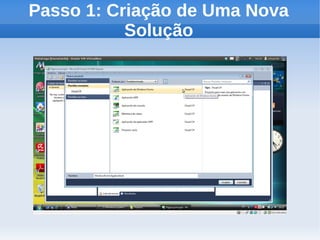
   O primeiro passo será o de criar uma nova
    solução no Visual Studio. Aqui será criado um
    novo aplicativo do Windows, ao estilo
    formulário.
Passo 1: Criação de Uma Nova
           Solução
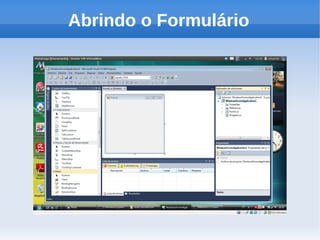
Passo 2: Abrindo o Formulário

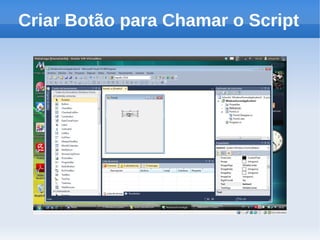
   Agora será adicionado um Botão no
    Formulário.
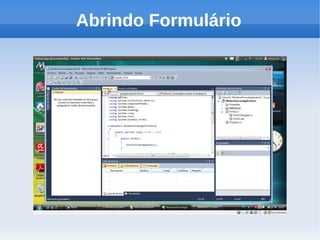
   Após a adição do botão, com um duplo clique
    no formulário será adicionado ao projeto o
    arquivo Form1.cs
   Nesse arquivo será acrescentada a chamada
    do script
Abrindo o Formulário
Abrindo Formulário
Criar Botão para Chamar o Script
Passo 3: Adicionando referências

   Agora é preciso adicionar as referências (.dll)
    do IronPython, essas normalmente se
    encontram em c:/Arquivos e
    Programas/IronPython 2.7/
   As dll's necessárias são:
       IronPython.dll
       IronPython.Modules.dll
       Microsoft.Scripting.dll
       Microsoft.Dynamic.dll
       Microsoft.Scripting.Metadata.dll
Passo 3: Adicionando referências

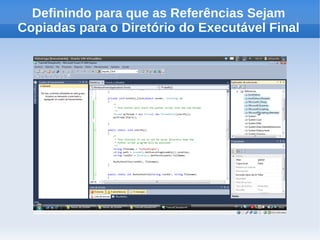
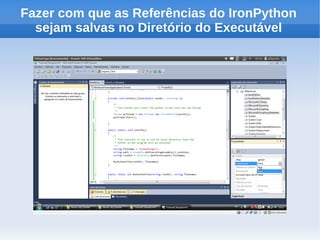
   Essas referencias precisam ser colocadas no
    diretório em que se encontra o arquivo
    executável.
   Isso irá permiter que o programa gerado rode
    em outra máquina que não possua o
    IronPython instalado
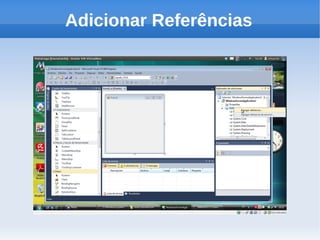
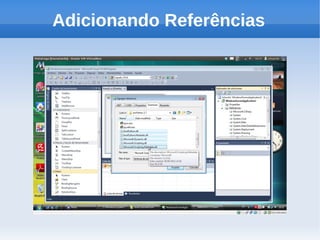
   Nas Próximas figuras são mostrados esses
    passos.
Adicionar Referências
Adicionando Referências
Definindo para que as Referências Sejam
Copiadas para o Diretório do Executável Final
Fazer com que as Referências do IronPython
  sejam salvas no Diretório do Executável
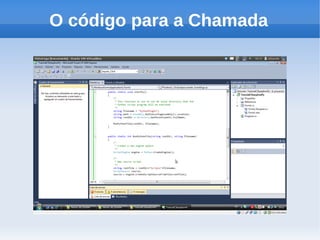
O código para a Chamada
Passo 4: Programando

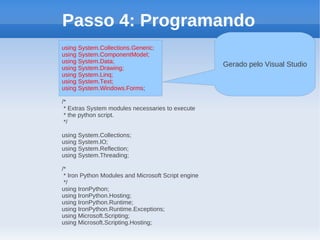
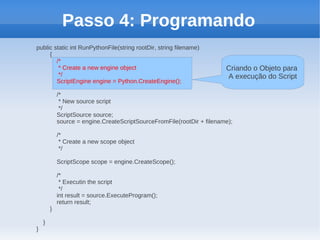
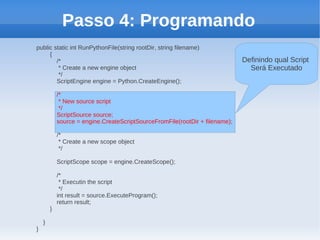
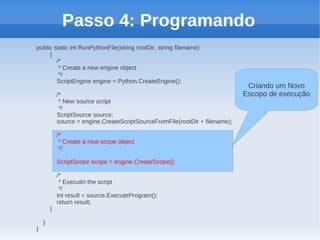
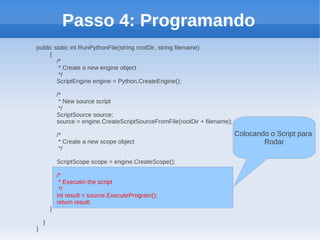
   Agora serão acrescentadas as chamadas das
    referências e criação da rotina de execução do
    script.


   O código final ficará como segue:
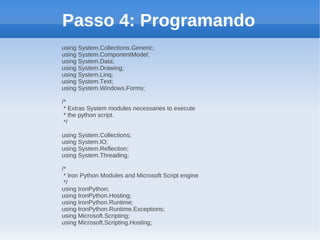
Passo 4: Programando
using System.Collections.Generic;
using System.ComponentModel;
using System.Data;
using System.Drawing;
using System.Linq;
using System.Text;
using System.Windows.Forms;

/*
 * Extras System modules necessaries to execute
 * the python script.
 */

using System.Collections;
using System.IO;
using System.Reflection;
using System.Threading;

/*
 * Iron Python Modules and Microsoft Script engine
 */
using IronPython;
using IronPython.Hosting;
using IronPython.Runtime;
using IronPython.Runtime.Exceptions;
using Microsoft.Scripting;
using Microsoft.Scripting.Hosting;
Passo 4: Programando
using System.Collections.Generic;
using System.ComponentModel;
using System.Data;
using System.Drawing;
                                                     Gerado pelo Visual Studio
using System.Linq;
using System.Text;
using System.Windows.Forms;

/*
 * Extras System modules necessaries to execute
 * the python script.
 */

using System.Collections;
using System.IO;
using System.Reflection;
using System.Threading;

/*
 * Iron Python Modules and Microsoft Script engine
 */
using IronPython;
using IronPython.Hosting;
using IronPython.Runtime;
using IronPython.Runtime.Exceptions;
using Microsoft.Scripting;
using Microsoft.Scripting.Hosting;
Passo 4: Programando
using System.Collections.Generic;
using System.ComponentModel;
using System.Data;
using System.Drawing;
using System.Linq;
using System.Text;
using System.Windows.Forms;

/*
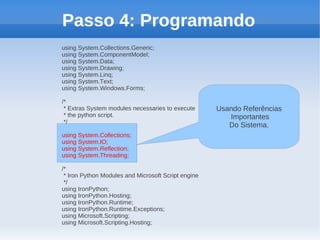
 * Extras System modules necessaries to execute      Usando Referências
 * the python script.                                   Importantes
 */
                                                        Do Sistema.
using System.Collections;
using System.IO;
using System.Reflection;
using System.Threading;

/*
 * Iron Python Modules and Microsoft Script engine
 */
using IronPython;
using IronPython.Hosting;
using IronPython.Runtime;
using IronPython.Runtime.Exceptions;
using Microsoft.Scripting;
using Microsoft.Scripting.Hosting;
Passo 4: Programando
using System.Collections.Generic;
using System.ComponentModel;
using System.Data;
using System.Drawing;
using System.Linq;
using System.Text;
using System.Windows.Forms;

/*
 * Extras System modules necessaries to execute
 * the python script.
 */

using System.Collections;
using System.IO;
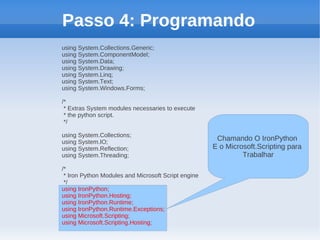
                                                      Chamando O IronPython
using System.Reflection;                             E o Microsoft.Scripting para
using System.Threading;                                       Trabalhar
/*
 * Iron Python Modules and Microsoft Script engine
 */
using IronPython;
using IronPython.Hosting;
using IronPython.Runtime;
using IronPython.Runtime.Exceptions;
using Microsoft.Scripting;
using Microsoft.Scripting.Hosting;
Passo 4: Programando
namespace WindowsFormsApplication1
{
  public partial class Form1 : Form
  {
    public Form1()
    {
       InitializeComponent();
    }

    private void button1_Click(object sender, EventArgs e)
    {
       /*
        * This button will start the python script into the new thread
        */
       Thread myThread = new Thread( new ThreadStart(startPy));
       myThread.Start();
    }
    public static void startPy()
    { /*
        * This function is use to set de local directory that the
        * Python script program will be executed
        */
       string filename = "/Scripts/Program.py";
       string path = Assembly.GetExecutingAssembly().Location;
       string rootDir = Directory.GetParent(path).FullName;

        RunPythonFile(rootDir, filename);
    }
Passo 4: Programando
namespace WindowsFormsApplication1
{
  public partial class Form1 : Form
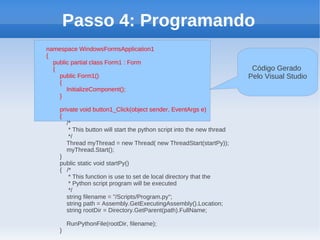
  {                                                                       Código Gerado
    public Form1()                                                       Pelo Visual Studio
    {
       InitializeComponent();
    }

    private void button1_Click(object sender, EventArgs e)
    {
       /*
        * This button will start the python script into the new thread
        */
       Thread myThread = new Thread( new ThreadStart(startPy));
       myThread.Start();
    }
    public static void startPy()
    { /*
        * This function is use to set de local directory that the
        * Python script program will be executed
        */
       string filename = "/Scripts/Program.py";
       string path = Assembly.GetExecutingAssembly().Location;
       string rootDir = Directory.GetParent(path).FullName;

        RunPythonFile(rootDir, filename);
    }
Passo 4: Programando
namespace WindowsFormsApplication1
{
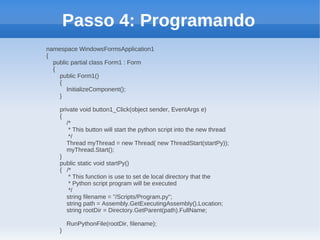
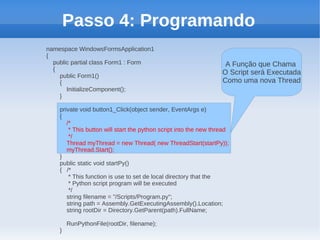
  public partial class Form1 : Form                                 A Função que Chama
  {
    public Form1()
                                                                   O Script será Executada
    {                                                              Como uma nova Thread
       InitializeComponent();
    }

    private void button1_Click(object sender, EventArgs e)
    {
       /*
        * This button will start the python script into the new thread
        */
       Thread myThread = new Thread( new ThreadStart(startPy));
       myThread.Start();
    }
    public static void startPy()
    { /*
        * This function is use to set de local directory that the
        * Python script program will be executed
        */
       string filename = "/Scripts/Program.py";
       string path = Assembly.GetExecutingAssembly().Location;
       string rootDir = Directory.GetParent(path).FullName;

        RunPythonFile(rootDir, filename);
    }
Passo 4: Programando
namespace WindowsFormsApplication1
{
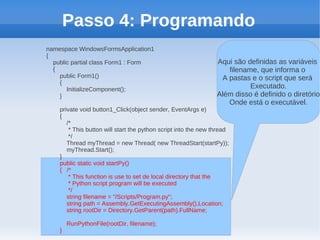
  public partial class Form1 : Form                              Aqui são definidas as variáveis
  {                                                                 filename, que informa o
    public Form1()                                                A pastas e o script que será
    {
       InitializeComponent();                                              Executado.
    }                                                            Além disso é definido o diretório
                                                                    Onde está o executável.
    private void button1_Click(object sender, EventArgs e)
    {
       /*
        * This button will start the python script into the new thread
        */
       Thread myThread = new Thread( new ThreadStart(startPy));
       myThread.Start();
    }
    public static void startPy()
    { /*
        * This function is use to set de local directory that the
        * Python script program will be executed
        */
       string filename = "/Scripts/Program.py";
       string path = Assembly.GetExecutingAssembly().Location;
       string rootDir = Directory.GetParent(path).FullName;

        RunPythonFile(rootDir, filename);
    }
Passo 4: Programando
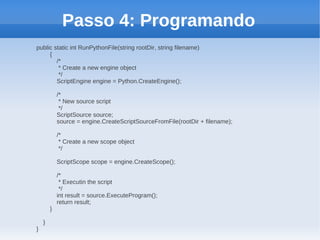
public static int RunPythonFile(string rootDir, string filename)
     {
        /*
         * Create a new engine object
         */
        ScriptEngine engine = Python.CreateEngine();

            /*
             * New source script
             */
            ScriptSource source;
            source = engine.CreateScriptSourceFromFile(rootDir + filename);

            /*
             * Create a new scope object
             */

            ScriptScope scope = engine.CreateScope();

            /*
             * Executin the script
             */
            int result = source.ExecuteProgram();
            return result;
        }

    }
}
Passo 4: Programando
public static int RunPythonFile(string rootDir, string filename)
     {
        /*
         * Create a new engine object                                   Criando o Objeto para
         */                                                             A execução do Script
        ScriptEngine engine = Python.CreateEngine();

            /*
             * New source script
             */
            ScriptSource source;
            source = engine.CreateScriptSourceFromFile(rootDir + filename);

            /*
             * Create a new scope object
             */

            ScriptScope scope = engine.CreateScope();

            /*
             * Executin the script
             */
            int result = source.ExecuteProgram();
            return result;
        }

    }
}
Passo 4: Programando
public static int RunPythonFile(string rootDir, string filename)
     {
        /*                                                                    Definindo qual Script
         * Create a new engine object                                           Será Executado
         */
        ScriptEngine engine = Python.CreateEngine();

            /*
             * New source script
             */
            ScriptSource source;
            source = engine.CreateScriptSourceFromFile(rootDir + filename);

            /*
             * Create a new scope object
             */

            ScriptScope scope = engine.CreateScope();

            /*
             * Executin the script
             */
            int result = source.ExecuteProgram();
            return result;
        }

    }
}
Passo 4: Programando
public static int RunPythonFile(string rootDir, string filename)
     {
        /*
         * Create a new engine object
         */
        ScriptEngine engine = Python.CreateEngine();
                                                                               Criando um Novo
            /*                                                                Escopo de execução
             * New source script
             */
            ScriptSource source;
            source = engine.CreateScriptSourceFromFile(rootDir + filename);

            /*
             * Create a new scope object
             */

            ScriptScope scope = engine.CreateScope();

            /*
             * Executin the script
             */
            int result = source.ExecuteProgram();
            return result;
        }

    }
}
Passo 4: Programando
public static int RunPythonFile(string rootDir, string filename)
     {
        /*
         * Create a new engine object
         */
        ScriptEngine engine = Python.CreateEngine();

            /*
             * New source script
             */
            ScriptSource source;
            source = engine.CreateScriptSourceFromFile(rootDir + filename);

            /*                                                                Colocando o Script para
             * Create a new scope object                                              Rodar
             */

            ScriptScope scope = engine.CreateScope();

            /*
             * Executin the script
             */
            int result = source.ExecuteProgram();
            return result;
        }

    }
}
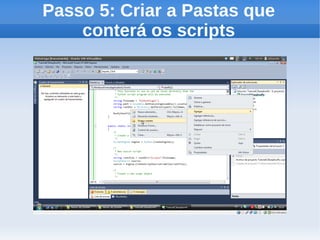
Passo 5: Criar a Pastas que
    conterá os scripts
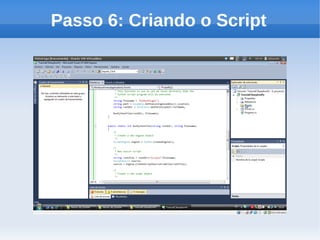
Passo 6: Criando o Script

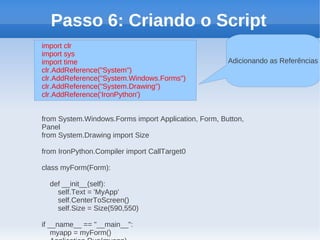
   O script em IronPython será algo bem simples,
    ele irá apenas abrir um novo formulário em
    uma nova janela.
   Por gerar uma nova janela, a opção de criar
    uma nova thread evita que ocorra um erro de
    gerenciamento, mas mais importante é que o
    novo script acaba sendo executado como uma
    função independente, mas que sua
    inicialização e finalização está ligada ao
    aplicativo original em C#
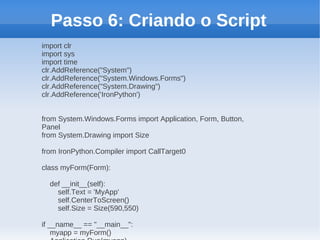
Passo 6: Criando o Script
import clr
import sys
import time
clr.AddReference("System")
clr.AddReference("System.Windows.Forms")
clr.AddReference("System.Drawing")
clr.AddReference('IronPython')


from System.Windows.Forms import Application, Form, Button,
Panel
from System.Drawing import Size

from IronPython.Compiler import CallTarget0

class myForm(Form):

  def __init__(self):
    self.Text = 'MyApp'
    self.CenterToScreen()
    self.Size = Size(590,550)

if __name__ == "__main__":
    myapp = myForm()
Passo 6: Criando o Script
import clr
import sys
import time                                           Adicionando as Referências
clr.AddReference("System")
clr.AddReference("System.Windows.Forms")
clr.AddReference("System.Drawing")
clr.AddReference('IronPython')


from System.Windows.Forms import Application, Form, Button,
Panel
from System.Drawing import Size

from IronPython.Compiler import CallTarget0

class myForm(Form):

  def __init__(self):
    self.Text = 'MyApp'
    self.CenterToScreen()
    self.Size = Size(590,550)

if __name__ == "__main__":
    myapp = myForm()
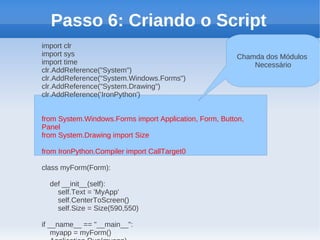
Passo 6: Criando o Script
import clr
import sys                                              Chamda dos Módulos
import time                                                 Necessário
clr.AddReference("System")
clr.AddReference("System.Windows.Forms")
clr.AddReference("System.Drawing")
clr.AddReference('IronPython')


from System.Windows.Forms import Application, Form, Button,
Panel
from System.Drawing import Size

from IronPython.Compiler import CallTarget0

class myForm(Form):

  def __init__(self):
    self.Text = 'MyApp'
    self.CenterToScreen()
    self.Size = Size(590,550)

if __name__ == "__main__":
    myapp = myForm()
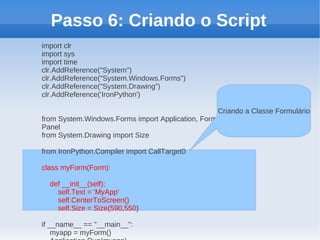
Passo 6: Criando o Script
import clr
import sys
import time
clr.AddReference("System")
clr.AddReference("System.Windows.Forms")
clr.AddReference("System.Drawing")
clr.AddReference('IronPython')

                                                   Criando a Classe Formulário
from System.Windows.Forms import Application, Form, Button,
Panel
from System.Drawing import Size

from IronPython.Compiler import CallTarget0

class myForm(Form):

  def __init__(self):
    self.Text = 'MyApp'
    self.CenterToScreen()
    self.Size = Size(590,550)

if __name__ == "__main__":
    myapp = myForm()
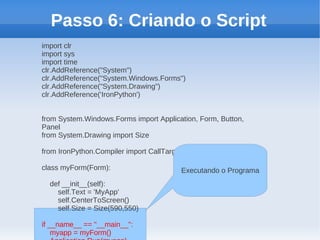
Passo 6: Criando o Script
import clr
import sys
import time
clr.AddReference("System")
clr.AddReference("System.Windows.Forms")
clr.AddReference("System.Drawing")
clr.AddReference('IronPython')


from System.Windows.Forms import Application, Form, Button,
Panel
from System.Drawing import Size

from IronPython.Compiler import CallTarget0

class myForm(Form):                      Executando o Programa
  def __init__(self):
    self.Text = 'MyApp'
    self.CenterToScreen()
    self.Size = Size(590,550)

if __name__ == "__main__":
    myapp = myForm()
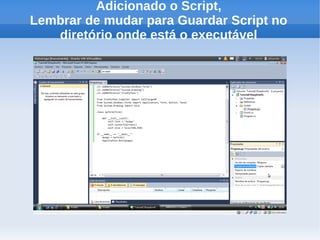
Adicionado o Script,
Lembrar de mudar para Guardar Script no
   diretório onde está o executável


    Lembre-se de definir no projeto que o
     Script deverá ser copiado para a pasta
     onde se encontra o executável no
     momento em que será gerada a solução
Adicionado o Script,
Lembrar de mudar para Guardar Script no
   diretório onde está o executável
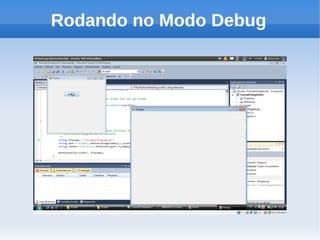
Rodando no Modo Debug
   FIM

Tutorial Rodando Python no C#

  • 1.
    Tutorial [Introdutório]: Criando Pluging IronPython para c# Por: Eduardo dos Santos Pereira Dr. em Astrofísica pereira.somoza@gmail.com
  • 2.
    Tutorial [Introdutório]: Criando Pluging IronPython para c#  Instituto Nacional de Pesquisas Espaciais/DEA Apresentado uma breve introdução de como rodar um script IronPython dentro do C#, isso permitiria a criação de plugins em IronPython para projetos que originalmente forma escritos em c#.
  • 3.
    Materiais  Nesse Tutorial é usado o IronPython 2.7, sendo que esse pode ser baixado no site www.ironpyton.net  .Net 4.0  Também será usado o Visual Studio 2010 Express. É necessário o C# Visual Studio 2010 ou superior pelo fato de que as versões anteriores não são compatíveis com o .Net 4.0
  • 4.
    Passo 1  O primeiro passo será o de criar uma nova solução no Visual Studio. Aqui será criado um novo aplicativo do Windows, ao estilo formulário.
  • 5.
    Passo 1: Criaçãode Uma Nova Solução
  • 6.
    Passo 2: Abrindoo Formulário  Agora será adicionado um Botão no Formulário.  Após a adição do botão, com um duplo clique no formulário será adicionado ao projeto o arquivo Form1.cs  Nesse arquivo será acrescentada a chamada do script
  • 7.
  • 8.
  • 9.
    Criar Botão paraChamar o Script
  • 10.
    Passo 3: Adicionandoreferências  Agora é preciso adicionar as referências (.dll) do IronPython, essas normalmente se encontram em c:/Arquivos e Programas/IronPython 2.7/  As dll's necessárias são:  IronPython.dll  IronPython.Modules.dll  Microsoft.Scripting.dll  Microsoft.Dynamic.dll  Microsoft.Scripting.Metadata.dll
  • 11.
    Passo 3: Adicionandoreferências  Essas referencias precisam ser colocadas no diretório em que se encontra o arquivo executável.  Isso irá permiter que o programa gerado rode em outra máquina que não possua o IronPython instalado  Nas Próximas figuras são mostrados esses passos.
  • 12.
  • 13.
  • 14.
    Definindo para queas Referências Sejam Copiadas para o Diretório do Executável Final
  • 15.
    Fazer com queas Referências do IronPython sejam salvas no Diretório do Executável
  • 16.
    O código paraa Chamada
  • 17.
    Passo 4: Programando  Agora serão acrescentadas as chamadas das referências e criação da rotina de execução do script.  O código final ficará como segue:
  • 18.
    Passo 4: Programando usingSystem.Collections.Generic; using System.ComponentModel; using System.Data; using System.Drawing; using System.Linq; using System.Text; using System.Windows.Forms; /* * Extras System modules necessaries to execute * the python script. */ using System.Collections; using System.IO; using System.Reflection; using System.Threading; /* * Iron Python Modules and Microsoft Script engine */ using IronPython; using IronPython.Hosting; using IronPython.Runtime; using IronPython.Runtime.Exceptions; using Microsoft.Scripting; using Microsoft.Scripting.Hosting;
  • 19.
    Passo 4: Programando usingSystem.Collections.Generic; using System.ComponentModel; using System.Data; using System.Drawing; Gerado pelo Visual Studio using System.Linq; using System.Text; using System.Windows.Forms; /* * Extras System modules necessaries to execute * the python script. */ using System.Collections; using System.IO; using System.Reflection; using System.Threading; /* * Iron Python Modules and Microsoft Script engine */ using IronPython; using IronPython.Hosting; using IronPython.Runtime; using IronPython.Runtime.Exceptions; using Microsoft.Scripting; using Microsoft.Scripting.Hosting;
  • 20.
    Passo 4: Programando usingSystem.Collections.Generic; using System.ComponentModel; using System.Data; using System.Drawing; using System.Linq; using System.Text; using System.Windows.Forms; /* * Extras System modules necessaries to execute Usando Referências * the python script. Importantes */ Do Sistema. using System.Collections; using System.IO; using System.Reflection; using System.Threading; /* * Iron Python Modules and Microsoft Script engine */ using IronPython; using IronPython.Hosting; using IronPython.Runtime; using IronPython.Runtime.Exceptions; using Microsoft.Scripting; using Microsoft.Scripting.Hosting;
  • 21.
    Passo 4: Programando usingSystem.Collections.Generic; using System.ComponentModel; using System.Data; using System.Drawing; using System.Linq; using System.Text; using System.Windows.Forms; /* * Extras System modules necessaries to execute * the python script. */ using System.Collections; using System.IO; Chamando O IronPython using System.Reflection; E o Microsoft.Scripting para using System.Threading; Trabalhar /* * Iron Python Modules and Microsoft Script engine */ using IronPython; using IronPython.Hosting; using IronPython.Runtime; using IronPython.Runtime.Exceptions; using Microsoft.Scripting; using Microsoft.Scripting.Hosting;
  • 22.
    Passo 4: Programando namespaceWindowsFormsApplication1 { public partial class Form1 : Form { public Form1() { InitializeComponent(); } private void button1_Click(object sender, EventArgs e) { /* * This button will start the python script into the new thread */ Thread myThread = new Thread( new ThreadStart(startPy)); myThread.Start(); } public static void startPy() { /* * This function is use to set de local directory that the * Python script program will be executed */ string filename = "/Scripts/Program.py"; string path = Assembly.GetExecutingAssembly().Location; string rootDir = Directory.GetParent(path).FullName; RunPythonFile(rootDir, filename); }
  • 23.
    Passo 4: Programando namespaceWindowsFormsApplication1 { public partial class Form1 : Form { Código Gerado public Form1() Pelo Visual Studio { InitializeComponent(); } private void button1_Click(object sender, EventArgs e) { /* * This button will start the python script into the new thread */ Thread myThread = new Thread( new ThreadStart(startPy)); myThread.Start(); } public static void startPy() { /* * This function is use to set de local directory that the * Python script program will be executed */ string filename = "/Scripts/Program.py"; string path = Assembly.GetExecutingAssembly().Location; string rootDir = Directory.GetParent(path).FullName; RunPythonFile(rootDir, filename); }
  • 24.
    Passo 4: Programando namespaceWindowsFormsApplication1 { public partial class Form1 : Form A Função que Chama { public Form1() O Script será Executada { Como uma nova Thread InitializeComponent(); } private void button1_Click(object sender, EventArgs e) { /* * This button will start the python script into the new thread */ Thread myThread = new Thread( new ThreadStart(startPy)); myThread.Start(); } public static void startPy() { /* * This function is use to set de local directory that the * Python script program will be executed */ string filename = "/Scripts/Program.py"; string path = Assembly.GetExecutingAssembly().Location; string rootDir = Directory.GetParent(path).FullName; RunPythonFile(rootDir, filename); }
  • 25.
    Passo 4: Programando namespaceWindowsFormsApplication1 { public partial class Form1 : Form Aqui são definidas as variáveis { filename, que informa o public Form1() A pastas e o script que será { InitializeComponent(); Executado. } Além disso é definido o diretório Onde está o executável. private void button1_Click(object sender, EventArgs e) { /* * This button will start the python script into the new thread */ Thread myThread = new Thread( new ThreadStart(startPy)); myThread.Start(); } public static void startPy() { /* * This function is use to set de local directory that the * Python script program will be executed */ string filename = "/Scripts/Program.py"; string path = Assembly.GetExecutingAssembly().Location; string rootDir = Directory.GetParent(path).FullName; RunPythonFile(rootDir, filename); }
  • 26.
    Passo 4: Programando publicstatic int RunPythonFile(string rootDir, string filename) { /* * Create a new engine object */ ScriptEngine engine = Python.CreateEngine(); /* * New source script */ ScriptSource source; source = engine.CreateScriptSourceFromFile(rootDir + filename); /* * Create a new scope object */ ScriptScope scope = engine.CreateScope(); /* * Executin the script */ int result = source.ExecuteProgram(); return result; } } }
  • 27.
    Passo 4: Programando publicstatic int RunPythonFile(string rootDir, string filename) { /* * Create a new engine object Criando o Objeto para */ A execução do Script ScriptEngine engine = Python.CreateEngine(); /* * New source script */ ScriptSource source; source = engine.CreateScriptSourceFromFile(rootDir + filename); /* * Create a new scope object */ ScriptScope scope = engine.CreateScope(); /* * Executin the script */ int result = source.ExecuteProgram(); return result; } } }
  • 28.
    Passo 4: Programando publicstatic int RunPythonFile(string rootDir, string filename) { /* Definindo qual Script * Create a new engine object Será Executado */ ScriptEngine engine = Python.CreateEngine(); /* * New source script */ ScriptSource source; source = engine.CreateScriptSourceFromFile(rootDir + filename); /* * Create a new scope object */ ScriptScope scope = engine.CreateScope(); /* * Executin the script */ int result = source.ExecuteProgram(); return result; } } }
  • 29.
    Passo 4: Programando publicstatic int RunPythonFile(string rootDir, string filename) { /* * Create a new engine object */ ScriptEngine engine = Python.CreateEngine(); Criando um Novo /* Escopo de execução * New source script */ ScriptSource source; source = engine.CreateScriptSourceFromFile(rootDir + filename); /* * Create a new scope object */ ScriptScope scope = engine.CreateScope(); /* * Executin the script */ int result = source.ExecuteProgram(); return result; } } }
  • 30.
    Passo 4: Programando publicstatic int RunPythonFile(string rootDir, string filename) { /* * Create a new engine object */ ScriptEngine engine = Python.CreateEngine(); /* * New source script */ ScriptSource source; source = engine.CreateScriptSourceFromFile(rootDir + filename); /* Colocando o Script para * Create a new scope object Rodar */ ScriptScope scope = engine.CreateScope(); /* * Executin the script */ int result = source.ExecuteProgram(); return result; } } }
  • 31.
    Passo 5: Criara Pastas que conterá os scripts
  • 32.
  • 33.
    Passo 6: Criandoo Script  O script em IronPython será algo bem simples, ele irá apenas abrir um novo formulário em uma nova janela.  Por gerar uma nova janela, a opção de criar uma nova thread evita que ocorra um erro de gerenciamento, mas mais importante é que o novo script acaba sendo executado como uma função independente, mas que sua inicialização e finalização está ligada ao aplicativo original em C#
  • 34.
    Passo 6: Criandoo Script import clr import sys import time clr.AddReference("System") clr.AddReference("System.Windows.Forms") clr.AddReference("System.Drawing") clr.AddReference('IronPython') from System.Windows.Forms import Application, Form, Button, Panel from System.Drawing import Size from IronPython.Compiler import CallTarget0 class myForm(Form): def __init__(self): self.Text = 'MyApp' self.CenterToScreen() self.Size = Size(590,550) if __name__ == "__main__": myapp = myForm()
  • 35.
    Passo 6: Criandoo Script import clr import sys import time Adicionando as Referências clr.AddReference("System") clr.AddReference("System.Windows.Forms") clr.AddReference("System.Drawing") clr.AddReference('IronPython') from System.Windows.Forms import Application, Form, Button, Panel from System.Drawing import Size from IronPython.Compiler import CallTarget0 class myForm(Form): def __init__(self): self.Text = 'MyApp' self.CenterToScreen() self.Size = Size(590,550) if __name__ == "__main__": myapp = myForm()
  • 36.
    Passo 6: Criandoo Script import clr import sys Chamda dos Módulos import time Necessário clr.AddReference("System") clr.AddReference("System.Windows.Forms") clr.AddReference("System.Drawing") clr.AddReference('IronPython') from System.Windows.Forms import Application, Form, Button, Panel from System.Drawing import Size from IronPython.Compiler import CallTarget0 class myForm(Form): def __init__(self): self.Text = 'MyApp' self.CenterToScreen() self.Size = Size(590,550) if __name__ == "__main__": myapp = myForm()
  • 37.
    Passo 6: Criandoo Script import clr import sys import time clr.AddReference("System") clr.AddReference("System.Windows.Forms") clr.AddReference("System.Drawing") clr.AddReference('IronPython') Criando a Classe Formulário from System.Windows.Forms import Application, Form, Button, Panel from System.Drawing import Size from IronPython.Compiler import CallTarget0 class myForm(Form): def __init__(self): self.Text = 'MyApp' self.CenterToScreen() self.Size = Size(590,550) if __name__ == "__main__": myapp = myForm()
  • 38.
    Passo 6: Criandoo Script import clr import sys import time clr.AddReference("System") clr.AddReference("System.Windows.Forms") clr.AddReference("System.Drawing") clr.AddReference('IronPython') from System.Windows.Forms import Application, Form, Button, Panel from System.Drawing import Size from IronPython.Compiler import CallTarget0 class myForm(Form): Executando o Programa def __init__(self): self.Text = 'MyApp' self.CenterToScreen() self.Size = Size(590,550) if __name__ == "__main__": myapp = myForm()
  • 39.
    Adicionado o Script, Lembrarde mudar para Guardar Script no diretório onde está o executável  Lembre-se de definir no projeto que o Script deverá ser copiado para a pasta onde se encontra o executável no momento em que será gerada a solução
  • 40.
    Adicionado o Script, Lembrarde mudar para Guardar Script no diretório onde está o executável
  • 41.
  • 42.
    FIM