GrammarpresentationHavegot / hasgot
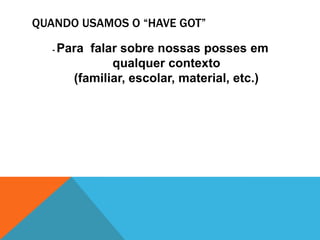
Quando usamos o “havegot”- Para  falar sobre nossas posses em qualquer contexto  (familiar, escolar, material, etc.)
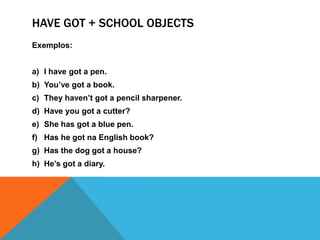
Havegot + schoolobjectsExemplos:I havegot a pen.You’vegot a book.Theyhaven’tgot a pencilsharpener.Haveyougot a cutter? Shehasgot a blue pen.Hashegot na English book?Hasthedoggot a house?He’sgot a diary.
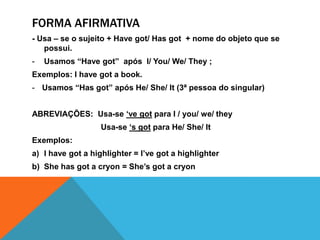
Forma afirmativa- Usa – se o sujeito + Havegot/ Hasgot  + nome do objeto que se possui.Usamos “Havegot”  após  I/ You/ We/ They ;Exemplos: I havegot a book.Usamos “Hasgot” após He/ She/ It (3ª pessoa do singular)ABREVIAÇÕES:  Usa-se ‘vegot para I / you/ we/ they                              Usa-se ‘s got para He/ She/ ItExemplos:I havegot a highlighter = I’vegot a highlighterShehasgot a cryon = She’sgot a cryon
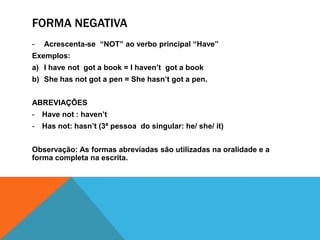
Forma negativaAcrescenta-se  “NOT” ao verbo principal “Have”Exemplos:I havenotgot a book = I haven’tgot a bookShehasnotgot a pen = Shehasn’tgot a pen.ABREVIAÇÕESHavenot : haven’t
Hasnot: hasn’t (3ª pessoa  do singular: he/ she/ it)Observação: As formas abreviadas são utilizadas na oralidade e a forma completa na escrita.
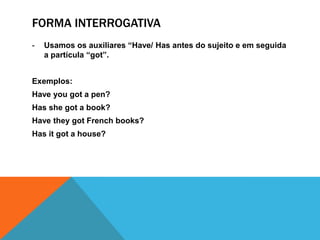
Forma interrogativaUsamos os auxiliares “Have/ Has antes do sujeito e em seguida a partícula “got”.Exemplos:Haveyougot a pen?Hasshegot a book?HavetheygotFrench books?Has it got a house?

Grammar Presentation - Have got

  • 1.
  • 2.
    Quando usamos o“havegot”- Para falar sobre nossas posses em qualquer contexto (familiar, escolar, material, etc.)
  • 3.
    Havegot + schoolobjectsExemplos:Ihavegot a pen.You’vegot a book.Theyhaven’tgot a pencilsharpener.Haveyougot a cutter? Shehasgot a blue pen.Hashegot na English book?Hasthedoggot a house?He’sgot a diary.
  • 4.
    Forma afirmativa- Usa– se o sujeito + Havegot/ Hasgot + nome do objeto que se possui.Usamos “Havegot” após I/ You/ We/ They ;Exemplos: I havegot a book.Usamos “Hasgot” após He/ She/ It (3ª pessoa do singular)ABREVIAÇÕES: Usa-se ‘vegot para I / you/ we/ they Usa-se ‘s got para He/ She/ ItExemplos:I havegot a highlighter = I’vegot a highlighterShehasgot a cryon = She’sgot a cryon
  • 5.
    Forma negativaAcrescenta-se “NOT” ao verbo principal “Have”Exemplos:I havenotgot a book = I haven’tgot a bookShehasnotgot a pen = Shehasn’tgot a pen.ABREVIAÇÕESHavenot : haven’t
  • 6.
    Hasnot: hasn’t (3ªpessoa do singular: he/ she/ it)Observação: As formas abreviadas são utilizadas na oralidade e a forma completa na escrita.
  • 7.
    Forma interrogativaUsamos osauxiliares “Have/ Has antes do sujeito e em seguida a partícula “got”.Exemplos:Haveyougot a pen?Hasshegot a book?HavetheygotFrench books?Has it got a house?