Como evitarnotas Rosas no seuCaixaCelso HummelDiretor de CanaisJunho de 2011
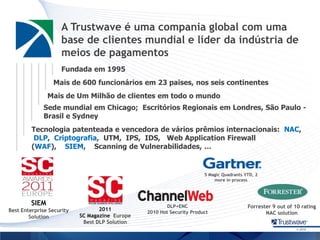
A Trustwave é umacompaniaglobal com uma base de clientesmundial e líder da indústria de meios de pagamentosFundadaem 1995Mais de 600 funcionáriosem23 paises, nosseiscontinentesMais de Um Milhão de clientesemtodo o mundoSedemundialem Chicago;  EscritóriosRegionaisemLondres, São Paulo - Brasil e Sydney Tecnologiapatenteadae vencedora de váriosprêmiosinternacionais:  NAC, DLP,  Criptografia,  UTM,  IPS,  IDS,   Web Application Firewall (WAF),    SIEM,    Scanning de Vulnerabilidades, …5 Magic Quadrants YTD, 2 more in processDLP+ENC2010 Hot Security ProductSIEMBest Enterprise Security SolutionForrester 9 out of 10 rating  NAC solution2011SC Magazine  EuropeBest DLP Solution
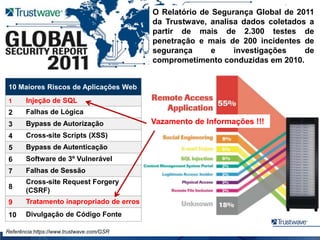
O Relatório de Segurança Global de 2011 da Trustwave, analisa dados coletados a partir de mais de 2.300 testes de penetração e mais de 200 incidentes de segurança e investigações de comprometimento conduzidas em 2010.  Vazamento de Informações !!! Referência:https://www.trustwave.com/GSR
Evolução dos Ataques1980s:AtaquesFísicos
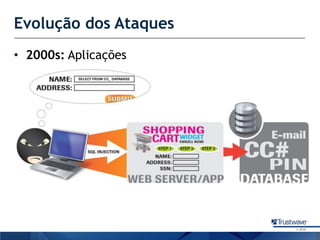
Evolução dos Ataques2000s:Aplicações
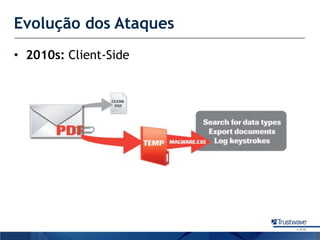
Evolução dos Ataques2010s: Client-Side
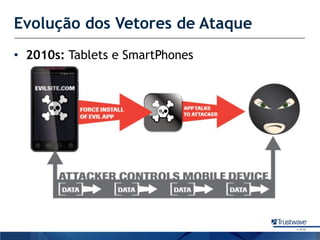
Evolução dos Vetores de Ataque2010s: Tablets e SmartPhones
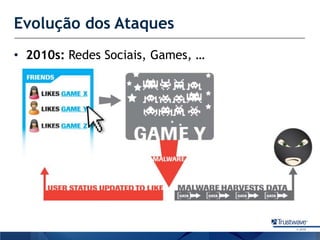
Evolução dos Ataques2010s: RedesSociais, Games, …
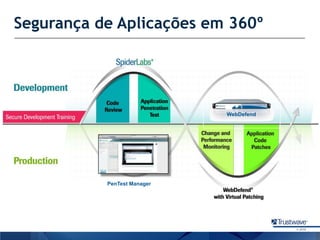
Segurança de Aplicaçõesem 360ºWebDefendPenTest Manager
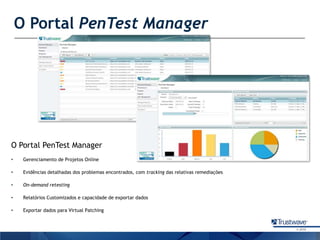
O Portal PenTest ManagerO Portal PenTest ManagerGerenciamento de Projetos Online
Evidênciasdetalhadas dos problemasencontrados, com tracking das relativasremediações
On-demand retesting
RelatóriosCustomizados e capacidade de exportar dados
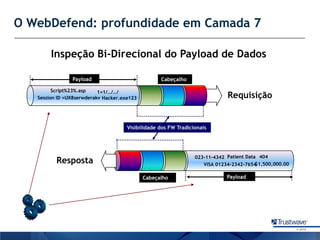
Exportar dados para Virtual PatchingPayloadCabeçalhoScript%23%.asp1=1/../../RequisiçãoSession ID =UX8serwderakvHacker.exe123Visibilidade dos FW TradicionaisPatient Data404023-11-4342Resposta$1,500,000.00VISA 01234-2342-7654PayloadCabeçalhoO WebDefend: profundidadeemCamada 7Inspeção Bi-Direcional do Payload de Dados
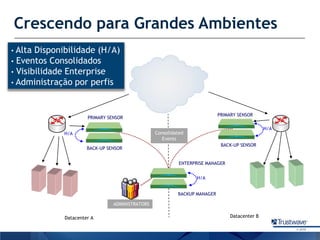
Crescendo paraGrandesAmbientesConsolidated EventsAlta Disponibilidade (H/A)
EventosConsolidados

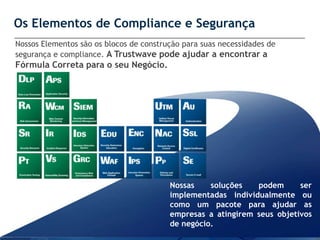
Trustwave - Segurança 360

Notas do Editor

  • #10 Trustwave 360 Application Security bridges the gap between expert manual testing and automated protection. Swap OS Patches with Application Performance
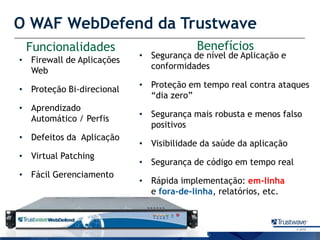
  • #12 WebDefend Sees Deeper Layer 7 visibility – TCP Packet(here from slide 2)One of the differentiators of WebDefend is this bi-directional inspection. Most security products only look at inbound traffic coming into your environment, looking for something malicious in it, looking to see if someone they’re trying to attack you, or trying to extract data from you. And that’s the key point to make – WebDefend also looks at the response to the transaction, checking if there is any sensitive information in that outbound flow. WebDefend inspects the request, it inspects the response; WebDefend inspects all the way down to the complete set of request and response data. Yes, we look for the obvious stuff like CCN, SSN, etc from an outbound perspective, but we’re also checking to see if there is anything in the response data that indicates any environment type data, say an error message after your application dies that tells the world that you are running a SQL Server database and displays a table name, that kind of information is not strictly speaking security related but it is – it’s telling an attacker information about your environment. Now they have a little more information about how to attack you, how to tailor the attack vectors to be specific to your environment, perhaps by not running Oracle database tools in an attack since you’re running SQL Server. So the more environmental data that is leaked, the easier it is to attack you.So WebDefend is very much a BI-DIRECTIONAL tool, which makes it a security device, a Web-specific DLP type device, looking for leakage of information. Also, whenever you see events in WebDefend, you always are shown what was detected in the request, and what was detected in the response, so you actually get to see the full picture of this caused that, or this was the result of that, so it’s a very good informational tool as well.
  • #13 Scaling WebDefend.You can start out a single system, a manager and a sensor all rolled into one device, or create a ‘n’-tier architecture where you have sensors in different locations around the network, and they all report back to the manager.The sensors do all the heavy lifting, they profile the traffic, they perform traffic analysis and detection, they execute the blocking mechanisms, and they send all the event data back to the manager.The WebDefend manager does all the event aggregation reporting type functions and also the policy control. The user performs all the policy management on the manager, and the policies are pushed out to the sensors. High Availability: you can set up High Availability on any of the devices; each individual sensor and manager can have an failover pair and failover works on an active/active or active/passive basis, the usual failover choices.