Baixar para ler offline









![Tipagem estática
var users []User](https://image.slidesharecdn.com/17h00andrewsmedina-161026201433/75/InterCon-2016-Software-as-a-service-usando-Go-como-principal-linguagem-os-cases-globo-com-14-2048.jpg)
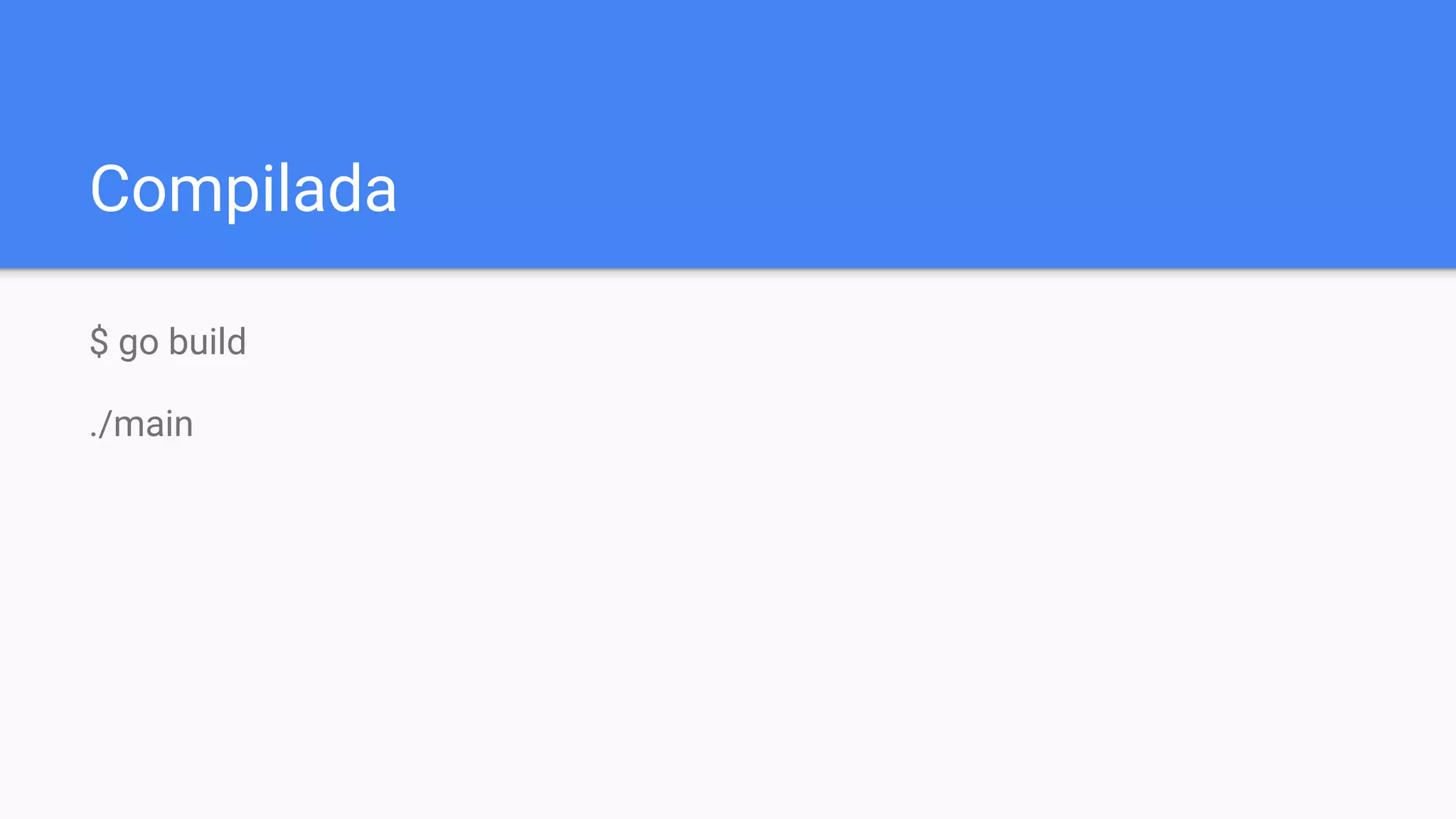

![Goroutines
go sort(s[:i])
go sort(s[i:])](https://image.slidesharecdn.com/17h00andrewsmedina-161026201433/75/InterCon-2016-Software-as-a-service-usando-Go-como-principal-linguagem-os-cases-globo-com-17-2048.jpg)
![Goroutines
go sort(s[:i])
go sort(s[i:])](https://image.slidesharecdn.com/17h00andrewsmedina-161026201433/75/InterCon-2016-Software-as-a-service-usando-Go-como-principal-linguagem-os-cases-globo-com-18-2048.jpg)
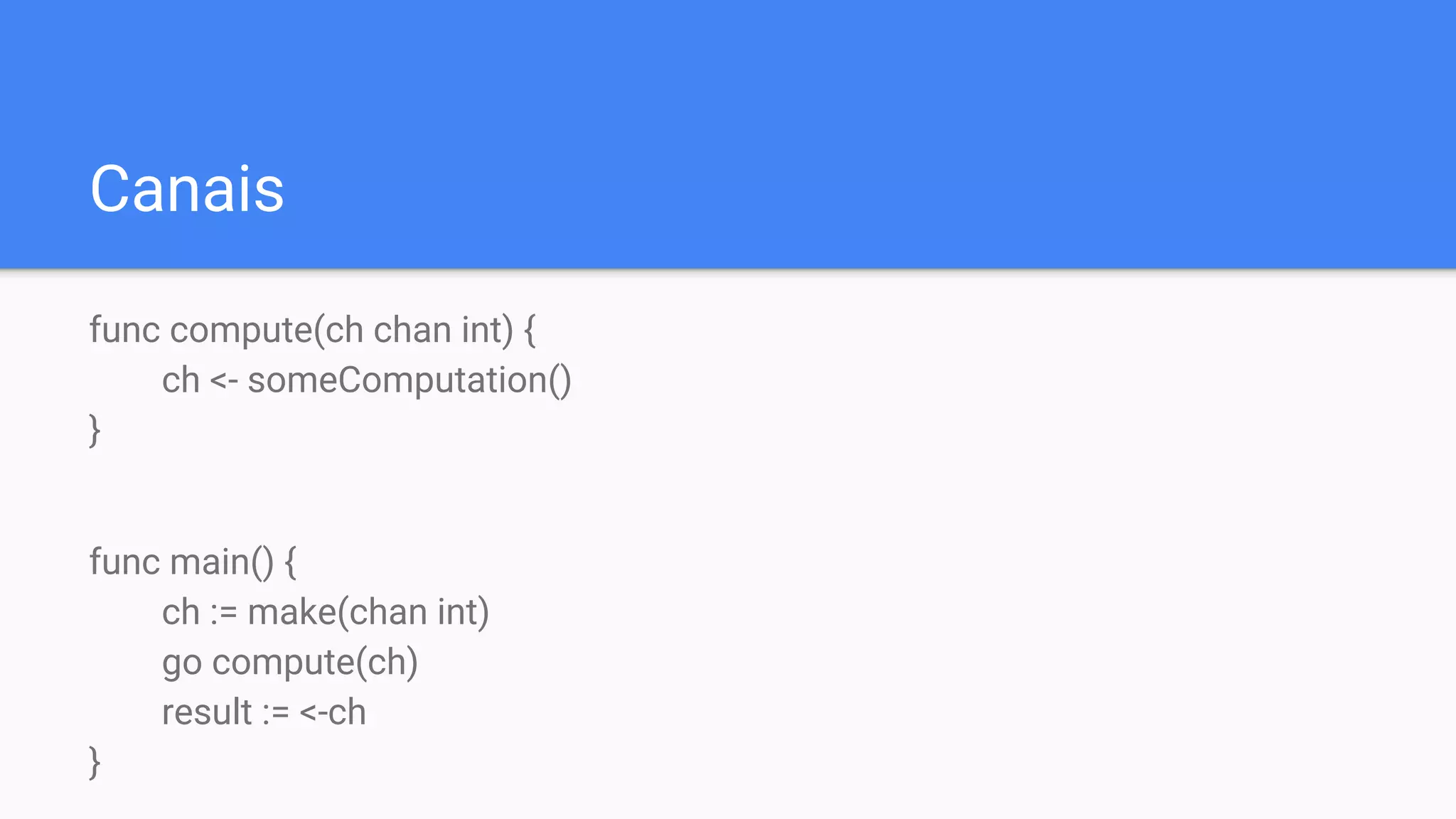
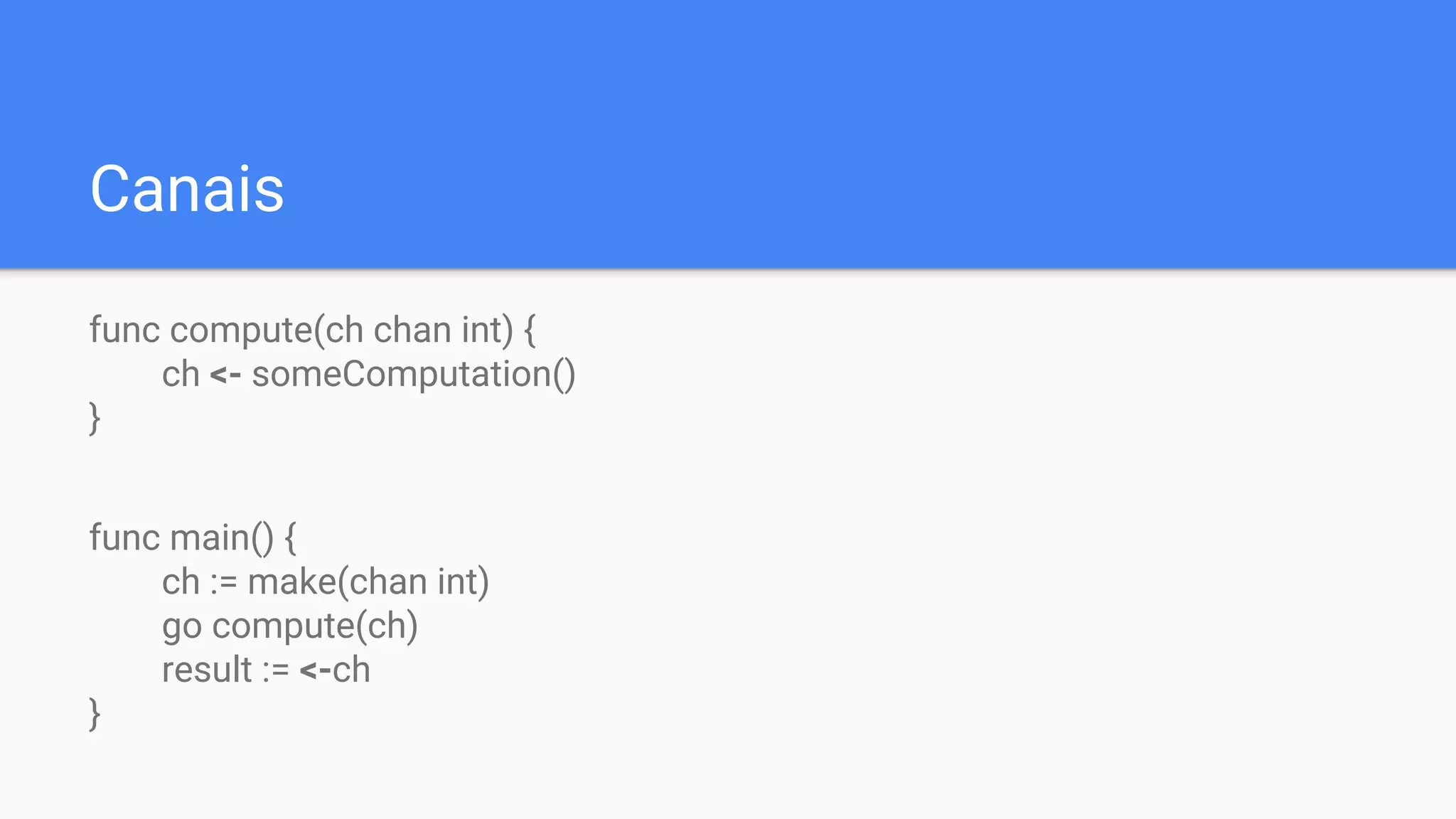





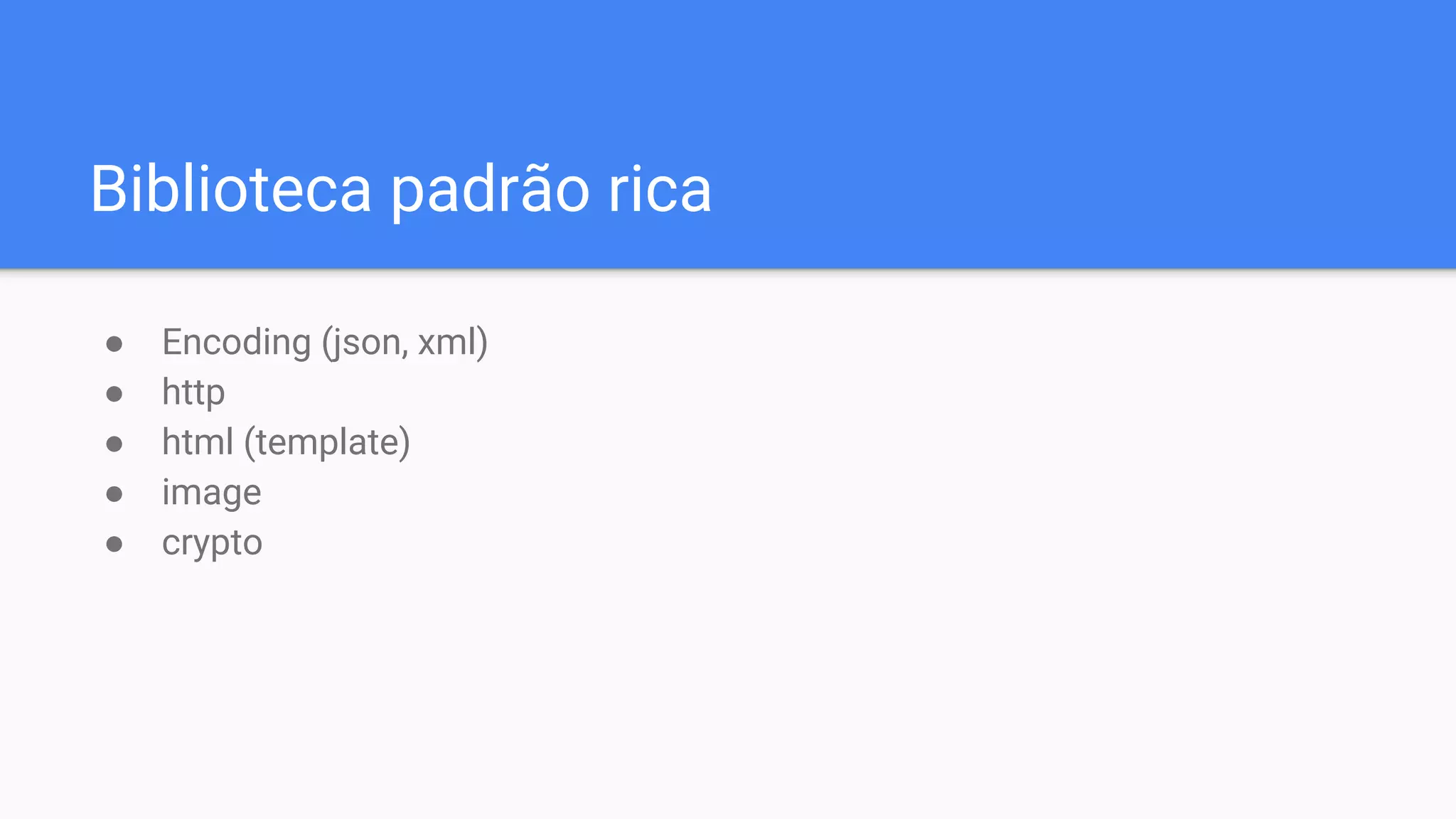
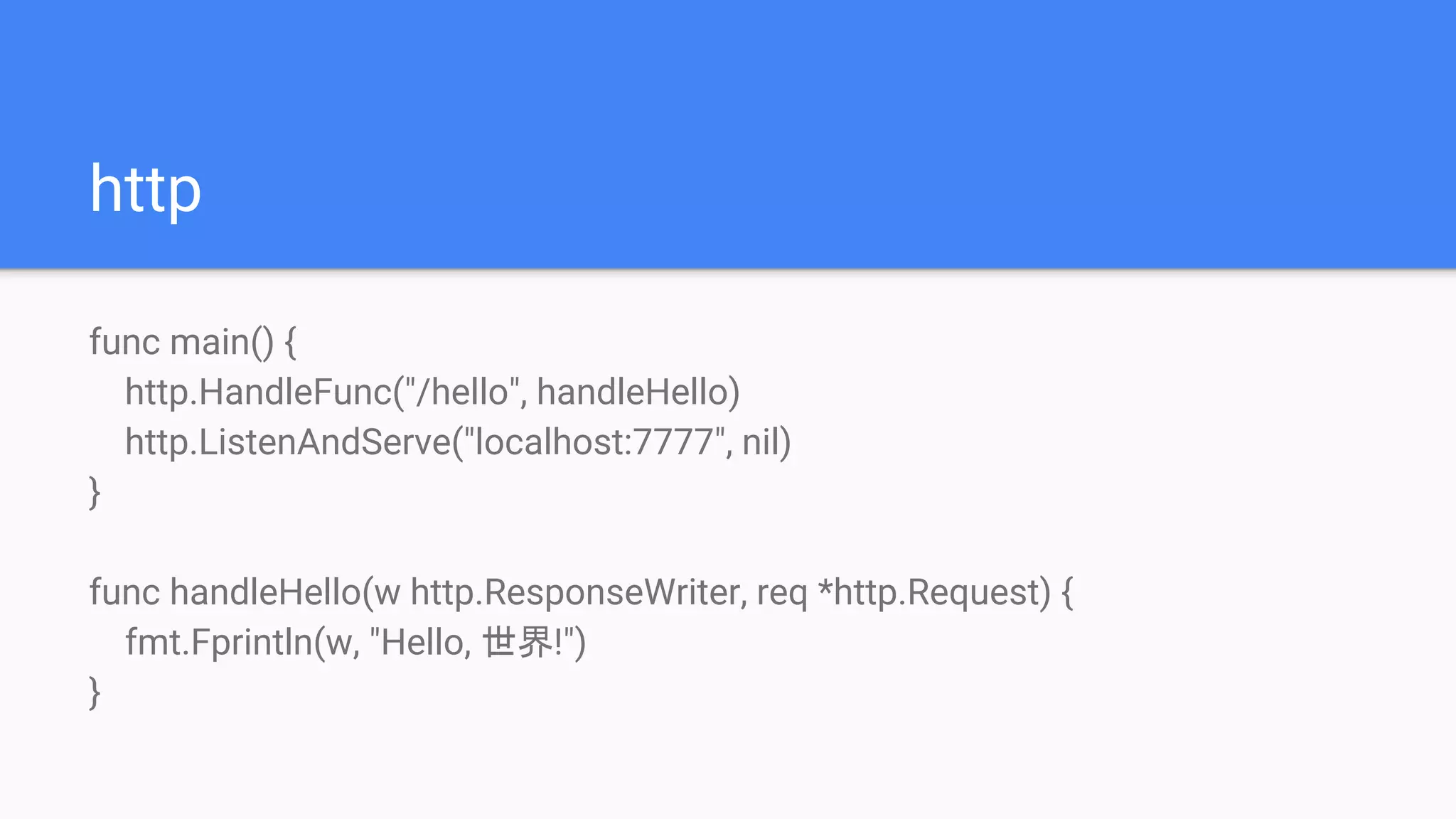
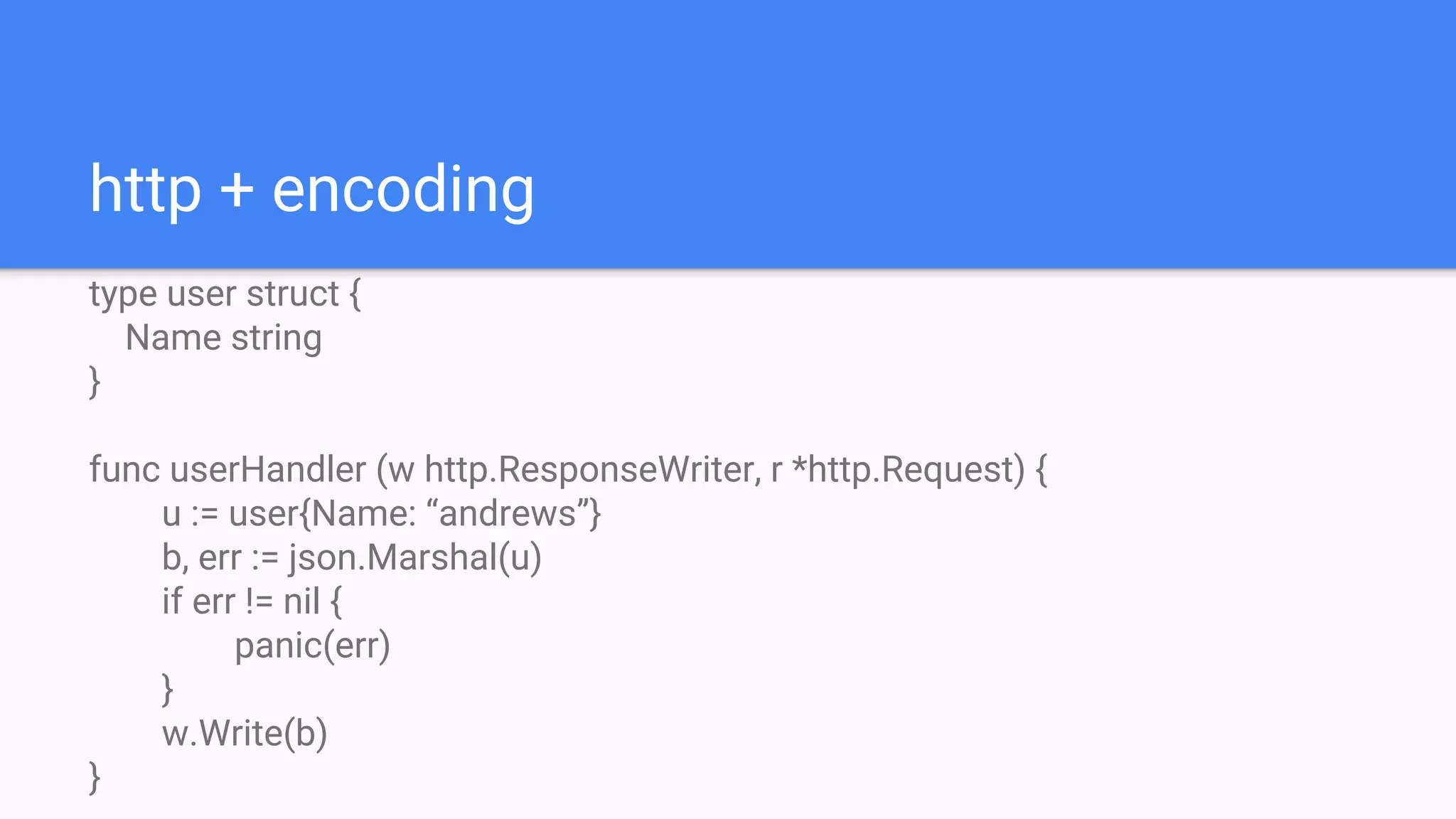



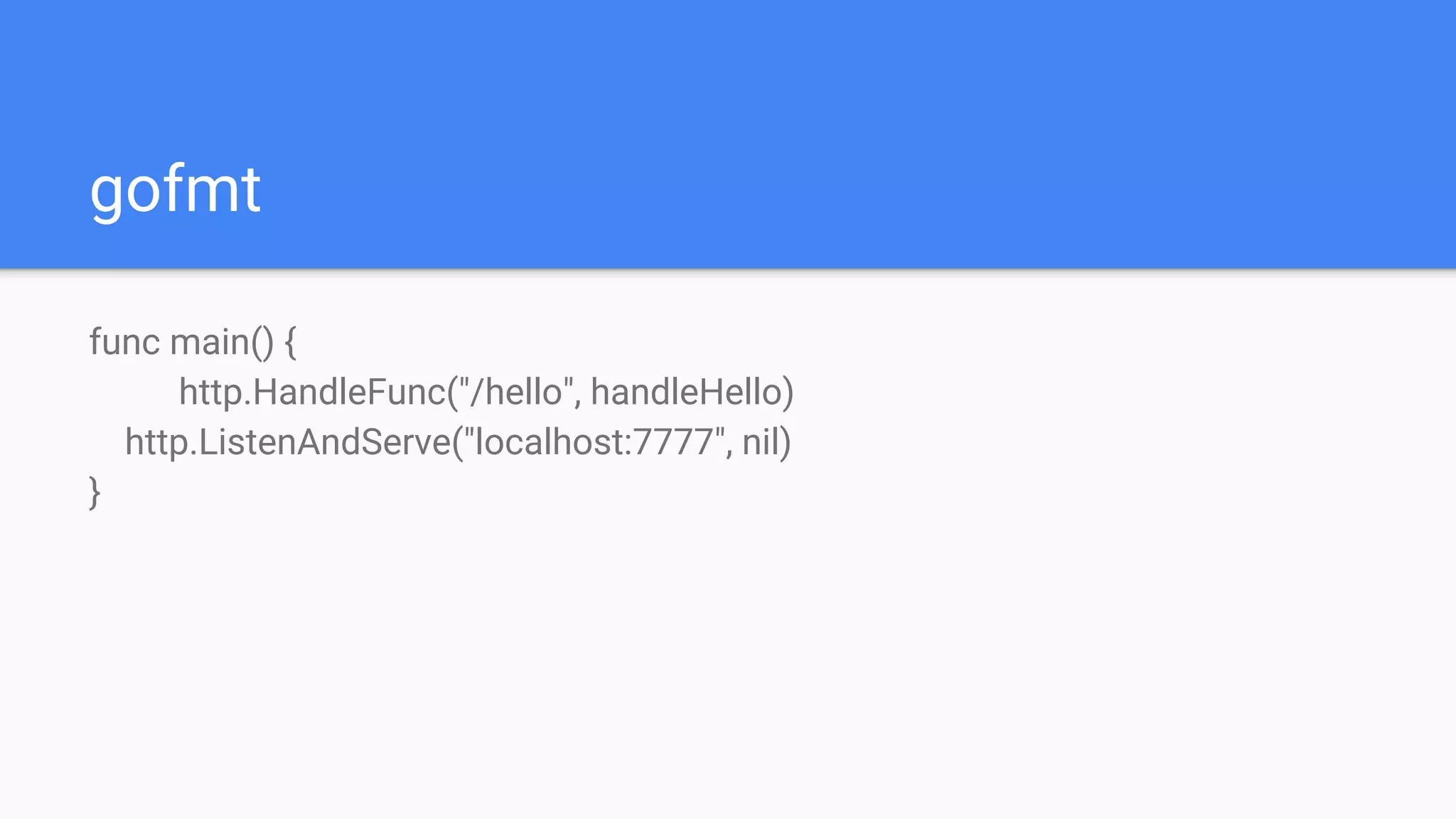
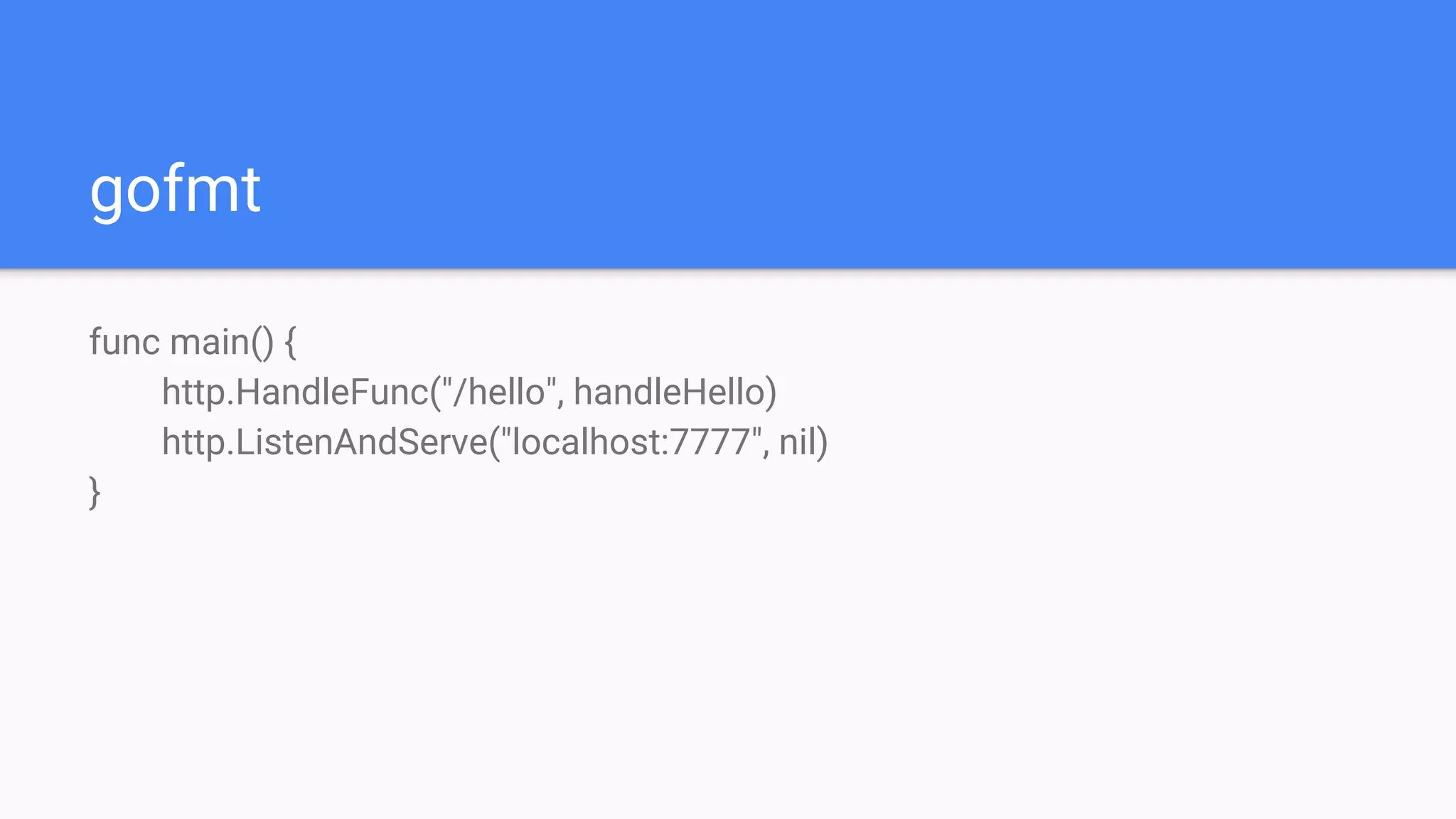

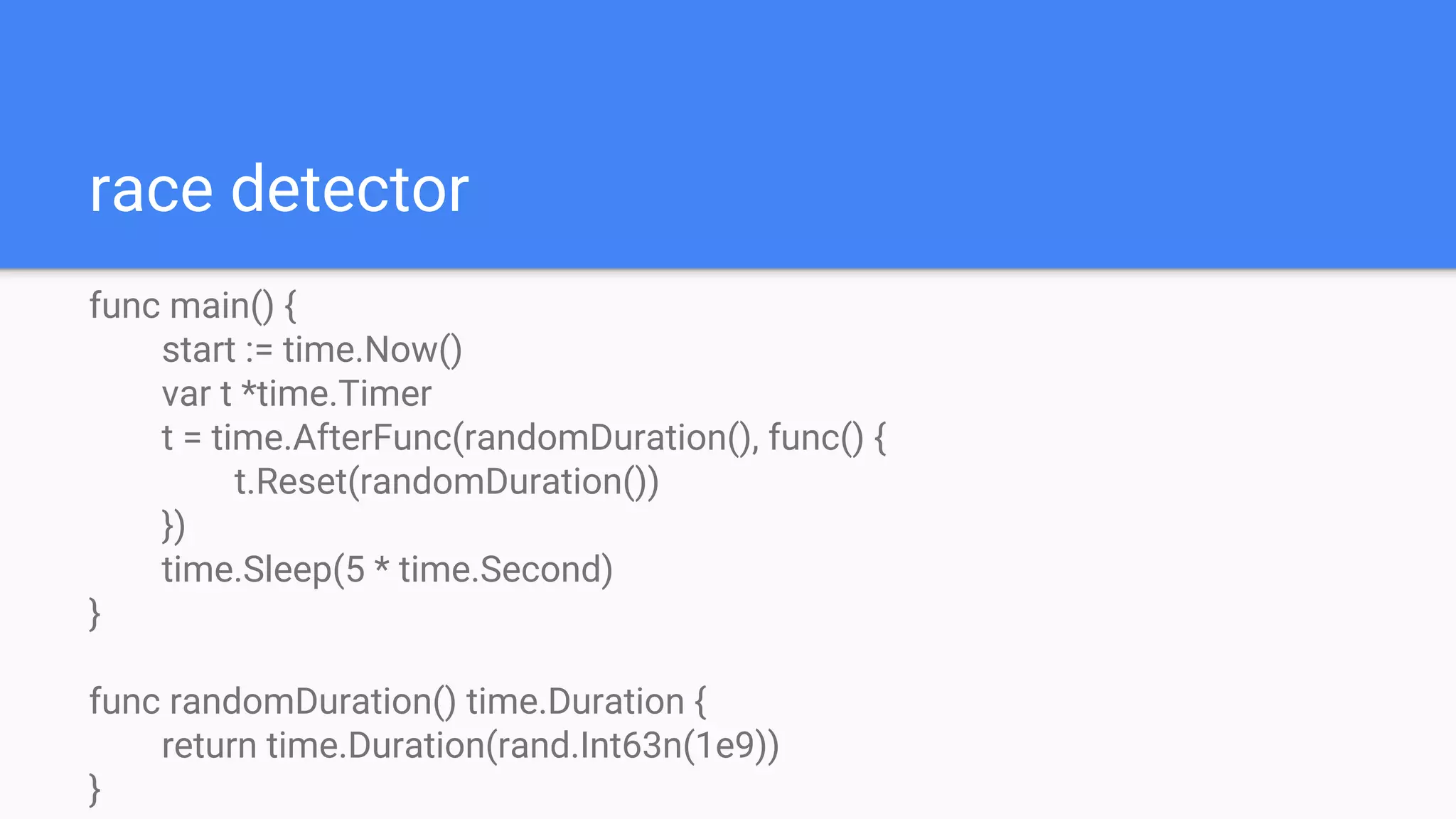
![race detector
panic: runtime error: invalid memory address or nil pointer dereference
[signal 0xb code=0x1 addr=0x8 pc=0x41e38a]
goroutine 4 [running]:
time.stopTimer(0x8, 0x12fe6b35d9472d96)
src/pkg/runtime/ztime_linux_amd64.c:35 +0x25
time.(*Timer).Reset(0x0, 0x4e5904f, 0x1)
src/pkg/time/sleep.go:81 +0x42
main.func·001()
race.go:14 +0xe3
created by time.goFunc
src/pkg/time/sleep.go:122 +0x48](https://image.slidesharecdn.com/17h00andrewsmedina-161026201433/75/InterCon-2016-Software-as-a-service-usando-Go-como-principal-linguagem-os-cases-globo-com-36-2048.jpg)
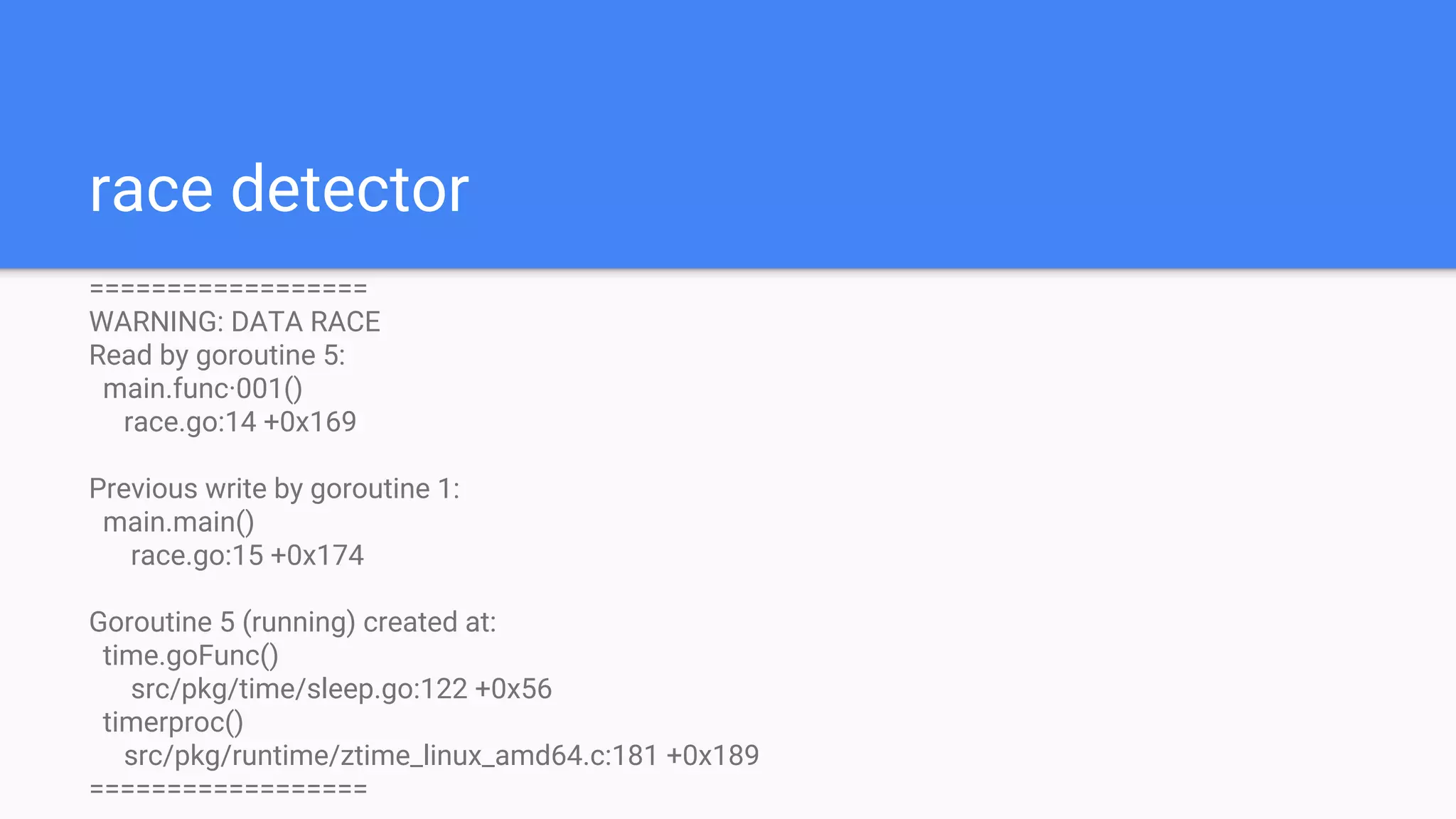
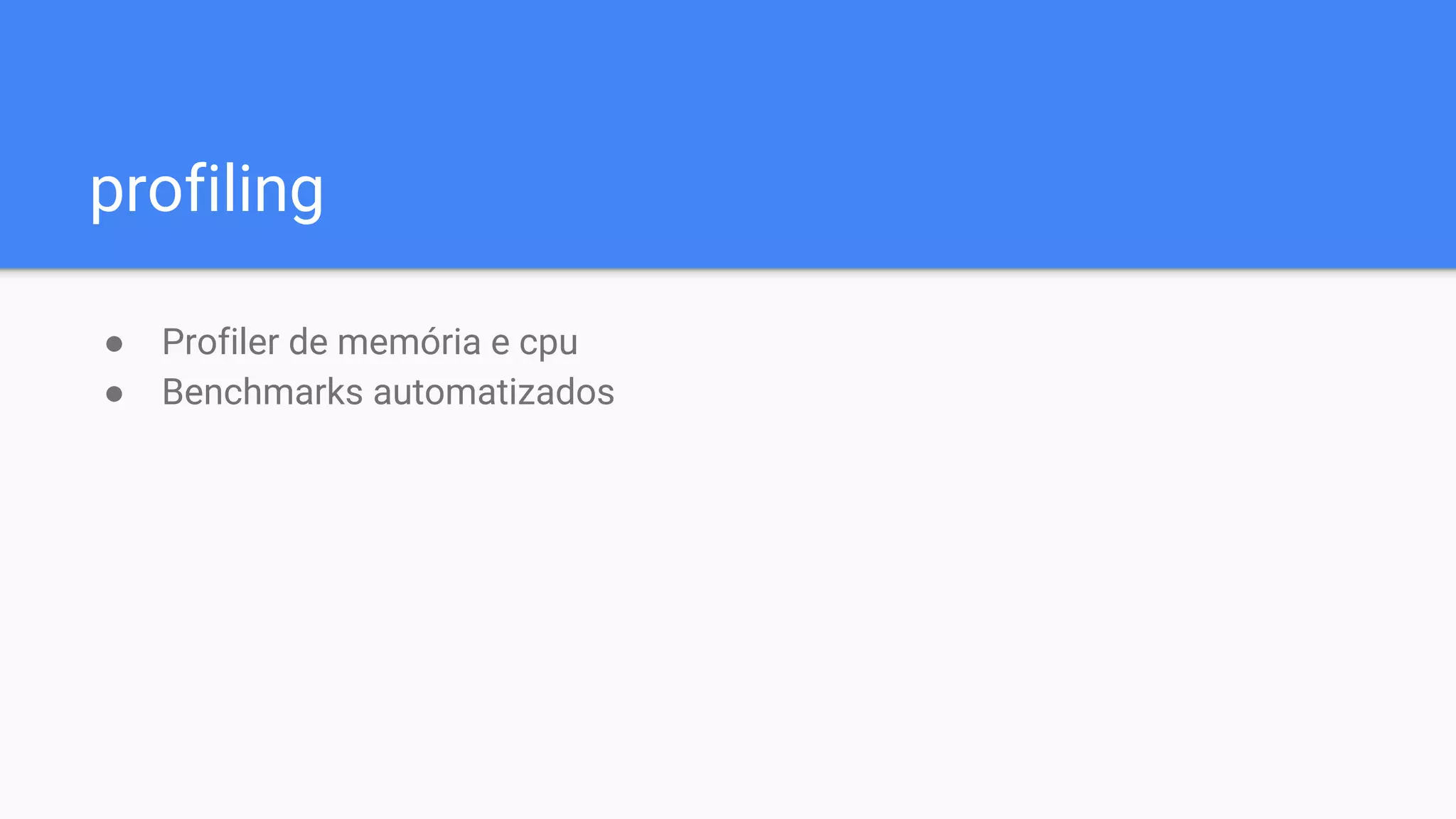




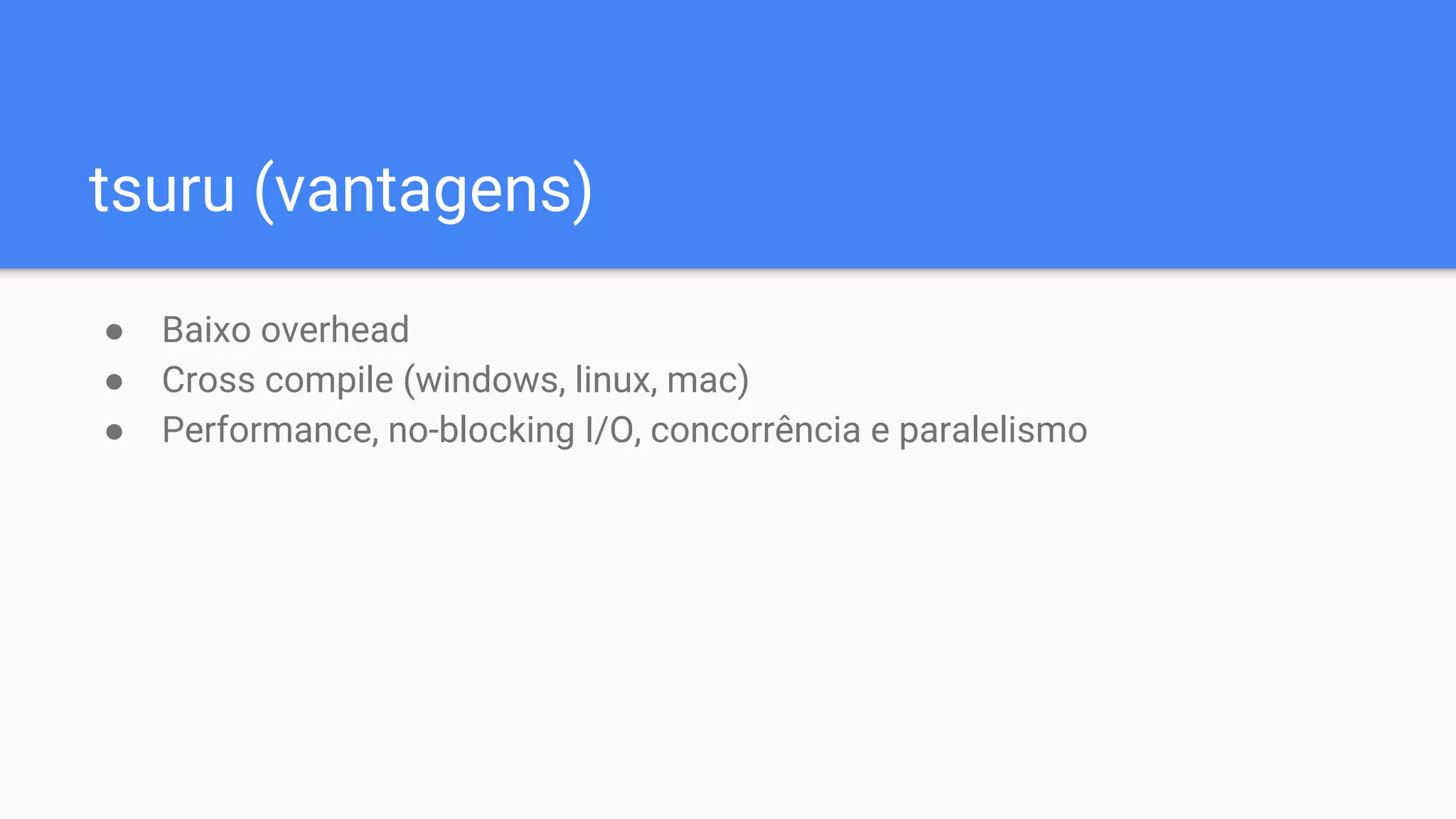




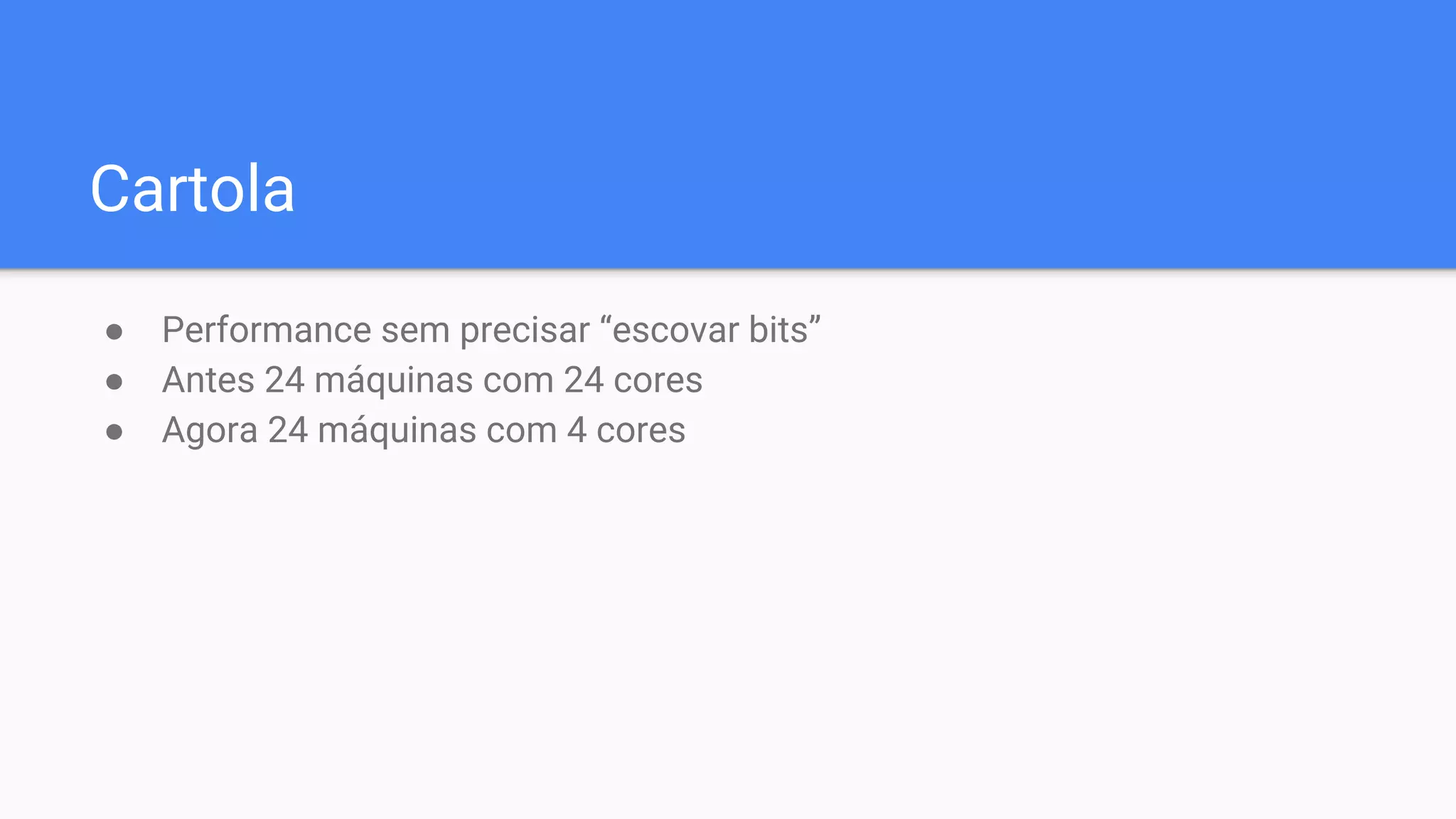





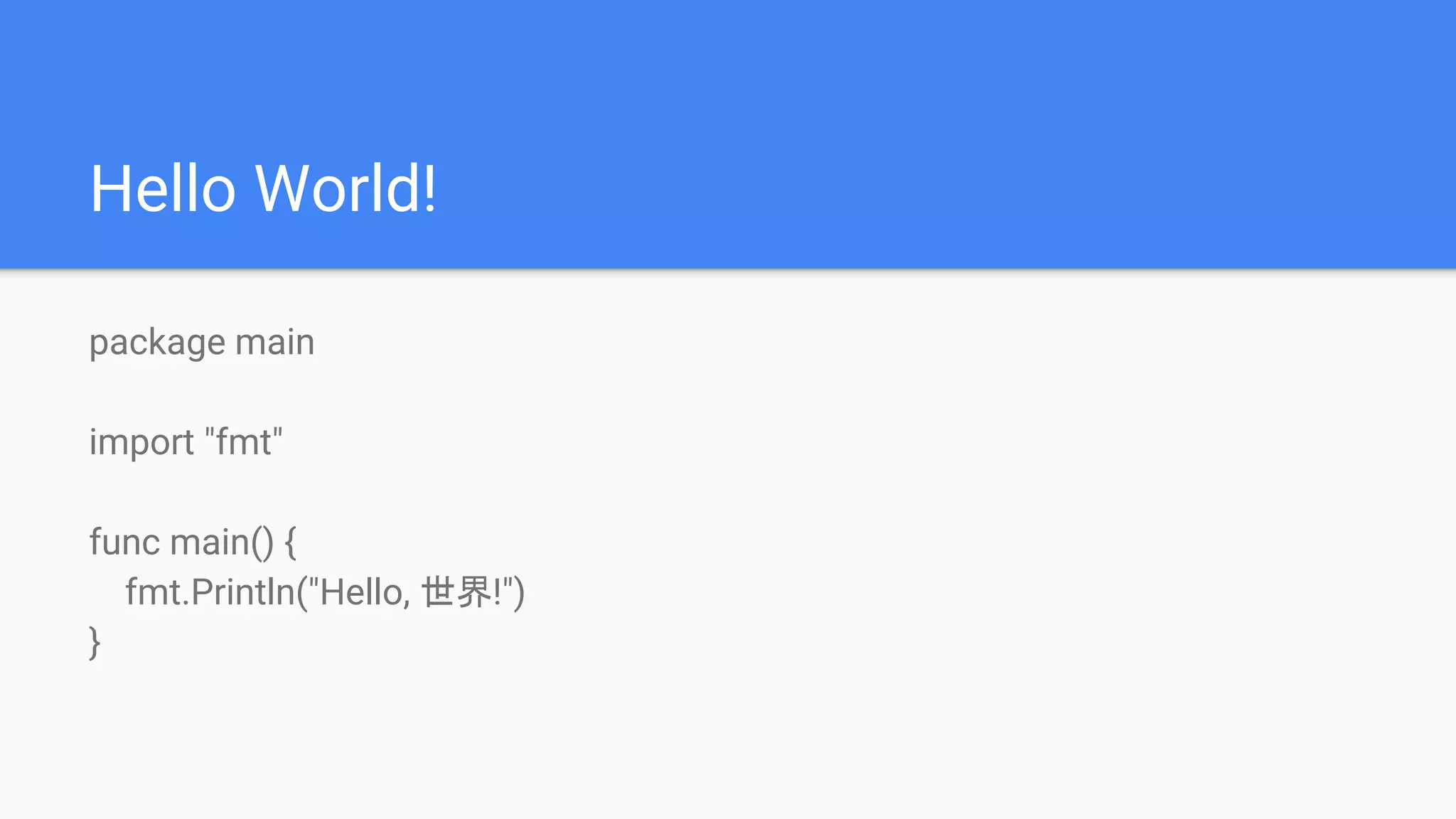
O documento apresenta uma visão geral sobre o uso de Go na criação de software como serviço, destacando sua simplicidade, eficiência e suporte a diferentes linguagens. Além disso, menciona ferramentas como tsuru.io para implantar aplicações rapidamente e discute aspectos técnicos como concorrência e detecção de condições de corrida. A apresentação também menciona o uso do Go na Globo.com, com uma estatística de aproximadamente 300 implantações por dia.


![[Devcamp] usando programação funcional agora!](https://cdn.slidesharecdn.com/ss_thumbnails/devcampusandoprogramacaofuncionalagora-150518110026-lva1-app6891-thumbnail.jpg?width=640&height=640&fit=bounds)


![[EXTENDED] Ceph, Docker, Heroku Slugs, CoreOS and Deis Overview](https://cdn.slidesharecdn.com/ss_thumbnails/deis1-141107133247-conversion-gate02-thumbnail.jpg?width=640&height=640&fit=bounds)


