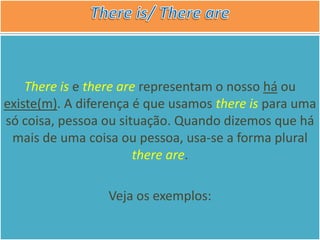
There is e there are representam o nosso há ou
existe(m). A diferença é que usamos there is para uma
só coisa, pessoa ou situação. Quando dizemos que há
 mais de uma coisa ou pessoa, usa-se a forma plural
                       there are.

                 Veja os exemplos:
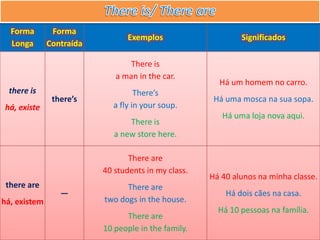
Forma        Forma
                                 Exemplos                    Significados
  Longa       Contraída

                                 There is
                             a man in the car.
                                                       Há um homem no carro.
 there is                           There’s
               there’s                                Há uma mosca na sua sopa.
há, existe                   a fly in your soup.
                                                        Há uma loja nova aqui.
                                 There is
                             a new store here.

                                 There are
                          40 students in my class.
                                                     Há 40 alunos na minha classe.
 there are                      There are
                 —                                       Há dois cães na casa.
há, existem               two dogs in the house.
                                                       Há 10 pessoas na família.
                                There are
                          10 people in the family.
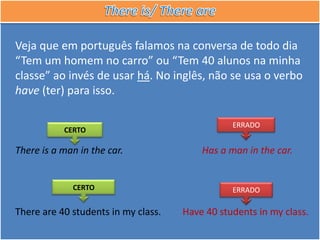
Veja que em português falamos na conversa de todo dia
“Tem um homem no carro” ou “Tem 40 alunos na minha
classe” ao invés de usar há. No inglês, não se usa o verbo
have (ter) para isso.

                                                ERRADO
           CERTO

There is a man in the car.               Has a man in the car.


             CERTO                              ERRADO

There are 40 students in my class.   Have 40 students in my class.
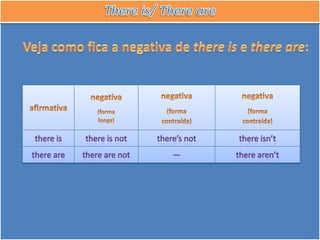
Veja alguns exemplos:
  afirmativa                                         negativa
                                                      There is not
       There is                                     a man in the car.
   a man in the car.
                                             [Não há um homem no carro.]
                                                       There’s not
          There’s                                  a fly in your soup.
   a fly in your soup.
                                            [Não há uma mosca na sua sopa.]
                                                       There isn’t
       There is                                     a new store here.
   a new store here.
                                              [Não há uma loja nova aqui.]
                                                     There are not
       There are                                40 students in my class.
40 students in my class.
                                           [Não há 40 alunos na minha classe.]
                                                      There aren’t
     There are                                   two dogs in the house.
two dogs in the house
                                            [Não há dois cachorros na casa.]
                                                      There aren’t
      There are                                  10 people in the family.
10 people in the family.
                                             [Não há 10 pessoas na família.]

3. there is there are

  • 1.
    There is ethere are representam o nosso há ou existe(m). A diferença é que usamos there is para uma só coisa, pessoa ou situação. Quando dizemos que há mais de uma coisa ou pessoa, usa-se a forma plural there are. Veja os exemplos:
  • 2.
    Forma Forma Exemplos Significados Longa Contraída There is a man in the car. Há um homem no carro. there is There’s there’s Há uma mosca na sua sopa. há, existe a fly in your soup. Há uma loja nova aqui. There is a new store here. There are 40 students in my class. Há 40 alunos na minha classe. there are There are — Há dois cães na casa. há, existem two dogs in the house. Há 10 pessoas na família. There are 10 people in the family.
  • 3.
    Veja que emportuguês falamos na conversa de todo dia “Tem um homem no carro” ou “Tem 40 alunos na minha classe” ao invés de usar há. No inglês, não se usa o verbo have (ter) para isso. ERRADO CERTO There is a man in the car. Has a man in the car. CERTO ERRADO There are 40 students in my class. Have 40 students in my class.
  • 5.
    Veja alguns exemplos: afirmativa negativa There is not There is a man in the car. a man in the car. [Não há um homem no carro.] There’s not There’s a fly in your soup. a fly in your soup. [Não há uma mosca na sua sopa.] There isn’t There is a new store here. a new store here. [Não há uma loja nova aqui.] There are not There are 40 students in my class. 40 students in my class. [Não há 40 alunos na minha classe.] There aren’t There are two dogs in the house. two dogs in the house [Não há dois cachorros na casa.] There aren’t There are 10 people in the family. 10 people in the family. [Não há 10 pessoas na família.]