R Tools no Visual Studio 2017
name <- c("Orlando Gomes")
title <- c("Microsoft Student Partner(MSP)")
medium <- c("https://medium.com/@orlandogomes_13207")
linkedin <- c("inkedin.com/in/orlandomariano")
facebook <- c("facebook.com/orlandomaiuri")
email <- c("orlando.mariano@studentpartner.com")
Olá , meu nome é Orlando 
 Curso Técnico em Informática – Fundação Bradesco;
 Formado em Redes de Computadores – FIAP;
 Graduando do 2º Ano de Engenharia Mecatrônica - FIAP;
 Experiência focada em SharePoint e Power BI;
 MSDN Tech Advisor;
 MSP - Microsoft Student Partner;
 Fã de Pokémon / Futebol.
Agenda
 Linguagem R;
 R Tools para Visual Studio 2017;
 Montagem do Ambiente;
 Referencias.
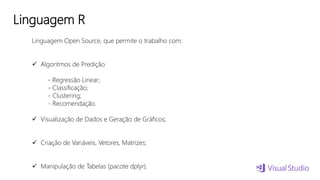
Linguagem R
Linguagem Open Source, que permite o trabalho com:
 Algoritmos de Predição
- Regressão Linear;
- Classificação;
- Clustering;
- Recomendação.
 Visualização de Dados e Geração de Gráficos;
 Criação de Variáveis, Vetores, Matrizes;
 Manipulação de Tabelas (pacote dplyr).
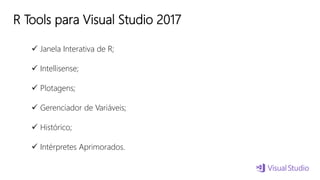
R Tools para Visual Studio 2017
 Janela Interativa de R;
 Intellisense;
 Plotagens;
 Gerenciador de Variáveis;
 Histórico;
 Intérpretes Aprimorados.
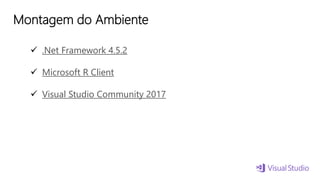
Montagem do Ambiente
 .Net Framework 4.5.2
 Microsoft R Client
 Visual Studio Community 2017
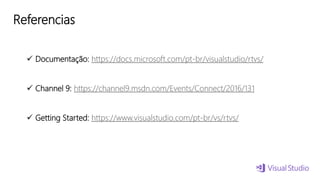
Referencias
 Documentação: https://docs.microsoft.com/pt-br/visualstudio/rtvs/
 Channel 9: https://channel9.msdn.com/Events/Connect/2016/131
 Getting Started: https://www.visualstudio.com/pt-br/vs/rtvs/
agredecimento <- c(“Obrigado =D”)
Demo - Explorando o R no Visual Studio 2017
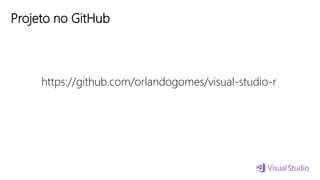
Projeto no GitHub
https://github.com/orlandogomes/visual-studio-r

Usando r no visual studio 2017

  • 1.
    R Tools noVisual Studio 2017 name <- c("Orlando Gomes") title <- c("Microsoft Student Partner(MSP)") medium <- c("https://medium.com/@orlandogomes_13207") linkedin <- c("inkedin.com/in/orlandomariano") facebook <- c("facebook.com/orlandomaiuri") email <- c("orlando.mariano@studentpartner.com")
  • 2.
    Olá , meunome é Orlando   Curso Técnico em Informática – Fundação Bradesco;  Formado em Redes de Computadores – FIAP;  Graduando do 2º Ano de Engenharia Mecatrônica - FIAP;  Experiência focada em SharePoint e Power BI;  MSDN Tech Advisor;  MSP - Microsoft Student Partner;  Fã de Pokémon / Futebol.
  • 3.
    Agenda  Linguagem R; R Tools para Visual Studio 2017;  Montagem do Ambiente;  Referencias.
  • 4.
    Linguagem R Linguagem OpenSource, que permite o trabalho com:  Algoritmos de Predição - Regressão Linear; - Classificação; - Clustering; - Recomendação.  Visualização de Dados e Geração de Gráficos;  Criação de Variáveis, Vetores, Matrizes;  Manipulação de Tabelas (pacote dplyr).
  • 5.
    R Tools paraVisual Studio 2017  Janela Interativa de R;  Intellisense;  Plotagens;  Gerenciador de Variáveis;  Histórico;  Intérpretes Aprimorados.
  • 6.
    Montagem do Ambiente .Net Framework 4.5.2  Microsoft R Client  Visual Studio Community 2017
  • 7.
    Referencias  Documentação: https://docs.microsoft.com/pt-br/visualstudio/rtvs/ Channel 9: https://channel9.msdn.com/Events/Connect/2016/131  Getting Started: https://www.visualstudio.com/pt-br/vs/rtvs/
  • 8.
  • 9.
    Demo - Explorandoo R no Visual Studio 2017
  • 10.

Notas do Editor

  • #3 Big Data – the size, type, shape of data that business are analyze is changing. Data from sensors: RFID tags in manufacturing, or location data for company’s with large fleets. Data from social media like facebook, twitter, Linked-In – for analyzing the success of a marketing campaign or to assess customer sentiment or to gather feedback to help shape products or services. Public data – traffic or weather feeds, or data published from data.gov initiatives etc Being able to easily tap into these data sources from smarter analytics to drive business insight is a prevalent theme. Consumerization of IT – this is about choice. I as an individual want to work on the device of my choice. From wherever I want to work. This extends beyond devices to include apps and user experiences. I search for information all the time at home on the web, I want to have that same experience at the office. I’ll talk today about how we’re bringing these experiences to the world of data as well.
  • #4 Big Data – the size, type, shape of data that business are analyze is changing. Data from sensors: RFID tags in manufacturing, or location data for company’s with large fleets. Data from social media like facebook, twitter, Linked-In – for analyzing the success of a marketing campaign or to assess customer sentiment or to gather feedback to help shape products or services. Public data – traffic or weather feeds, or data published from data.gov initiatives etc Being able to easily tap into these data sources from smarter analytics to drive business insight is a prevalent theme. Consumerization of IT – this is about choice. I as an individual want to work on the device of my choice. From wherever I want to work. This extends beyond devices to include apps and user experiences. I search for information all the time at home on the web, I want to have that same experience at the office. I’ll talk today about how we’re bringing these experiences to the world of data as well.
  • #5 Big Data – the size, type, shape of data that business are analyze is changing. Data from sensors: RFID tags in manufacturing, or location data for company’s with large fleets. Data from social media like facebook, twitter, Linked-In – for analyzing the success of a marketing campaign or to assess customer sentiment or to gather feedback to help shape products or services. Public data – traffic or weather feeds, or data published from data.gov initiatives etc Being able to easily tap into these data sources from smarter analytics to drive business insight is a prevalent theme. Consumerization of IT – this is about choice. I as an individual want to work on the device of my choice. From wherever I want to work. This extends beyond devices to include apps and user experiences. I search for information all the time at home on the web, I want to have that same experience at the office. I’ll talk today about how we’re bringing these experiences to the world of data as well.
  • #6 Big Data – the size, type, shape of data that business are analyze is changing. Data from sensors: RFID tags in manufacturing, or location data for company’s with large fleets. Data from social media like facebook, twitter, Linked-In – for analyzing the success of a marketing campaign or to assess customer sentiment or to gather feedback to help shape products or services. Public data – traffic or weather feeds, or data published from data.gov initiatives etc Being able to easily tap into these data sources from smarter analytics to drive business insight is a prevalent theme. Consumerization of IT – this is about choice. I as an individual want to work on the device of my choice. From wherever I want to work. This extends beyond devices to include apps and user experiences. I search for information all the time at home on the web, I want to have that same experience at the office. I’ll talk today about how we’re bringing these experiences to the world of data as well.
  • #7 Big Data – the size, type, shape of data that business are analyze is changing. Data from sensors: RFID tags in manufacturing, or location data for company’s with large fleets. Data from social media like facebook, twitter, Linked-In – for analyzing the success of a marketing campaign or to assess customer sentiment or to gather feedback to help shape products or services. Public data – traffic or weather feeds, or data published from data.gov initiatives etc Being able to easily tap into these data sources from smarter analytics to drive business insight is a prevalent theme. Consumerization of IT – this is about choice. I as an individual want to work on the device of my choice. From wherever I want to work. This extends beyond devices to include apps and user experiences. I search for information all the time at home on the web, I want to have that same experience at the office. I’ll talk today about how we’re bringing these experiences to the world of data as well.
  • #8 Big Data – the size, type, shape of data that business are analyze is changing. Data from sensors: RFID tags in manufacturing, or location data for company’s with large fleets. Data from social media like facebook, twitter, Linked-In – for analyzing the success of a marketing campaign or to assess customer sentiment or to gather feedback to help shape products or services. Public data – traffic or weather feeds, or data published from data.gov initiatives etc Being able to easily tap into these data sources from smarter analytics to drive business insight is a prevalent theme. Consumerization of IT – this is about choice. I as an individual want to work on the device of my choice. From wherever I want to work. This extends beyond devices to include apps and user experiences. I search for information all the time at home on the web, I want to have that same experience at the office. I’ll talk today about how we’re bringing these experiences to the world of data as well.