This essay discusses how Graciliano Ramos' short stories contain elements of modernism despite his disinterest in avant-garde movements, arguing that the historical context of early 20th century artistic production influenced all authors regardless of their views. It investigates how technological advances may have created a shared phenomenological and historical perspective, allowing modernist ideas to appear in Ramos' work similarly to how they influenced overtly avant-garde writers.




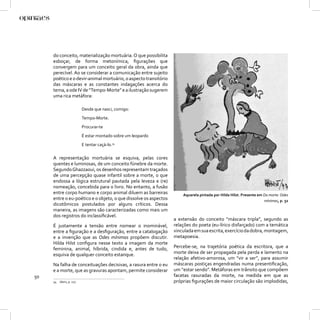
![“inércia”, de qual o “corpo morto” sai e reanima-se, e os tique-taques do relógio e teme que dormirá sentado.
a reentrada à consciência, abre-se um lapso temporal Ora, o tempo aí não é mais do relógio social. É o tempo
e espacial em que o narrador ouve a pergunta “Sim do sujeito, não o do cidadão. É o tempo do sonho, em
ou não?” e a compara a “Uma garra segurando-me os que dormir se torna ilógico, impossível. Já aí se atingiu o
cabelos, puxando-me para cima, forçando-me a erguer o limite máximo das possibilidades.
espinhaço”. Daí o estado de semiconsciência se desvela:
Esse quadro não nos é dado gratuitamente. É verossímil:
ao notar que a pergunta era absurda, não lhe resta outra
estado em que não sabemos que estamos dormindo, ou
solução senão voltar a dormir. Isso se o maquinismo não
em que imaginamos que já estamos acordados quando
tivesse falhado; se se estivessem sincronizados o tempo
permanecemos dormindo. Tal evento assemelha-se
do relógio humano e o do relógio social: levantaria como
ao sonambulismo. Mas, aí na ficção, é uma forma de
máquina; como em todas as manhãs.
representação de um nível de discurso dentro de outro,
Em Biologia, o relógio celular animal ou vegetal é cuja inversão do que estaria contido num estado, e o
chamado de cercadiano, isto é, cerca de um dia, e que o contém, possibilita comparações.
funciona de modo diferente dos relógios mecânicos, cuja
Assombra-se, aí, o personagem e deseja estar acordado:
marcação do tempo é determinada socialmente e a que
“(...) levantar-me-ei tranquilo com os rumores da rua, os
devemos nos adequar. O personagem pretende dormir,
pregões dos vendedores, que nunca escuto.” Isso se o
obedecer ao tempo social, mas não pode, ligando a
maquinismo não tivesse falhado. Esse encadeamento
esse aspecto o próprio título do conto: “Insônia”, em
do real dentro do sonho vai tornar-se mais agudo
que o indivíduo, fatigado pelas atividades diárias do
ainda quando a realidade for percebida como apenas
trabalho e dos compromissos sociais, se encontraria
plataforma frágil da razão em que nossa consciência se
em um tempo e espaço absolutamente desvinculados
sustenta pela repetição exaustiva:
das ações práticas do mundo, mas não das ações do
intelecto ou do pensamento que fluem continuamente
Certamente aquilo [a pergunta] foi alucinação,
em qualquer tempo ou lugar. “Mas o desgraçado corpo
esforço-me por acreditar que uma alucinação
está erguido e não tolera a posição horizontal. Poderei
me agarrou pelos cabelos e me conservou
dormir sentado?” Ocorre então a perspectivação da
deste modo, inteiriçado, os olhos muito
imagem do personagem num estado, embora natural,
abertos10, cheio de pavores. Que pavores? Por
perturbador: concluído que não pode dormir sentado,
que tremo, tento sustentar-me em coisas do
estando ele certo disso, voltaria a deitar-se. Mas o
passado, frágeis, teias de aranha? Sim ou não?
22 corpo não responde ao estímulo lógico, produto de um
comportamento normal. Passa ele, então, a distinguir
10 Grifo meu, doravante adotado como padrão nesse ensaio.](https://image.slidesharecdn.com/opinic3a3es-nc2b012-120706161833-phpapp02/85/Revista-Opiniaes-n-1-22-320.jpg)
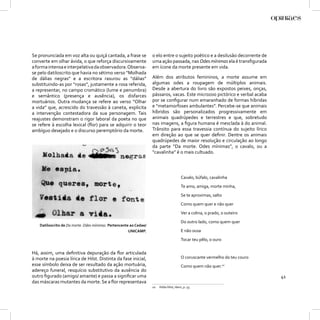
![Rubro mandala para um perfil”13), identificam-se, no O devir em questão se constitui em vias de mão dupla
bloco dos 40 poemas de “Da morte. Odes mínimas”, os entre eu-lírico e Morte na poesia de Hilst. A própria
duplos e suas relações disparados por meio do ato de metáfora-conceito “Dorso mutante” – verso da ode
amar. Proveniente da lírica arcaica, amar é conhecer, III – direciona-se para o trânsito de máscaras a serem
simbolizado pela máscara feminina e animal, mas (re)modeladas e transfiguradas tal qual a enumeração
também há certo “saber da morte” como enfrentamento deleuziana suscita. Na dimensão do jogo apropriativo
poético eclodido a partir de um jogo duplo entre os entre significante e significação mortuária, nota-
envolvidos. se certo processo de metamorfose num mesmo
poema. A partir dos rótulos de natureza mais fixa que
Os moldes da morte analisados anteriormente servem arrolamos (feminino e animal), o eu-póetico embaralha,
de eixo metodológico, “abre-alas” para o conjunto de redimensiona as vestimentas supostamente definidas ao
alegorias móveis e mutantes que se segue. Ao se pensar estatuto de máscaras provisórias. No campo do desejo,
nas esferas figurativas mais protuberantes, o feminino a própria “cavalinha” adquire outros travestimentos:
e o animal, dentro da multiplicidade performativa de
Da morte. Odes mínimas, o conceito de devir, de Gilles
Os cascos enfaixados
Deleuze, oferece subsídios para se analisar as mutações
coexistentes entre essas duas matrizes simbólicas. Para que eu não ouça
Para Deleuze, escrever não é impor uma forma a uma Teu duro trote.
matéria vivida, mas, ao contrário, esse ato está do lado É assim, cavalinha
do inacabamento. E o devir assinala essa transmutação,
num processo infinito, trâmite gerador de um devir- Que me virás buscar?
mulher, devir-animal ou vegetal, devir-molécula, e até
Ou porque te pensei
um devir-imperceptível. “Devir não é atingir uma forma
(identificação, imitação, mimese), mas encontrar a zona Severa e silenciosa
de indiscernibilidade ou de indiferenciação [...] O devir
Virás criança
está sempre ‘entre’ e no ‘meio’”14. Segundo o filósofo,
não há um processo mimético, transfusão representativa Num estilhaço de louças?
entre os meios, pois não se imita um animal ou uma
planta, mas este trabalho origina-se de “linhas de fuga”, Amante
na medida em que, no processo da escrita, animal, planta Porque te desprezei?
e homem são, de forma intercambiada e concomitante,
adulterados pela palavra poética. “É, antes, um encontro Ou com ares de rei
entre dois reinos, um curto-circuito, uma captura de Porque te fiz rainha?16
código onde cada um se desterritorializa”15.
Pode-se pensar na progressão desse trânsito de
disfarces duplos: prisão/ liberdade, repulsa/ desejo,
saber/ conhecer, homem/ animal, homem/ planta como
13 Ibidem, 97.
43
14 Gilles Deleuze, Crítica e clínica, p.11
15 Gilles Deleuze; Claire Parner, Diálogos, p. 36. 16 Hilda Hilst, Op. Cit., p. 41.](https://image.slidesharecdn.com/opinic3a3es-nc2b012-120706161833-phpapp02/85/Revista-Opiniaes-n-1-43-320.jpg)
![construído (idade e número de textos) aparece cavalinha, Nula, Palavra viva, Pequenina, Poesia, Praia,
inferencialmente na ode VIII: Prisma, Púrpura, Riso, Rosto de ninguém, Sonido, Sorte,
Tempo, Torpe, Túrgida-mínima, Unguento, Velhíssima-
[...] Pequenina, Ventura. Esses termos coletados compõem
um dicionário onomástico com verbetes provisórios para
Linhos, cal tua cara a morte, configurados enquanto máscaras mutantes
Lenta tua casa assumidas ao longo dos poemas.
Segundo os dicionários, a palavra “inventário” designa
a listagem enumerativa e descrição sistemática de bens
Nova crescendo agora patrimoniais deixados por um indivíduo à posteridade.
Nos meus cinquenta. Em geral, é material de consulta e parte constituinte de
arquivos encontrados em museus, coleções particulares
E madeirames e telhas e acervos de personalidades públicas. No entanto,
E escadas, tuas rijezas (HILST, 1998, p.39) se pensado a partir do radical latino inventum, o
termo apresenta-se paradoxal por abarcar a precisão,
mapeamento, agrupamento totalizador e, ao mesmo
Além da concentração de um tema específico nas tempo, em seu cerne etimológico, a dimensão inventiva,
obras poéticas de Hilst, compreendidas entre 1974- imaginária.
1995, Edson da Costa Duarte ressalta a importância do
critério organizacional da escritora, pois “um núcleo Tal formato possibilita certa comparação com o livro
temático que toma várias nuances nos poemas serve de analisado, pois há o trabalho rigoroso de Hilst em
espinha dorsal, de viga mestra para o desenvolvimento catalogar impressões poéticas acerca da morte, em
das reflexões da poeta”29. Numa tentativa de orquestrar enumerar os poemas e compor uma coleção, além
blocos temáticos “amor”, “erotismo”, “morte” e seus da demarcação de uma tríplice estrutural das partes
desdobramentos, a autora os agrupou em títulos e “Da morte. Odes mínimas”, “Tempo-Morte” e “À tua
subtítulos que fazem alusão parafrásica a tratados frente. Em vaidade” que podem ser lidas como séries.
filosóficos, Do desejo, “Da noite”, “Da razão”, “Da Concomitantemente, existe o trabalho do sujeito
proporção”, “Da fantasia”, Do amor e, parodisticamente, poético em nomear a morte, enumerar, classificar
Da morte. Odes mínimas. tarefas, listar facetas fixas e máscaras mortuárias
provisórias. Ademais, os “bens” aqui são compostos por
Como ocorre com os nomes de Deus e dos órgãos adjetivos afetuosos e familiares, “amantíssima” e “Minha
genitais dentro do acervo literário de Hilst, a morte irmã”, que projetam um conceito metafórico inicial
também receberá nomenclaturas plurais: Altura, de disseminação da “boa morte”, de morte captada
Amada, Amantíssima, Amiga, Búfalo, Calha, Candeia, pelo seu avesso. Porém, conforme a própria palavra
Cavalinha, Cavalo, Corça, Corpo de ar e marfim, Dorso inventário duplamente explicita, há algo que escapa da
mutante, Duna, Esquiva, Feixe de flautas, Flanco de objetividade taxonômica pela falha classificatória:
acácias, Fogo, Fulva, Insana, Palha, Palma, Máscara
tripla, Menina-Morte, Minha irmã, Morte, Nada, Negra
Como se tu coubesses
48
Na crista
29 Edson da Costa Duarte, Hilda Hilst: economias estéticas, p. 17.](https://image.slidesharecdn.com/opinic3a3es-nc2b012-120706161833-phpapp02/85/Revista-Opiniaes-n-1-48-320.jpg)
![Abstract com Guimarães Rosa, estou escrevendo sobre pessoas
empilhadas na cidade enquanto os tecnocratas afiam o
Essay focused on the war started by Zé Bebelo in Grande arame farpado. [...] Não dá mais para Diadorim”3.
sertão: veredas, whose cause is founded on an idealized
comprehension of modernity. According to this Tal negação denuncia o desgaste de uma vasta tradição
conception, the redemption of the sertanejos’ miserable literária que, abarcando “os negrinhos do pastoreio, os
condition would only be possible if a revolutionary action guaranis, os sertões da vida”4, pretendia sintetizar, de
could supplant the jagunços’ power through republican maneira ufana ou crítica, mas em todo caso hegemônica,
order. The reverse of this social-political view finds a identidade nacional. Como se fosse possível “falar
in Rubem Fonseca’s short stories “Intestino grosso” em cultura brasileira, assim, no singular, como se
and “O Cobrador” some examples of demystification existisse uma unidade prévia que aglutinasse todas as
of a utopian modernity and of a violent strategy of manifestações materiais e espirituais do povo brasileiro.
social inclusion in the universe of consumption. Such Mas é claro que uma tal unidade ou uniformidade parece
contraposition reiterates a perception of a future that is não existir”5.
no longer how it used to be.
A reação de Rubem Fonseca às diversas convenções
que, em estilos variados, visavam a estabelecer um
Keywords: conceito de literatura nacional, lastreado pela noção de
Grande sertão: veredas, “Intestino grosso”, “O Cobrador”, identidade acima referida, se manifesta pela assimilação
revolution, utopia, social inequality. do espaço urbano em sua prosa, “não apenas como
cenário ou ambiente, mas como condição para a própria
Querer o bem com demais força, criação literária”6. Espaço resultante de um processo de
de incerto jeito, pode já estar sendo se querendo urbanização e industrialização que transformou grande
o mal, por principiar. parte das antigas populações rurais em uma massa
de excluídos, cujas tradições culturais continuam a se
Guimarães Rosa desmanchar no ar.
Introdução Essa ruptura com o conceito uno de literatura nacional
Em “Intestino grosso”, conto que encerra a coletânea apresenta ainda uma visão distópica da modernidade,
Feliz ano novo (1975), Rubem Fonseca cria um alter ego, incongruente, por exemplo, à idealização elaborada por
a personagem autora de um livro homônimo ao conto, Zé Bebelo em Grande sertão: veredas – do qual o autor de
com o qual “faz a apologia e a defesa dos temas sobre “Intestino grosso” poderia dizer o mesmo que disse em
os quais empreendeu escrever” 2. É através da voz deste
70 seu duplo que Fonseca declara: “Eu nada tenho a ver 3 Rubem Fonseca, Contos reunidos, p. 468.
4 Rubem Fonseca, Contos reunidos, p. 461.
5 Alfredo Bosi, Dialética da colonização, p. 308.
2 Deonísio da Silva, O caso Rubem Fonseca, p. 30. 6 Alexandre Faria, Literatura de subtração, s/pág.](https://image.slidesharecdn.com/opinic3a3es-nc2b012-120706161833-phpapp02/85/Revista-Opiniaes-n-1-70-320.jpg)
![relação a Diadorim. Sob a ótica bebeliana, a modernidade mas silenciada, do que existe. Pertence à época pelo
é considerada um período histórico de inigualável modo como se aparta dela”9.
potencial de promoção da cidadania. Modernizar o
sertão equivaleria, segundo a personagem, a racionalizar Em contrapartida, na perspectiva do alter ego de
a vida social mediante o desenvolvimento industrial e a Rubem Fonseca, encontramos um discurso sobre a
difusão do conhecimento institucionalizado. modernização marcadamente negativo, em que se
reconhece um
Para realizar tal projeto, Bebelo deflagra uma guerra
contra o sistema jagunço que assola o norte de Minas opressivo e decadente processo de urbanização
Gerais, o sul da Bahia e o oeste de Goiás. De acordo com implementado durante a ditadura militar;
a ideologia por ele apregoada, em comícios políticos na opressivo por ter-se implantado através da
parceria de Riobaldo, a redenção do estado miserável força militar do autoritarismo imposto à
em que os sertanejos se encontram só seria possível nação, e decadente porque iníquo, orientado
se uma ação revolucionária suplantasse o poder dos por relações de interesse entre o poder e a
chefes jagunços pela ordem republicana. Seu objetivo é, classe dominante e se torna uma forma de
portanto, utópico, pois como diria Boaventura Santos, controle. 10
a utopia é a exploração de novas possibilidades Ao contrário das expectativas bebelianas, tal processo
e vontades humanas, por via da oposição da acentuou as desigualdades sócio-econômicas que
imaginação à necessidade do que existe, só se arrastam pela História do Brasil desde o período
porque existe, em nome de algo radicalmente colonial. E enquanto as possibilidades de conciliação dos
melhor que a humanidade tem direito de antagonismos sociais parecem se tornar cada vez mais
desejar e por que merece a pena lutar. 7 ilusórias, alguns dos marginalizados por este processo
decidem não se resignar, reagindo violentamente. O
Ao justificar-se “dizendo que, depois, estável que narrador-protagonista do conto “O cobrador” é um caso
abolisse o jaguncismo, e deputado fosse, então reluzia emblemático e serve como um interessante contraponto
perfeito o Norte, botando pontes, baseando fábricas, a Zé Bebelo, devido à dissimulação com a qual justifica
remediando a saúde de todos, preenchendo a pobreza, sua reação violenta à exclusão do consumismo
estreando mil escolas”8, Zé Bebelo demonstra como, capitalista, fingindo lutar por um mundo melhor. Zé
“por um lado, [a utopia] é uma chamada de atenção Bebelo e o Cobrador são, portanto, os objetos de estudo
para o que não existe como (contra)parte integrante, centrais deste trabalho, que passa então a examiná-los
mais detidamente, a partir do primeiro.
71
7 Boaventura de Souza Santos, Pela mão de Alice, p. 323. 9 Boaventura de Souza Santos, Pela mão de Alice, p. 323.
8 João Guimarães Rosa. Grande sertão: veredas, p. 119. 10 Alexandre Graça Faria, O Brasil presente, p. 31.](https://image.slidesharecdn.com/opinic3a3es-nc2b012-120706161833-phpapp02/85/Revista-Opiniaes-n-1-71-320.jpg)
![O mal que há no Bem arbitrária do mandonismo local e à afirmação
dos poderes do Estado; no econômico-
Ao deflagrar a guerra contra o sistema jagunço e os administrativo, defendia a extensão da
costumes sertanejos pautados pela moral da honra e da ação governamental para o interior, com a
vingança, Zé Bebelo pretende instaurar no sertão uma devida promoção do progresso material; e no
sociabilidade regida pelos paradigmas positivistas da ideológico-cultural, pregava a afirmação de
ordem e do progresso. Para levar a cabo seu projeto, ele uma identidade nacional, de modo a superpô-
conta de início com os préstimos retóricos de Riobaldo, la às solidariedades locais.12
que deveriam legitimar seus atos violentos. Tem a
seu lado então alguém que conhece empiricamente O sistema de poder desse mandonismo local, cujo
a crueldade dos hábitos jagunços e que, apesar de conceito historiográfico pertinente é o de coronelismo,
posteriormente lutar a favor deles, não se exime da é assim descrito pela personagem Selorico Mendes, em
análise crítica de um comportamento tão destrutivo: tom saudosista:
A gente devia mesmo de reprovar os usos de — “Ah, a vida vera é outra, do cidadão do sertão.
bando em armas invadir cidades, arrasar o Política! Tudo política, e potentes chefias. A
comércio, saquear na sebaça, barrear com pena, que aqui já é terra avinda concorde,
estrumes humanos as paredes da casa do juiz- roncice de paz, e sou homem particular. Mas,
de-direito, escramuçar o promotor amontado adiante, por aí arriba, ainda fazendeiro graúdo
à força numa má égua, de cara para trás, com se reina mandador – todos donos de agregados
lata amarrada na cauda, e ainda a cambada valentes, turmas de cabras do trabuco e na
dando morras e aí soltando os foguetes! Até carabina escopetada! [...]” 13
não arrombavam pipas de cachaça diante de
igreja, ou isso de se expor padre sacerdote Com base na passagem acima, Roncari distingue
nu no olho da rua, e ofender as donzelas e as os sistemas em conflito: a velha ordem jagunça e a
famílias, gozar senhoras casadas, por muitos moderna lei republicana, cujo choque produziu um
homens, o marido obrigado a ver? 11
aparente absurdo ou paradoxo: “cidadão do
Tal argumento serve muito bem aos propósitos de Zé sertão”. Um termo contraria o outro, pois
Bebelo, cujo discurso, segundo Roncari um remete à ordem e outro à desordem, um
à igualdade e o outro à desigualdade, um às
seguia algumas orientações: no âmbito relações horizontais e o outro às verticais, um
político, propunha o combate à ação violenta e
72
12 Luiz Roncari, O Brasil de Rosa, p. 281-2.
11 João Guimarães Rosa, Grande sertão: veredas, p. 118. 13 João Guimarães Rosa. Grande sertão: veredas, p. 100.](https://image.slidesharecdn.com/opinic3a3es-nc2b012-120706161833-phpapp02/85/Revista-Opiniaes-n-1-72-320.jpg)
![ao espaço civil e às relações urbanas e o outro A percepção da consequência destrutiva dos atos
ao espaço guerreiro e às relações agressivas. pacificadores de Zé Bebelo faz com que Riobaldo
E o absurdo continuava na frase seguinte, deserte de seu bando: “Fugi. De repente, eu vi que não
quando ele associava a política, “Tudo podia mais, me governou um desgosto. Não sei se era
política”, com a ordem dos grandes chefes, porque eu reprovava aquilo: de se ir, com tanta maioria
“potentes chefias”, “fazendeiro graúdo se reina e largueza, matando e prendendo gente, na constante
mandador”, sendo que “cada lugar é só de um brutalidade”15. O protagonista passa então para o lado
grande senhor”, o que reduzia a nada tanto a dos jagunços, mas permanece num incessante conflito
cidadania quanto a vida política. O império aí interno, incapaz de harmonizar seu comportamento e
era o da violência e das relações guerreiras. A seu posicionamento na guerra aos ideais humanistas
sua nostalgia, portanto, era a de um tempo em com os quais está de acordo – como se nota no
que os poderes dos senhores locais não tinham fragmento abaixo:
sido ainda questionados nem compartilhados
com os poderes oficiais, particularmente com eu comparava com Zé Bebelo aquele homem
os dos presidentes dos Estados, e limitados [Hermógenes]. Nessa hora, eu gostava de Zé
pelas mudanças na legislação eleitoral da Bebelo, quase como um filho deve de gostar
República Velha. Era a nostalgia idealizante do do pai. As tantas coisas me tonteavam: eu
patriarcalismo do tempo do Império, quando em claro. De repente, eu via que estava
o poder privado não sofria as restrições desejando que Zé Bebelo vencesse, porque
republicanas... 14 era ele quem estava com a razão. Zé Bebelo
devia de vir, forte viesse: liquidar mesmo, a
Em luta contra as desigualdades político-sociais da rás, com o inferno da jagunçada! E eu estava
ordem patriarcal, Zé Bebelo pretende instituir um ali, cumprindo meu ajuste, por fora, com todo
modelo de Estado que aproxime o sertão do ideal rigor; mas estava tudo traindo, traidor, no cabo
moderno de civilização ocidental. Seu método, no do meu coração.
entanto, é recriminado pelo narrador da história, que
põe em xeque o caráter justo e igualitário do novo Tal comparação é a justa medida do conflito ideológico
regime; afinal, Bebelo utilizava meios muito próximos deste narrador. Conforme Roncari, Hermógenes e Zé
dos quais combatia para poder civilizar aquele território. Bebelo representam respectivamente o mal absoluto e
Mas sob a sua ótica, se a república é um sistema mais o bem possível. Quanto a “Riobaldo, que agora lutava
justo e igualitário que o coronelismo, é legítimo que seja no bando do Hermógenes contra Zé Bebelo, reconhecia
imposta com o uso da violência. mais valor e medida no inimigo, como se a sua força
73
14 Luiz Roncari, O Brasil de Rosa, p. 73-74. 15 João Guimarães Rosa, Grande sertão: veredas, p. 123.](https://image.slidesharecdn.com/opinic3a3es-nc2b012-120706161833-phpapp02/85/Revista-Opiniaes-n-1-73-320.jpg)
![guerreira tivesse algum [...] sentido de justiça”16. A quanto Rosa e Fonseca revela a permanência de uma
contradição constitutiva da personagem pode ser imagem do Brasil que, em última instância, permite-nos
interpretada como metáfora da impossibilidade de dizer que “o futuro já não é o que era” – usando uma
uma síntese conciliadora do conflito em questão, pois expressão de autoria anônima, citada por Boaventura
o projeto de modernidade defendido por Bebelo não Santos, segundo o qual
consegue se concretizar superando dialeticamente a sua
antítese, cuja personificação encontra em Hermógenes o futuro prometido pela modernidade não
“a própria encarnação da desmedida [...] do poder de tem, de facto, futuro. Descrê dele, vencida
violência e da força descontrolada da natureza”17. pelos desafios, a maioria dos povos da periferia
do sistema mundial, porque em nome dele
Esse “embate entre civilização e barbárie, ordem
negligenciaram ou recusaram outros futuros,
e desordem, instituição e costume, urbanidade e
quiçá menos brilhantes e mais próximos do
violência, moderno e arcaico” é considerado por Luiz
seu passado, mas que ao menos asseguravam
Roncari “o verdadeiro tema geral”18 de Grande sertão:
a subsistência comunitária e uma relação
veredas. Consideramos que tal embate não se resolve
equilibrada com a natureza, que agora se lhes
ao término da narrativa pelo fato de, mesmo depois de
deparam tão precárias. 20
terminada a guerra jagunça, o sertão não deixar de ser
um lugar “onde criminoso vive seu cristo-jesus, arredado
do arrocho de autoridade”19. A guerra liderada por A citação nos remete à promessa de Zé Bebelo de
Bebelo, justa sob o olhar de Riobaldo, não atingiu seus civilizar o sertão. Contudo, como esclarece Willi Bolle,
propósitos revolucionários de promoção da cidadania e “os discursos de Zé Bebelo são a alegoria de um Brasil
das liberdades democráticas. Ao fim e ao cabo, limitou- retórico, eternamente projetado para o futuro.” 21
se a dar continuidade à belicosidade sangrenta que,
Ao analisar comparativamente Grande sertão: veredas e
longe de se restringir a área dominada pela jagunçagem,
Os sertões, Bolle argumenta que Rosa
manifesta-se também onde o Estado se faz presente
institucionalmente.
recupera o desenho desse Brasil recalcado, que
Euclides e os adeptos do desenvolvimentismo,
Uma imagem de Brasil permanece com sua mítica fé no progresso, fazem de
conta que se apagará – quando as evidências
Tal belicosidade não se encontra reprimida na cidade
mostram o contrário. Por ironia da história, a
moderna evocada pela prosa fonsequiana. A presença
fisionomia de Canudos, a despeito de ela ter
desse elemento em obras de escritores tão antagônicos
tido suas 5.200 casas totalmente arrasadas, iria
74 16
17
Luiz Roncari, O Brasil de Rosa, p. 287.
Idem, Ibidem, p. 286. 20 Boaventura de Souza Santos, Pela mão de Alice, p. 322.
18 Idem, Ibidem, p. 263. 21 Willi Bolle, In: Angélica Madeira e Mariza Veloso (org.). Descobertas do
19 João Guimarães Rosa. Grande sertão: veredas, p. 5. Brasil, p. 189.](https://image.slidesharecdn.com/opinic3a3es-nc2b012-120706161833-phpapp02/85/Revista-Opiniaes-n-1-74-320.jpg)
![se reproduzir [...] no traçado dos “polipeiros do metrô são encostadas na parede na hora
humanos” que são as centenas ou milhares de do expediente, e somente à noite o barraco de
favelas do Brasil dos dias atuais. 22 Marcelo, e também os barracos de papelão da
família Gonçalves são reconstruídos para que
Sua leitura apresenta uma constatação próxima à de Marcelo, Ana Paula e Marcelinha e os doze
Boaventura Santos, segundo a qual “apesar de algumas membros da família entrem neles para dormir.
ideias utópicas serem eventualmente realizadas, não é Mas hoje é sábado, no sábado e no domingo
da natureza da utopia ser realizada. Pelo contrário, a não há expediente no Banco Mercantil do
utopia é a metáfora de uma hipercarência formulada ao Brasil, e o barraco de Marcelo e Ana Paula,
nível a que não pode ser satisfeita”23. No caso em tela, uma caixa de papelão usada como embalagem
conforme a comparação feita por Bolle entre Canudos de uma geladeira grande, não foi desarmado,
e as favelas das grandes cidades contemporâneas, e Ana Paula goza desse conforto. 24
a hipercarência que Zé Bebelo almejava satisfazer
continua a se perpetuar no Brasil. Do sertão rosiano às O excerto evoca uma paisagem comum às metrópoles
ruas da metrópole fonsequiana, ou desde a República atuais, reiterando a constatação de que a utopia do
Velha até os dias atuais, a hipercarência que atinge progresso técnico, como meio de superação daquele
a maior parte da população, privando-a tanto dos Brasil recalcado, foi desmitificada pela história. Nas
bens de consumo quanto dos direitos civis, nunca foi palavras deAlexandre Faria: “Essas cidades distanciaram-
satisfatoriamente sanada. se de seu caráter original: de moderno espaço destinado
ao convívio harmônico com o outro, ao encontro e à
Um conto emblemático a esse respeito é “A arte de troca, tornaram-se sepulcro da própria utopia, palco
andar nas ruas do Rio de Janeiro”, publicado em 1992 de distopias a que o homem contemporâneo busca
no volume Romance negro e outras histórias, do qual se ajustar”. Referindo-se, neste caso, à distopia como
retiramos a seguinte passagem: “negação de qualquer possibilidade utópica”, o crítico
recorre à etimologia das palavras cidade e urbe para
Ana Paula pôde armar de dia o pequeno barraco demonstrar o seguinte paradoxo:
de papelão em que vive com o marido e a filha
sob a marquise do Banco Mercantil do Brasil. A
Através da palavra cidade, definimos
tábua que serve de parede, de um metro e meio
indistintamente tanto o espaço territorial
de altura, o lado mais alto do barraco, foi tirada
urbanamente constituído, em oposição ao
de uma construção abandonada do metrô. Nos
campo, quanto o espaço social demarcado pela
dias úteis o barraco fica desarmado, as grandes
participação civil dos habitantes. Daí, temos
folhas de papelão e a tábua tirada do buraco
em latim, respectivamente, urbs e civitas.
75
22 Idem, Ibidem, p. 175.
23 Boaventura de Souza Santos, Pela mão de Alice, p. 324. 24 Rubem Fonseca, Contos reunidos, p. 611.](https://image.slidesharecdn.com/opinic3a3es-nc2b012-120706161833-phpapp02/85/Revista-Opiniaes-n-1-75-320.jpg)
![A urbe contemporânea, finalmente, é palco para restaurar a ordem convencional da sociedade,
da transfiguração de ideais civis coletivos. A mesmo porque tal ordem sequer foi alterada. Tampouco
cidade (civitas) agoniza e morre na urbe. 25 se trata de uma ação revolucionária, com o objetivo de
transformar as estruturas políticas, econômicas e sociais
Ao invés de preencher a pobreza, democratizando o em vigência. O Cobrador é um entre tantos outros
bem-estar social, a industrialização e a urbanização personagens fonsequianos que não pretendem “mudar
perpetuaram (se não ampliaram) as desigualdades sócio- o mundo, mas serem incluídos no universo do consumo
econômicas do país. Àqueles que foram marginalizados e como o consumo é uma atividade individual, a luta
por este processo não restam muitas alternativas além que se desencadeia não é coletiva é de indivíduo contra
de uma resignação conformista, como no caso da família indivíduo” – como bem observou Vera Figueiredo27.
Gonçalves, ou de uma reação violenta, como é o caso do
Cobrador, que será examinado a seguir. Assim, seus alvos individuais são selecionados por
uma classificação maniqueísta da sociedade, dividida
entre aqueles com os quais se identifica e os outros que
Um falso revolucionário
executa. São poupados de seus ataques pessoas como
O protagonista do conto “O cobrador” (publicado em “o crioulo [que] tem poucos dentes, dois ou três, tortos
1979, no livro homônimo) considera-se lesado pela e escuros”28. Sob sua ótica, o problema dentário é uma
sociedade: “está todo mundo me devendo! Estão marca de identificação na penúria em que vive. Por
me devendo comida, buceta, cobertor, sapato, casa, outro lado, entre suas vítimas encontram-se “dentistas,
automóvel, relógio, dentes, estão me devendo”26. A comerciantes, advogados, industriais, funcionários,
listagem dessa carência material e afetiva, com pequenas médicos, executivos, essa canalha inteira”29. A
variações dos itens que a compõem, é repetida algumas personagem estabelece, deste modo, relações de
vezes ao longo da narrativa, expondo enfaticamente as identidade e alteridade com base na segregação sócio-
privações que o revoltam. O conto começa com sua ida econômica que a impele à violência.
ao dentista para extrair um dente com a raiz apodrecida.
Esta sua reação a uma forma de violência primária, que
A cirurgia custar-lhe-ia quatrocentos cruzeiros, caso
é a da exclusão, adquire em seu discurso um sentido
não reagisse violentamente, dando início a uma série
falsamente revolucionário. Em suas palavras:
de atentados com os quais acredita cobrar os bens
materiais e afetivos cuja posse não usufrui.
Eu não sabia o que queria, não buscava um
Suas ações não configuram, certamente, um ato de resultado prático, meu ódio estava sendo
vingança, na acepção tradicional do termo, pois não se desperdiçado. Eu estava certo nos meus
trata de reparar dano algum. O personagem não luta impulsos, meu erro era não saber quem era
76 27 Vera Lúcia Follain de Figueiredo, Os crimes do texto, p. 43.
25 Alexandre Faria, Literatura de subtração, s/pág. 28 Rubem Fonseca, Contos reunidos, p. 502.
26 Rubem Fonseca, Contos reunidos, p. 492. 29 Idem, ibidem, p. 491.](https://image.slidesharecdn.com/opinic3a3es-nc2b012-120706161833-phpapp02/85/Revista-Opiniaes-n-1-76-320.jpg)
![o inimigo e por que era inimigo. Agora eu sei convencionalmente os que pudermos. Será o
[...]. E o meu exemplo deve ser seguido por meu último gesto romântico inconseqüente.
outros, muitos outros, só assim poderemos Escolhemos para iniciar a nova fase os
mudar o mundo.30 compristas nojentos de um supermercado da
zona sul. Serão mortos por uma bomba de alto
O Cobrador não detinha conhecimento sistematizado poder explosivo. 31
sobre luta de classes e, na verdade, suas execuções não
resultariam numa transformação infra-estrutural da A narrativa é, então, concluída sem deixar indícios de que
sociedade. Entretanto, estritamente sob o seu ponto de isso venha a resultar em algum tipo de transformação
vista, o Cobrador está convicto de que seus homicídios social. As palavras finais do Cobrador – “Vamos ao Baile
em série contribuirão para tornar o mundo mais de Natal. Não faltará cerveja, nem perus. Nem sangue.
igualitário, tal como pensava Zé Bebelo a propósito de Fecha-se um ciclo da minha vida e abre-se outro”32 –
sua guerra contra a ordem jagunça. indicam, com o verbo no futuro, que a ostentação do
luxo de uns e a reação violenta de outros não irá parar
Uma diferença significativa entre ambos, no entanto, por aí mas, sim, continuará a se expandir.
é que Bebelo agrega à sua causa uma coletividade que
apoia a luta contra o jaguncismo em nome da ordem e Diante deste morticínio anunciado cumpre ressaltar a
do progresso; o que permite entendê-lo como o líder de seguinte provocação do narrador-protagonista: “Sei
um movimento revolucionário, que é sustentado pelo que se todo fodido fizesse como eu o mundo seria
claro objetivo de transformar radicalmente a sociedade melhor e mais justo”33. Relembrando, em sentido
sertaneja e as estruturas de poder que a regem. Já o inverso, Boaventura Santos: “a utopia é a metáfora de
discurso do Cobrador não apresenta tal caráter. Sua uma hipercarência formulada ao nível a que não pode
reação é individual, contando apenas com a cumplicidade ser satisfeita”34. Trata-se, neste caso, da universalização
da companheira Ana. Além disso, seu projeto consiste do consumo de bens materiais, tanto essenciais quanto
exclusivamente na eliminação de seus inimigos, o que supérfluos, os quais formam um conjunto em que até
não atinge a infra-estrutura do sistema capitalista, mesmo relações afetivas estão inclusas: “Estão me
solidamente implantado ao redor do globo. Inclusive a devendo [...] buceta” 35; “Tão me devendo [...] namorada
mudança de escala, que modifica estrategicamente seu [e] respeito”36; “Estão me devendo uma garota de vinte
acerto de contas com o sistema, aponta tão só para uma anos, cheia de dentes e perfume.”37 A justaposição
destruição incessante: destas derivações do mesmo item a outros tipos de
Matar um por um é coisa mística e disso eu 31 Idem, ibidem, p. 504.
32 Idem, ibidem, p. 504.
me libertei. No Baile de Natal mataremos 33 Rubem Fonseca, Contos reunidos, p. 503.
34
35
Boaventura de Souza Santos, Pela mão de Alice, p. 323.
Rubem Fonseca, Contos reunidos, p. 492.
77
36 Idem, ibidem, p. 493.
30 Idem, ibidem, p. 504. 37 Idem, ibidem, p. 500.](https://image.slidesharecdn.com/opinic3a3es-nc2b012-120706161833-phpapp02/85/Revista-Opiniaes-n-1-77-320.jpg)
![produtos formula um indicativo do mercantilismo do arraigado que influi em todas as dimensões das relações
sistema que sujeita toda a dimensão humana à mera humanas.
condição de mercadoria. Daí a miséria sócio-econômica
enfrentada pelo Cobrador ter como corolário a carência Sem tomar conhecimento do problema, o personagem
afetiva, conforme se evidencia pela sua recepção a um insiste em sua cobrança, na tentativa de preencher as
comercial de uísque veiculado pela televisão. carências de sua vida. Assim, congênitas ao extermínio
de seus inimigos, as alternativas de satisfação da
O comercial difunde um estilo de vida restrito a uma carência afetiva apresentam as seguintes possibilidades:
pequena parcela da sociedade, da qual o Cobrador é prostituir-se, como fica implícito no episódio que se passa
excluído. O contraste entre a realidade em que vive e o “na casa de uma mulher que [o] apanhou na rua”40; ou
que assiste na televisão alimenta o seu ódio que, ao final então invadir um apartamento e estuprar a moradora,
do conto, é convertido para a ilusão de estender a seus atitude justificada porque “estão me devendo xarope,
pares, os “fodidos”, a possibilidade de se comportar meia, cinema, filé mignon e buceta” 41, como diz ele.
tal como o personagem da propaganda: “Ele está
vestidinho, bonitinho, todo sanforizado, abraçado com Considerando-se esse comportamento como a etapa
uma loura reluzente, e joga pedrinhas de gelo num copo incipiente do seu projeto pseudorrevolucionário,
e sorri com todos os dentes, os dentes dele são certinhos percebe-se pelo cinismo de seu discurso – mais
e são verdadeiros”38. A mulher surge em cena como mais explicitamente que nas promessas de Zé Bebelo – o lado
um item advindo do status social do garoto-propaganda, mau que há no bem; ou, como diria Michel Maffesoli,
ou seja, é uma mercadoria da qual o telespectador de
baixa renda não goza da posse, assim como o uísque e que, além ou aquém das petições de princípio
os dentes sadios. dos protagonistas do status quo, além ou
aquém das boas intenções reformistas ou
No entanto, consoante advertência de Boaventura revolucionárias, das declarações políticas ou
Santos, não se pode efetivar satisfatoriamente a morais determinando os princípios do bem,
universalização desse estilo de vida. Afinal, “não é sempre será necessário compor, negociar,
da natureza da utopia ser realizada. [Portanto, o] “agüentar” as duras realidades que, de sua
que é importante nela não é o que diz sobre o futuro, parte, têm uma relação apenas distante com
mas a arqueologia virtual do presente que a torna o bem. [...] Pois este mal negado, este mal
possível”39. Logo, a utopia formulada no imaginário do dialeticamente superável não pode deixar
Cobrador, revela emblematicamente a configuração de ressurgir de outra forma, descontrolado,
contemporânea dessa sociedade cujo valor hegemônico sorrateiramente, de maneira perversa,
assenta-se num consumismo tão profundamente invertida. 42
78 40 Rubem Fonseca, Contos reunidos, p. 494.
38 Idem, ibidem, p. 493. 41 Idem, ibidem, p. 498.
39 Boaventura de Souza Santos, Pela mão de Alice, p. 324. 42 Michel Maffesoli, A parte do diabo, p. 42.](https://image.slidesharecdn.com/opinic3a3es-nc2b012-120706161833-phpapp02/85/Revista-Opiniaes-n-1-78-320.jpg)
![Conclusão significante parece subtrair por inteiro o seu significado,
interpretando-se tal cognome através da seguinte
Retornando à análise da guerra jagunça, observamos equação: Bem – Bem = 0. Toma-se assim este jagunço
que, sob o olhar de Zé Bebelo, o sistema jagunço seria como o símbolo por excelência da anulação absoluta
o mal a ser dialeticamente superado pelo positivismo do Bem, filiando-se ao “que poderíamos chamar de
da ordem e do progresso no sertão. Entretanto, o líder paradigma do Hades [...] que tem a ver com o fim da
guerreiro não se dá conta do paradoxo inerente à sua vida, mas é também um lugar ou uma entidade que se
causa pois, em nome do bem, se iguala àquilo que ele manifesta no próprio decurso da existência”47. Mesmo
próprio combatia. Tanto que “até um apelido em si sem se dar conta disto, sem percebê-la nitidamente, Zé
se apôs: Zé Bebelo; causa que, de nome, em verdade Bebelo também encarna esta entidade, como fica claro
era José Rebelo Adro Antunes”43. O objetivo disto era pela cognominação que o torna familiar a Joãozinho
causar uma impressão de equivalência guerreira ao Bem-Bem.
“único homem-jagunço que [ele] podia acatar”44, o
qual estaria supostamente acima dele em termos de Segundo esta linha de raciocínio, o Cobrador pode ser
hierarquia militar: Joãozinho Bem-Bem – personagem considerado um híbrido dessas duas personagens, pois
recorrente no universo rosiano, morto em duelo com seu comportamento, dentro dos parâmetros da cultura
Augusto Matraga45. Esta cognominação reflete aquilo ocidental, abriga concomitantemente a anulação total
que escapa à percepção de Zé Bebelo: o fato de que a do Bem e a solidariedade com que trata a incapacitada
violência que tanto pretendia recalcar consiste exata Dona Clotilde, proprietária do sobrado onde mora.
e contraditoriamente em seu instrumento repressivo, Demonstra-se também misericordioso com uma
configurando assim uma espécie de sistema de cliente, poupando-a de morte por esganação porque
retroalimentação no qual as forças de ação e repressão ela está conformada com a sua condição marginalizada.
mantêm a violência constante, “reconhecendo como Todavia, dois episódios adiante, estupra uma mulher
equivalentes essas duas entidades, bem e mal” 46, ameaçando-a de morte. A ambiguidade demonstra-se
respectivamente representadas por Zé Bebelo e assim algo constante, inerente à personagem. Por mais
Joãozinho Bem-Bem. Há de se notar como a própria que ao longo da narrativa predomine o seu lado maléfico,
construção do segundo personagem é um indicativo em razão dos diversos atentados que o definem como
desta ambiguidade: um dos jagunços mais temidos o Cobrador, todo o seu potencial destrutivo, de acordo
do sertão carrega em si o nome do Bem e, ainda por com a sua percepção dos fatos, é algo canalizado para a
cima, duplicado. Esta duplicação, curiosamente, é construção de um mundo mais justo e igualitário.
composta por hífen, sinal gráfico de subtração em
termos aritméticos. Sob este viés, a multiplicação do Assim, o Cobrador revela com muito mais nitidez seu
lado Joãozinho Bem-Bem, que Zé Bebelo, em nome da
43 João Guimarães Rosa. Grande sertão: veredas, p. 118. ordem e do progresso, esforçou-se tanto para recalcar; 79
44 Idem, ibidem, p. 118.
45 Idem, Sagarana, p. 369.
46 Michel Maffesoli, A parte do diabo, p. 41. 47 Idem, ibidem, p. 41.](https://image.slidesharecdn.com/opinic3a3es-nc2b012-120706161833-phpapp02/85/Revista-Opiniaes-n-1-79-320.jpg)
![ou melhor, o lado que este não reconhece como Em direções contrárias, Rosa e Fonseca estruturam suas
sendo parte integrante e intransferível da forma de obras sobre paradigmas claramente distintos, que os
sociabilidade que almejou estender até o sertão. Talvez separam entre a elaboração da brasilidade e a evocação
porque não soubesse que o progresso ao qual se referia de uma identidade urbana. No entanto, há uma área
em seus discursos se consolidaria segundo as regras nebulosa nesta fronteira na qual se confundem alguns
do capitalismo e enquanto tal, “a modernidade é um componentes de tais paradigmas. Sob as divergências
projeto incompleto. A ciência e o progresso, a liberdade ideológicas destes autores, seus textos revelam
e a igualdade, a racionalidade e a autonomia só podem certas semelhanças no que tange, em linhas gerais, à
ser plenamente cumpridas para além do capitalismo, desigualdade sócio-econômica brasileira e à percepção
e todo o projeto político”48 de Zé Bebelo, no caso de que a modernização técnica foi executada neste país
estudado, não tencionava suplantar tal sistema. à revelia de valores democráticos e republicanos e à
custa de uma constante brutalidade.
Tanto que a genealogia de uma das vítimas do Cobrador
é familiar àquela dos poderosos latifundiários que
combateu durante a guerra: “A moça era filha de um Agradecimentos
desses putos que enriquecem em Sergipe ou Piauí, A Gabriela Ruggiero Nor, que revisou o abstract deste
roubando os paus-de-arara, e depois vêm para o Rio”49 trabalho.
tal qual um personagem do conto “Mandrake” (também
publicado em O cobrador), chamado Cavalcante Méier:
“fazendeiro em São Paulo e no Norte, exportador de
café, açúcar e soja, suplente de senador por Alagoas,
um homem rico [com] serviços prestados à revolução”50.
Onde se lê “revolução” – leia-se golpe militar de 1964.
Pelo visto, o poder oligárquico que Zé Bebelo falhou em
extinguir adaptou-se à modernidade, disseminando-
se por todo o país com uma eficiência muito maior do
que a igualdade prometida aos sertanejos; revelando
a exclusão social como uma constante histórica que
perpassa diferentes sistemas políticos no Brasil e que
está alojada no âmago das manifestações de violência
impulsionadas por um anseio de superação da pobreza,
seja ele revolucionário ou não.
80 48 Boaventura de Souza Santos, Pela mão de Alice, p. 23.
49 Rubem Fonseca, Contos reunidos, p. 499.
50 Idem, ibidem, p. 525.](https://image.slidesharecdn.com/opinic3a3es-nc2b012-120706161833-phpapp02/85/Revista-Opiniaes-n-1-80-320.jpg)
![que, na maioria dos casos, leva o leitor a uma profunda O narrador fala a partir do espaço definido no título do
reflexão. texto e descreve os bichos à medida que os vê, como
indica o uso do verbo no presente: “As focas beijam-
Uma das descrições da raposa se reduz apenas à frase: se inundadamente” (p. 93) ou no pretérito perfeito,
“A espinha da raposa é uma espécie de serpente”. O indicando algo que acabara de acontecer: “O porco-
narrador utiliza-se da analogia com outro animal para espinho: espalitou-se” (p. 92). A passagem do tempo
descrever um detalhe da anatomia da raposa, e por aparece indicada no uso de marcadores temporais:
extensão, a raposa em si. Em outro exemplo, na procura “Elefante: há pouco, a ponta da tromba era um polegar;
pela síntese máxima, ele lança mão de metáforas agora virou dedo mindinho” (p. 92). Já o deslocamento
extremamente encurtadas e descreve três animais espacial é sugerido pela sucessão de animais, como
apenas com advérbios: “O dromedário apesar-de. O se o narrador se deslocasse de jaula em jaula, pela a
camelo, além-de. A girafa, sobre-tudo”6. referência a lugares específicos dentro do zoológico,
de onde determinados animais são observados: “No
Em alguns dos textos, as descrições curtas dão lugar a
paddock das girafas”, “Ilha dos macacos”, “No grande
parágrafos mais longos, em que a síntese é substituída
cercado e lago das pernaltas”, e pela presença de
pela descrição detalhista e estruturação narrativa:
outros visitantes: “meninos atiram-lhe [ao crocodilo]
moedinhas” (p. 278). É através dessas marcas que se
O que como espelho reluziu foi a nuca, cria a impressão de que os textos são simples anotações
sol’oleosa, de uma ariranha, dado o bufo rápido recolhidas em um dia de lazer.
– suflo e espirro – a bafo, com que toda bem
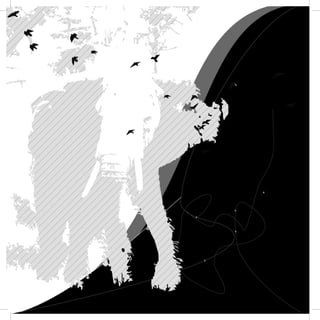
escorrida, ela aponta à tona. São duas, em sua Durante seu passeio, o narrador oferece as imagens
piscina: a outra, com fome, só zangadíssima, que produz à maneira de um fotógrafo. Sua tarefa é
já escorrega, de brinquedo, e geme curto, exercitar a competência à qual o leitor não tem acesso:
chorejo pueril, antes de pular também na água, ver os animais nas jaulas. Por isso ele deve, na falta da
depondo-se (p. 130). câmera fotográfica e apenas através da palavra, criar
efeitos para que o leitor reconstrua essas imagens em
A estrutura fragmentada dos textos em muito faz sua mente. A palavra é o único material que resta ao
referência à organização do álbum Zoos, que apresenta escritor, por isso no título do livro ele presta a reverência:
os recortes de jornais colados em suas páginas. Da Ave, palavra.
mesma forma, os “Zoo” aparentam ser uma colagem
de impressões recolhidas por alguém durante um Da mesma forma que o olho do fotógrafo recorta e filtra
passeio no jardim zoológico. A presença desse narrador a realidade que apresenta na foto, o narrador, através
que passeia frente às jaulas é mais explícita em alguns de sua sensibilidade poética, oferece sua visão pessoal
textos e pode ser percebida, principalmente, a partir das dos animais. Ou seja, as imagens que ele apresenta não
indicações de deslocamento espacial e temporal. são espontâneas, mas meditadas e construídas para
que surpreendam. A linguagem utilizada pelo narrador
não é um meio transparente que apenas capta as coisas
do mundo, mas dá nova forma ao próprio mundo. Essa
86 6 João Guimarães Rosa, Ave, palavra, p. 162. Mesmo não sendo a melhor
edição de Ave, Palavra, como se verá, utilizarei como referência para as
é a grande descoberta que se faz durante a leitura dos
citações a 5a. edição. A partir de agora será indicado apenas o número das textos: a linguagem aparentemente simples e os textos
páginas entre parênteses depois da citação.](https://image.slidesharecdn.com/opinic3a3es-nc2b012-120706161833-phpapp02/85/Revista-Opiniaes-n-1-86-320.jpg)
![Entremeadas por asteriscos, as descrições dos animais Outras vezes o narrador opera o inverso. Como se
estão separadas espacialmente, como se os olhos do descrevesse a partir de adivinhas, ele oferece a metáfora
narrador se deslocassem de jaula em jaula. São visitas e depois seu desvelamento: “A massa principal:
poéticas, nas quais o narrador busca a solução linguística elefante./ Um volume fechado: rinoceronte./ O amorfo
eficaz, no sentido de promover o impacto pretendido arremedado: hipopótamo” (p. 95).
sobre o leitor: o exercício de ressignificação. Tal exercício
corresponde à recomendação do escritor em carta ao Há casos em que a elipse não é apenas do verbo, mas de
seu tradutor para o alemão, Curt Meyer-Clason, para outros complementos, como em: “A pantera negra; e as
observar que todas suas frases precisam ser meditadas, estrelas?”. A comparação está subtendida: a pantera é
mesmo as que aparentam ser mais simples. negra como a noite. Se a noite tem estrelas, o narrador
pergunta onde estão as estrelas da pantera. A elipse é a
Aliás, exercício poderia ser uma boa definição para a ausência que deve ser preenchida pelo leitor.
natureza desses textos, que não podem ser chamados
nem de histórias, nem de contos, tal a diluição Se o verbo é explícito, o narrador, quando não opta pelo
da estrutura narrativa em favorecimento de uma uso do ser para indicar suas analogias: “Todo cavalo,
linguagem sintética e muito elaborada. Exercícios de perfil, é egípcio” (p. 95), dedica-se à procura do
zoológicos, para ser mais exato, nos quais o escritor “único verbo possível”, ou seja, verbos semanticamente
testa e amplia as possibilidades da língua em dar conta comprometidos com a construção da imagem do
da sua sensibilidade na observação dos animais. animal, como no caso de “o pavão arremia 9, à vezes,
como gato no amor” (p. 96); “a leoa antolha-se-nos (...)
O narrador exercita-se principalmente em dizer muito quando ela se faz estrábica, com o ultrabocejo armado”
pelo pouco, o que fica explícito pela frequência com que (p. 96); “a doninha flui – ela é só sua sombra” (p. 96); “O
recorre à elisão. A elipse do verbo é um dos recursos porco espinho: espalitou-se!” (p. 92).
mais explorados pelo escritor para construir suas
analogias: “Na rookery8: / A águia – desembainhada. / O Tais estruturas e características até aqui elencadas, e
urubu: urubudista. / As corujas de cabeças redondas: cor outras que serão ainda descritas, estão presentes nos
de piano, cor de jornal.” cinco textos, o que justifica, muitas vezes, sua análise
em conjunto, como no estudo feito por Washington
Apenas um sinal gráfico separa os animais de suas Benavides. Apesar disso, eles guardam algumas
metáforas, para serem mentalmente desenvolvidas singularidades que merecem ser destacadas. Por isso,
pelo leitor: a águia é como uma espada desembainhada, cada um deles será apresentado a seguir, com exemplos
pronta para o combate; o urubu, quando parado, imóvel, dos principais procedimentos linguísticos empregados
sugere uma imagem meditativa, como um monge nas descrições e as diferentes caracterizações do
budista; a coruja tem penas brancas e pretas como as foco narrativo. A ordem de apresentação decorre da
teclas do piano ou como as páginas do jornal. No caso sequência dada pelos organizadores de Ave, palavra,
do urubu, o efeito de síntese é conseguido também pela e não por Guimarães Rosa, uma vez que o escritor
aglutinação de dois termos, formando um neologismo. não deixou nenhuma indicação quanto a isso. Como
88 9 Arremiar: miar forte. Nilce S. Martins vê o prefixo arre- como um
intensificador comumente utilizado pelo escritor na composição de verbos,
8 Colônia de gralhas ou outros animais (rook [ingl.]: gralha-calva). como os arregritos dos corvos no “Zoo” de Hamburgo.](https://image.slidesharecdn.com/opinic3a3es-nc2b012-120706161833-phpapp02/85/Revista-Opiniaes-n-1-88-320.jpg)
![nove partes chamada Kanz ad-durar wa jāmic al-ġurar, “o incompleta, e a tenha tomado “emprestada” para
tesouro das pérolas e compêndio das auroras”. Segundo criar a história de Polifemo. Ele também cita algumas
afirma Tezcan, há também nesse livro um resumo do hipóteses, pelas quais Homero poderia ter ouvido a
conto de Depegöz, mas com algumas diferenças8. Seu história: a) talvez a tenha ouvido na própria Jônia; b) ou
livro afirma haver de alguma tribo dos oguzes que pertencia aos aliados do
rei troiano, Príamo, durante o cerco contra os gregos.
um livro chamado Oghuzname, que passa de Desta maneira, a fábula de Depegöz teria sido trazida
mão em mão entre os oguzes turcos. Nesse para a Ásia Menor no tempo de Homero11.
livro há a história de uma pessoa chamada
No entanto, Grimm acredita que a história de Polifemo
Dabakuz9, que assolou as terras dos primeiros
tenha sido inserida posteriormente.
turcos e matou seus maiores homens. Eles
dizem que ele era um homem feio e repugnante De qualquer forma, há três episódios que caracterizam
com um único olho no topo de sua cabeça. as duas histórias:
Nenhuma espada ou lança produziam efeito
sobre ele. Sua mãe era um demônio do oceano 1) O cegamento: tanto no caso de Polifemo como no
e o gorro do seu pai era feito de peles de dez de Depegöz, os ciclopes são cegados. A única diferença
carneiros, para que pudesse cobrir sua cabeça.
está no instrumento usado para cegá-los: no primeiro
caso, com uma rama de oliveira; no segundo, com um
Eles têm muitos contos bastante conhecidos
espeto de ferro (šiš).
e histórias sobre ele, as quais circulam até
hoje e são aprendidas de cor por seus homens 2) A fuga: nas duas histórias, Ulisses e Basat se agarram
sagazes, que são habilidosos no tocar do seu a um carneiro. Ademais, há a versão de matar o carneiro
alaúde [kopuz]10. e usar sua pele como disfarce.
3) O anel: um aspecto importante presente somente na
história de Depegöz e que, segundo afirma Hackman, é
2. O problema da origem parte da “forma completa” da história, estando ausente
de muitas das que ele recolheu.
A polêmica de qual seja o conto original, ou seja, ou o
conto da Odisseia, de Polifemo, ou o de Depegöz, em
O livro de Dede Korkut, começou com o investigador 2.1 Algumas hipóteses
alemão Heinrich Friederich von Diez num artigo em que Embora von Diez tenha defendido a hipótese de que
analisa cuidadosamente as duas histórias. Ele afirma Homero tenha tido uma experiência pessoal direta
que possivelmente Homero tenha ouvido a história de com a história de Depegöz, há outras hipóteses que
Depegöz por suas viagens pela Ásia, ainda que de forma sustentam que esse processo tenha sido indireto, por
meio de outra língua; a saber, o siríaco. A cidade de
8 Tezcan, Dede Korkut Oğuznameleri, p. 12.
9 Dabakuz é a forma que adquire Depegöz em árabe, visto que não há o
99
grafema “p”, nem “g” nem “e”, e tampouco “o” ou “ö”. 11 Von Diez, “Der neuentdeckte oghuzische Cyklop verglichen mit dem
10 Geoffrey Lewis, The book of Dede Korkut, p. 21. Homerischen”, p. 21-2.](https://image.slidesharecdn.com/opinic3a3es-nc2b012-120706161833-phpapp02/85/Revista-Opiniaes-n-1-99-320.jpg)
![sua aljava e as prendeu à sua cintura, cingiu sua espada O terceiro aspecto comum é a gruta, onde se
transversalmente em suas costas25. encontravam os heróis das duas histórias: “avistou de
longe uma gruta muito bonita […] entrou lá dentro”
O segundo aspecto é o ferimento do único olho: e “(Basat) com um salto, ele foi parar numa caverna,
“Quando o caipora chegou perto: ‘Bum!’ Estourou um entre carneiros. Depegöz percebeu que Basat estava na
tiro, ele deu um grito e caiu ferido. O tiro acertara em seu caverna.”29.
único olho, que tinha na testa”, e “Basat aproximou-se
do topo de sua cabeça, levantou suas pálpebras, olhou e Outro traço comum é a possessão de rebanhos de
viu que o seu olho era de fato de carne e disse: ‘Ó velhos, carneiros por parte do gigante: “Quando saía para o
ponham o espeto na fogueira, para que esquente até pasto seu gadinho de cabras e carneiros, ele exigia que a
ficar escaldante!’”26. mulher os passasse bem perto dele. O Caipora conhecia
seu gado (...)” e, no conto turco, “Ó bodes, chefes dos
É interessante notar que, apesar de ambos gigantes carneiros, passem um a um!”. Assim o fizeram, e ele
terem somente um olho, o de Depegöz é a única parte passou a mão na cabeça de cada um deles. Disse ainda:
de seu corpo que é de carne27, sendo que o resto estava “Meus queridos cordeiros de um ano, e você, minha
protegido contra tudo que pudesse feri-lo. Esta era a boa fortuna, meu bode de olhos, boca e chifre negros,
parte mais sensível de seu corpo; mas, como podemos venham e passem!”30. É curioso notar aqui o carinho que
verificar, não a parte pela qual ele pudesse ser morto. os gigantes tinham por seus rebanhos, que em português
No caso do Caipora, o próprio narrador nos diz que “só o é expresso pelo diminutivo de “gado”, “gadinho”, ao
umbigo ficava descoberto e por aqui podia ser matado”. passo que na história turca ele usa palavras afetuosas
No entanto, o cegamento dos dois gigantes é comum às como devletüm, “minha fortuna, alegria”.
duas histórias.
Outro aspecto é o engano ao gigante: “Um belo dia a
A descrição dos gigantes tem um lugar de destaque nos mulher matou um carneiro sem o Caipora perceber,
dois contos: “Então se depararam com aquela fonte tirou a pele dele, pô-la nas costas do caçador, e este
e viram uma massa disforme estendida, sua bunda ficou de quatro pés e foi passando devagarzinho. Este
indistinta de sua cabeça”28 e, logo depois, “o seu corpo é o carneiro tal, disse o Caipora, enquanto o prisioneiro
era o de um homem e tinha um único olho em sua testa”. se escapava” e “Um bode levantou-se de seu lugar e
Por sua vez, a descrição do caipora é assim: “Era um espreguiçou-se. De imediato Basat dominou esse bode,
gigante no tamanho, andava de dois pés como gente, degolou-o e o esfolou sem separar a cauda nem a cabeça
tinha o corpo todo peludo e pelos tão grandes que não e se cobriu com a pele. Então, ele se dirigiu à presença
precisava de roupa, iam quase até o chão”. de Depegöz”31.
25 “bilüginden ṭutam oæ čıqardı [...] qılıǰın ḥamāyil qušandı. Yayın
qarusına bıraqdı”
26 “Basat Depegözüŋ bašı uǰına geldi. Qapaq qaldurdı, baqdı, gördi kim 29 “Basat sıčradı, qoyun ičine maġāraya düšdi”.
gözi etdür. Eydür: ‘Mere qoǰalar, süglügi oǰaġa qoŋ, qızsun’ dedi [...] süglügi 30 “‘Mere qoyun bašları erkeč, bir bir gel geč’ dedi. Bir bir gelüb gečdi. Her
102 Depegözüŋ gözine eyle basdı kim Depegözüŋ gözi helāk oldı”
27 “gözi etdür”.
birinüŋ bašların sıġadı. ‘Toqlıǰaqlar devletüm, saqar qoč, gel geč’ dedi.”
31 “Bir qoč yerinden qalqdı, gerinüb sündi. Defcī Basat qočı basub
28 “gördiler kim bir cibret nesne yatur, bašı göti belürsiz” e “gevdesi boġazladı, derisini yüzdi. Quyruġıyıla bašını deriden ayırmadı. Ičine girdi.
ādem, depesinde bir gözi var”. Basat Depegözüŋ öŋine geldi.”](https://image.slidesharecdn.com/opinic3a3es-nc2b012-120706161833-phpapp02/85/Revista-Opiniaes-n-1-102-320.jpg)

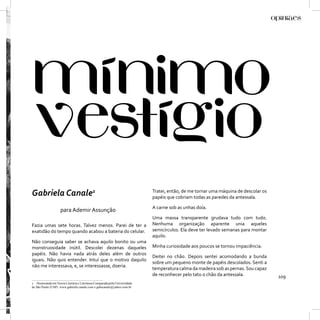
![Alívio e liberdade. O estrondo da batida da porta coroava rasgados que ocupava todo o chão. Concentrei-me
minha raiva. Coroa pesada, indesejada, mas minha. nas palmas. Quis ser eficiente. Detestava a ideia de ter
voltado, mas precisava da minha agenda de contatos do
[Desta vez eu seria preciso, combinei comigo. Entrei na
celular tanto quanto preciso de café e de sexo.]
antessala ignorando todos os cês. Ainda com as carnes
sob as unhas doloridas apalpei a floresta de papéis
111
Ilustração: Gabriela Canale](https://image.slidesharecdn.com/opinic3a3es-nc2b012-120706161833-phpapp02/85/Revista-Opiniaes-n-1-111-320.jpg)

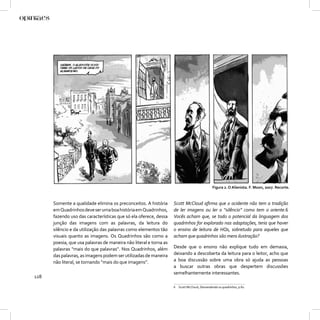
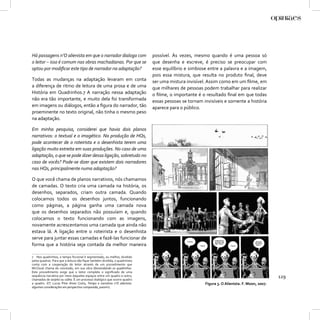
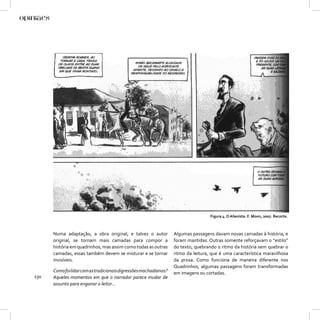
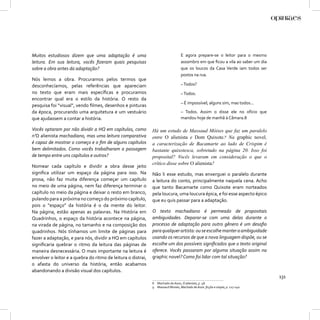
![e Alex Ross, o que estreita as ligações entre HQs, McCLOUD, S. Desvendando os quadrinhos. Tradução de Helcio
Literatura, Artes Plásticas e outras artes. Se os de Carvalho, Marisa do Nascimento Paro. São Paulo: Makron
quadrinhos, o Cinema ou outras artes que têm servido Books, 1995.
de suporte para as adaptações não são objeto de estudo
das Letras, são no mínimo dignas de atenção e formas
MOISÉS, M. “O Alienista: paródia de Dom Quixote?” In:
de contribuição para as análises literárias.
MOISÉS, M. Machado de Assis: ficção e utopia. São Paulo:
Agradecimentos: Cultrix, 2001, p.127-140.
Agradeço a Fábio Moon e a Gabriel Bá pela oportunidade
de conhecer melhor sua obra e pela participação no XII MOON, F. O Alienista / Machado de Assis: adaptação de Fábio
Encontro Mineiro dos Estudantes de Letras, em abril de Moon e Gabriel Bá. Rio de Janeiro: Agir, 2007.
2009.
_____. Biblioteca virtual [mensagem pessoal]. Mensagem
recebida por <10paezinhos@uol.com.br> em 23 jan. 2009.
Referências Bibliográficas:
RAMOS, Paulo. A leitura dos quadrinhos. São Paulo: Editora
Contexto, 2009.
ASSIS, Machado de. O Alienista e outras histórias. Coleção
Prestígio. São Paulo: Ediouro, s/d. p.17-56.
THEODOR, E. Tradução: ofício e arte. São Paulo: Editora
Cultrix, Editora da Universidade de São Paulo, 1926.
COSTA, L. P. A.; LOPES, E. C. A contribuição das histórias em
quadrinhos nas análises literárias: O alienista, de Machado
de Assis, em Graphic Novel. Relatório Final de Pesquisa de
Iniciação Científica. Universidade Federal de Viçosa, Viçosa,
MG, 2008-2009.
COSTA, L. P. A.; MELO, M. S. S. Tempo e narrativa n’O alienista:
algumas considerações em perspectiva comparada. In: EMAD –
Encontro Mineiro de Análise do Discurso. 3 ed., 2009. CD Anais
do evento. Viçosa, MG: Universalidade Federal de Viçosa,
2009.
133](https://image.slidesharecdn.com/opinic3a3es-nc2b012-120706161833-phpapp02/85/Revista-Opiniaes-n-1-133-320.jpg)