Digital Publishing
Fabricio Manzi | Consultor Adobe Systems Brasil | fabriciomanzi@gmail.com
1
2
O Cenário do
Digital
Publishing
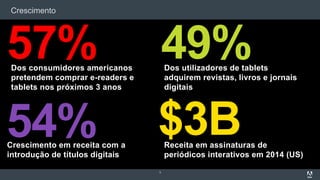
Crescimento
3
57%Dos consumidores americanos
pretendem comprar e-readers e
tablets nos próximos 3 anos
49%Dos utilizadores de tablets
adquirem revistas, livros e jornais
digitais
54%Crescimento em receita com a
introdução de títulos digitais
Receita em assinaturas de
periódicos interativos em 2014 (US)
$3B
Novas experiências de leitura
4
Um produto mais valioso
para os consumidores
Impressão,
Video,
Interatividade
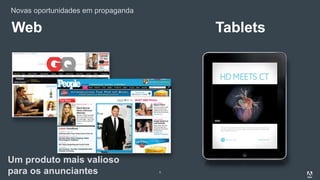
Novas oportunidades em propaganda
5
Web Tablets
Um produto mais valioso
para os anunciantes
Desafios
6
1
2
3
4
Autoração Multi-plataforma
Monetização
Propagandas atrativas
Geração imediata de negócios
7
Digital
Publishing
Suite
Clientes
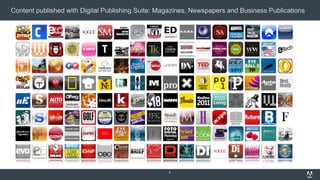
Content published with Digital Publishing Suite: Magazines, Newspapers and Business Publications
8
9
Digital
Publishing
Suite
Visão Geral
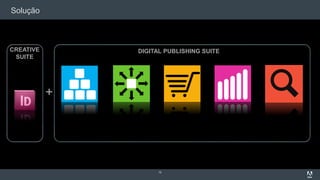
Solução
10
DIGITAL PUBLISHING SUITECREATIVE
SUITE
+
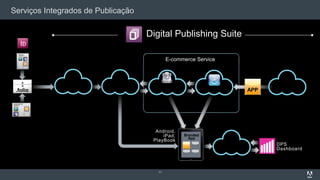
Serviços Integrados de Publicação
11
.folio
Folio Producer
Service (.folio)
Distribution
Service (.folio)
Direct
Entitlement App Store
E-commerce Service
APP
Viewer Builder
Service
Branded
App
Android,
iPad,
PlayBook
Analytics
Service
DPS
Dashboard
Digital Publishing Suite
.folio
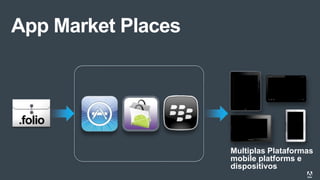
App Market Places
Multiplas Plataformas
mobile platforms e
dispositivos
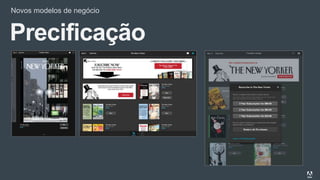
Novos modelos de negócio
Precificação
14
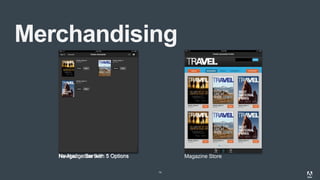
Merchandising
Magazine StoreNavigation Bar with 5 OptionsNavigation Bar with 3 OptionsNo Navigation Bar
15
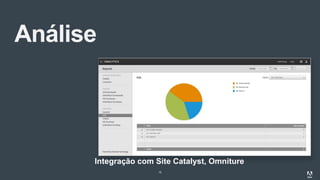
Análise
Integração com Site Catalyst, Omniture
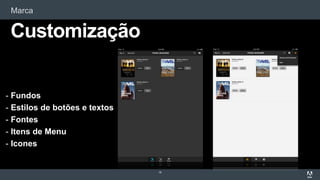
Marca
16
Customização
- Fundos
- Estilos de botões e textos
- Fontes
- Itens de Menu
- Icones
© 2011 Adobe Systems Incorporated. All Rights Reserved. Adobe Confidential.
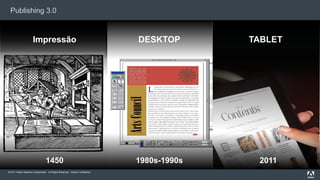
Publishing 3.0
DESKTOP
1980s-1990s
TABLET
2011
Impressão
1450
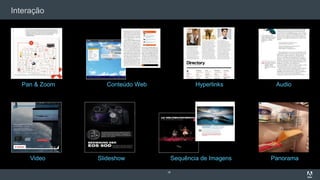
Interação
18
Video Sequência de Imagens Panorama
HyperlinksConteúdo Web
Slideshow
Pan & Zoom Audio
19
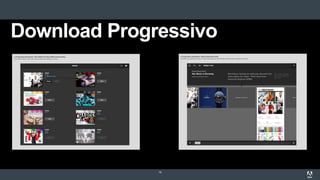
Download Progressivo
20
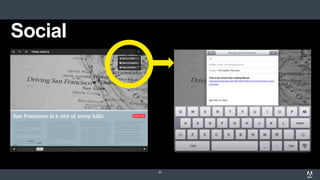
Social
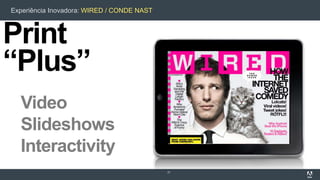
Experiência Inovadora: WIRED / CONDE NAST
21
Print
“Plus”
Video
Slideshows
Interactivity
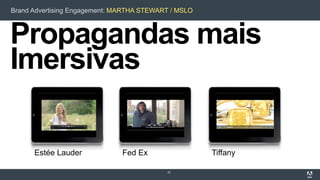
Brand Advertising Engagement: MARTHA STEWART / MSLO
Propagandas mais
Imersivas
22
Estée Lauder Fed Ex Tiffany
Digital publishing introbr

Digital publishing introbr

Notas do Editor

  • #4 Digital publishing poised for rapid growth All leading indicators point to the fact that digital publishing is poised for rapid and successful growth. With 60% of US consumers expecting to purchase an e-reader/tablet device in the next 3 years, the proliferation of device will fuel content consumption. Additionally, with reading as one of the leading uses of the devices, according to Forrester Research, publishers are well poised to collect $3 billion in subscription revenue for interactive periodicals by 2014.
  • #5  The launch of the World Wide Web was a turning point for publishers. Though publishers tried to take advantage of the Internet to build brand, and attract new audiences they weren’t able to optimize their content and transition their meticulously crafted print brands to the online world mainly through Websites. Why? Design online was homogenized and templatized by CMS systems. If you look at the websites of major brand magazines such as WIRED or GQ you can’t tell the difference between the two sites because of the template approach and therefore the brand equity of these publications is significantly compromised on the Web. The reading experience you get in print, just isn’t carried through online. The look and feel of print page as established through glossy images, unique layouts and font styling is lost on the web of today. The video and interactivity wasn’t as strong of an “entertainment experience” on the desktop because it wasn’t integrated into the editorial content and therefore existed outside of the primary reading experience. As a result, readers weren’t willing to pay for content delivered via the Web because the reading experience was not pleasing or as expected and advertisers didn’t get enough value from their brand advertising investments and moved their ad spend dollars to Search and PayPerClick advertising. The mobile revolution and the power of digital represent a chance for a DO OVER. Tablets will: Combine the best of print (with high design and sophisticated typography) with video, and interactivity into a tightly cohesive, lean back reading experience that is even beginning to challenge TV viewing as an entertainment activity.
  • #6 Just as the Web failed editorial, it failed advertising. Tablets can drive new level of ad engagement. Readers are navigating digital editions in different ways - the back cover doesn’t exist anymore. Banner advertising is a thing of the past – ignored and doesn’t allow brand advertisers to fully drive a brand experience. Digital advertising on tablet devices is fully immersive and part of the reading experience. Publisher should begin to be able to demand a premium for ad space as ad inventory grows over time. The launch of the World Wide Web was a turning point for publishers. Though publishers tried to take advantage of the Internet to build brand, and attract new audiences they weren’t able to optimize their content and transition their meticulously crafted print brands to the online world mainly through Websites. Why? Design online was homogenized and templatized by CMS systems. If you look at the websites of major brand magazines such as WIRED or GQ you can’t tell the difference between the two sites because of the template approach and therefore the brand equity of these publications is significantly compromised on the Web. The reading experience you get in print, just isn’t carried through online. The look and feel of print page as established through glossy images, unique layouts and font styling is lost on the web of today. The video and interactivity wasn’t as strong of an “entertainment experience” on the desktop because it wasn’t integrated into the editorial content and therefore existed outside of the primary reading experience. As a result, readers weren’t willing to pay for content delivered via the Web because the reading experience was not pleasing or as expected and advertisers didn’t get enough value from their brand advertising investments and moved their ad spend dollars to Search and PayPerClick advertising.
  • #7 Key trends and challenges But in achieving this growth, the industry faces some challenges. As mentioned previously, the technological landscape is different than what print publishers have become accustomed to. Not only are there multiple device platforms, resolutions and screen sizes to author content to, but publishers must also content with a variety of channels and business models in which they can monetize their content. According to PriceWaterhouseCoopers, advertising comprises majority of consumer magazine revenue in North America (53%), and a significant portion globally (38%). Therefore, publishers face challenges in attracting advertisers to this new platform and selling premium advertising inventory. Finally, the medium poses challenge and opportunity for publishers to gain insight into how content is being consumed, allowing them to fine-tune content for further optimization.
  • #9 Iconic, high value publishing brands attract audiences to digital And it’s not only quantity of titles that indicate momentum around this new type of reading experience – but quality of content also. Some of the world’s largest, iconic, and most venerated titles are choosing to engage readers with the design fidelity of print married with the interactivity of digital. These titles span a wide variety of content and publication types: WIRED magazine – highly designed monthly periodical The New Yorker – weekly production cycle that integrates flexible page layout via HTML VOGUE – launched with a “covers” app that features the magazines cover story with an innovative merchandising angle – a price point of $0.99 per issue Reader’s Digest – has the world’s largest circulation Martha Stewart Living – lifestyle content for a niche audience Bonnier – global publishing group has newspapers that publish on a daily cycle
  • #11 Introduction to Digital Publishing Suite. Talk about the benefits of the solution Integration with Creative Suite Integration with Omniture Cross platform viewers The ability to drive streamlined workflow, deeper reader engagement, monetization of content and analysis of editorial and advertising content for success on tablets
  • #12 Overview of the DPS services and how they work together to enable streamlined publishing of content.
  • #13 New distribution models changing publishing industry. This is presenting a significant challenge as publishers are facing is multi channel monetization requirements. They need to sell their content through leading apps stores as well as through direct means with support for direct entitlement. We can help publishers distribute their content across a wide number of digital stores and reach mobile devices and navigate complexity of distributing content in print, online and on device.
  • #14 Pricing experimentation is the current norm. To date, publishers have primarily sold content through single-in app purchase  changing to variety of ecommerce channels. Subscription models will fuel industry growth as readers have a convenient, recurring method to purchase content. Digital Publishing Suite supports/will support wide variety of subscription models (Apple, Android, direct entitlement) If publishers can’t have access to consumer demographic data, digital publishing will be a false dawn. Digital Publishing Suite enables publishers to take advantage of a wide range of payment models - single edition, subscription and direct entitlement. DPS also supports publishers ability to merchandise to cross sell related product offerings driving greater publisher profitability.
  • #18 Publishing 3.0 has been 550+ years in the making In the beginning, there was Gutenberg. Then, 550+ years later, after the advent of desktop publishing, we’re reaching a new dawn in publishing with the advent of tablet devices. Publishers are, in ever increasing numbers, seeking to monetize their content, deliver advertising, and engage with readers in new and exciting ways. Businesses are also seeing interest in engaging with their customers in a direct and meaningful way. Navigating the technology and business landscape is difficult, with an ever increasing number of devices, resolutions and platforms on which to deliver content. This, combined with the complexity of distribution channels, monetization methods, access to customer data, and visibility into consumption patterns pose challenges for publishers who wish to make the most of the digital publishing opportunity. Will Publishing 3.0 (tablet publishing) present itself as a false dawn for media and business publishers? Our position is no – and we’re working to make sure publishers can navigate the technological complexities of this new paradigm and continue to focus on what they do best… create compelling content that engages and entertains audiences across the globe. Will a new breed of publisher emerge, will the successful publishers of the past be the successful publishers of the future?
  • #19 Engagement is driven through interactiv e overlays that extend the editorial content. Publishers have been making use of these overlays in creative ways
  • #20 Option slide> progressive download address large file size and is controlled by both the publisher and the end reader.
  • #22  POINT OF SLIDE: Establish the value of interactivity to drive deeper reader engagement with tablet content. WIRED is showcase example. --------------------------------------------------------------- PRINT PLUS: There are a lot of compelling magazine applications built by very talent teams using Digital Publishing Suite. However, WIRED has really lead the way in terms of combining the reading experience of print with new levels of interactivity, as well as video, social media and photography to create a powerful approach to story telling in the digital world. Wired has delivered a year of issues built with DPS and as a hallmark of each issue, has made innovative use of interactive overlays to create an engaging reading experiences not only with editorial but also advertising. Interactivity: DPS allows WIRED to provide a 3D view of Mars that you couldn’t get in print. As you turn the planet around additional factoids pop up. They effectively used interactivity to supplement the Mars Invader story with additional information in a very intuitive and informative manner. Wired also recognized the growing re-socialization of the media consumption experience. Reading magazines has historically been something people do alone. But now the combination of digital access, mobility, and social networking is driving ALL forms of media from being solo activities toward being social experiences, as viewers discuss and share content via their social networks and mobile devices as well as in physical groups. Hence WIRED used the Web View overlay with support for twitter in one of their recent issues. Wired has had critical commercial success. The first issue of WIRED on iPad sold over 100,000 copies which significantly eclipsed the print sales of the same issue. Since then WIRED digital sales through the App store have averaged 37% of the print issues over the last 6 months. T <<Note: Additional comments regarding the 37% digital sales if time: This is significant and not to be under estimated given: - there is only one marketplace in which to sell content and as yet it does not support subscriptions - there are very few reading device in market - that is expected to change this year - purchasing habits on the iPad are being formed now - pricing models are being worked out by publishers >>
  • #23 POINT OF SLIDE: Establish the value of DPS to drive deeper engagement with brand advertising which will allow publishers to attract back ad investment. Martha Stewart Living is showcase example. <Notes are for background information and to address any potential questions that may come up during/after preso>> --------------------------------------------------------------- Another significant opportunity for digital magazine publisher lies in the opportunity to offer more immersive, engaging brand advertising to advertisers who need a mechanism to combat user fatigue with online banners and disruptive site takeovers.   Brand advertisers can now create engaging advertisements which leverage video, hyperlinks, audio and other interactivity to connect readers with their brands.  The result is an immersive advertising experience that is part of the reading experience – not an interruptive one. Companies are changing their focus from advertising in a medium to marketing through and with content for more positive results. Take Martha Stewart Living, for example.  Major global brands signed up to be part of the initial launch of the Boundless Beauty edition, including Estee Lauder, Fedex, Macys, Nestle, UPS, Tiffany & Co and more.   In the examples you see [on slide], readers see a highly-designed Tiffany & Co ad that looks much like a print layout – but as they explore the ad, they can click on a video to see up close the features of the jewelry , as well as learn more about Tiffany & Co products.   Other ads feature hyperlinks that open up a Web browser right within the magazine experience for a direct call to action. When the user is finished, he/she returns right back into the magazine experience.  Other ads include 360 degree rotation, slideshows and more – all with the intent to engage a user with the brand. These digital ads drive results.  In a Nielsen survey Martha Stewart Living conducted, they found that each advertiser in the digital edition saw an increase of brand awareness – some up to three or four times.  In a separate academic research study sponsored by Adobe, we found that users had a 70% increase in message involvement, positive attitude towards the brand and purchase intent when they viewed interactive ads in digital magazines versus static print ads.