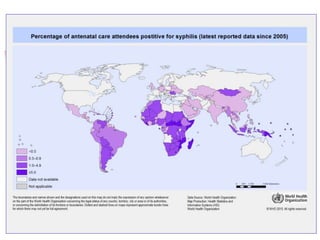
Infecções Sexualmente
Transmissíveis:
Epidemiologia e Prevenção
Fernando Bellissimo Rodrigues
UNIVERSIDADE DE SÃO PAULO
FACULDADE DE MEDICINA DE RIBEIRÃO PRETO
Cursos de Fisioterapia e Terapia Ocupacional
INTRODUÇÃO
 Definição: infceções cujo modo predominante de
transmissão é o contato sexual.
 Velha geração: sífilis, gonorréia, uretrites não-
gonocócicas, cancro mole, linfogranuloma venéreo,
tricomoníase, etc.
 Nova geração: AIDS, hepatite B, herpes genital,
infecção pelo HPV, HTLV-1 e HTLV-2, etc.
 No total, mais de 30 agentes infecciosos têm a via
sexual como forma principal de disseminação.
INTRODUÇÃO
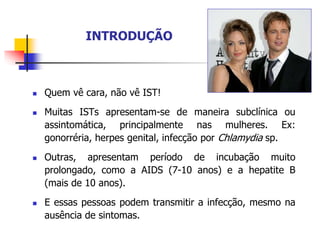
 Quem vê cara, não vê IST!
 Muitas ISTs apresentam-se de maneira subclínica ou
assintomática, principalmente nas mulheres. Ex:
gonorréria, herpes genital, infecção por Chlamydia sp.
 Outras, apresentam período de incubação muito
prolongado, como a AIDS (7-10 anos) e a hepatite B
(mais de 10 anos).
 E essas pessoas podem transmitir a infecção, mesmo na
ausência de sintomas.
INTRODUÇÃO
 Para a maioria das infecções sexualmente-
transmissíveis, as mulheres apresentam maior
prevalência que os homens.
 Evidência clínica menor.
 Vulnerabilidade biológica.
 Vulnerabilidade social e comportamental.
CONSEQUÊNCIAS DAS ISTs:
dor e desconforto
CONSEQUÊNCIAS DAS ISTs:
estigmatização das pessoas
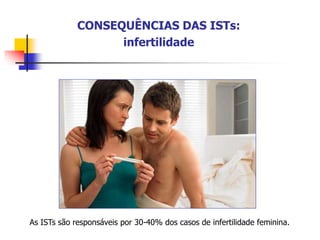
CONSEQUÊNCIAS DAS ISTs:
infertilidade
As ISTs são responsáveis por 30-40% dos casos de infertilidade feminina.
CONSEQUÊNCIAS DAS ISTs:
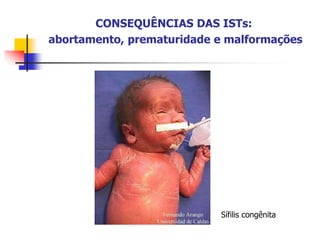
abortamento, prematuridade e malformações
Sífilis congênita
CONSEQUÊNCIAS DAS ISTs:
uma doença leva à outra
CONSEQUÊNCIAS DAS ISTs:
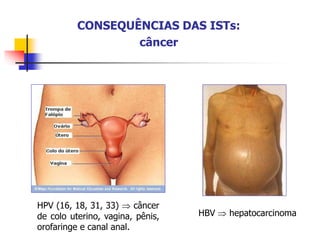
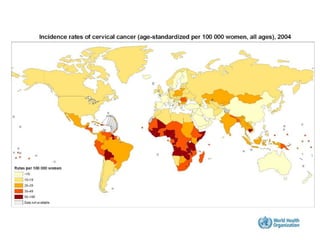
câncer
HBV  hepatocarcinoma
HPV (16, 18, 31, 33)  câncer
de colo uterino, vagina, pênis,
orofaringe e canal anal.
CONSEQUÊNCIAS DAS ISTs:
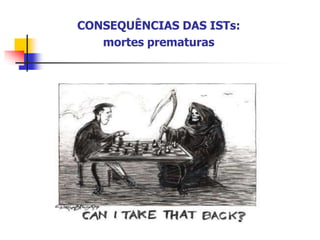
mortes prematuras
36.7 million [34.0 million – 39.8 million]
31.8 million [30.1 million – 33.7 million]
16.0 million [15.2 million – 16.9 million]
3.2 million [2.9 million – 3.5 million]
2.1 million [1.9 million – 2.4 million]
1.9 million [1.7 million – 2.1 million]
240 000 [210 000 – 280 000]
1.1 million [940 000 – 1.3 million]
1.0 million [1.2 million – 1.5 million]
190 000 [170 000 – 220 000]
Number of people
living with HIV in 2015
People newly infected
with HIV in 2015
AIDS deaths in 2015
Total
Adults
Women
Children (<15 years)
Total
Adults
Children (<15 years)
Total
Adults
Children (<15 years)
Global summary of the AIDS epidemic
Source: UNAIDS/WHO estimates.
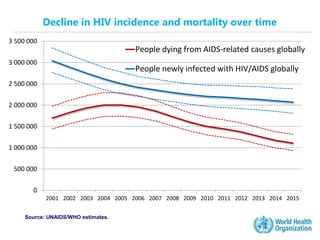
Decline in HIV incidence and mortality over time
0
500 000
1 000 000
1 500 000
2 000 000
2 500 000
3 000 000
3 500 000
2001 2002 2003 2004 2005 2006 2007 2008 2009 2010 2011 2012 2013 2014 2015
People dying from AIDS-related causes globally
People newly infected with HIV/AIDS globally
Source: UNAIDS/WHO estimates.
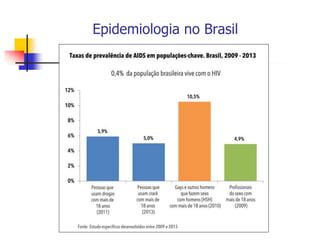
Epidemiologia no Brasil
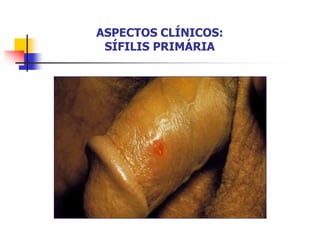
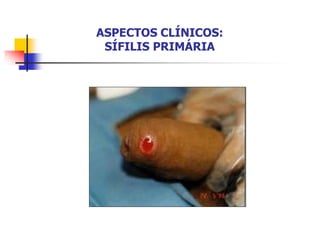
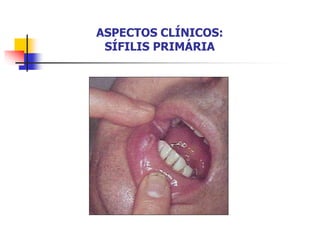
ASPECTOS CLÍNICOS:
SÍFILIS PRIMÁRIA
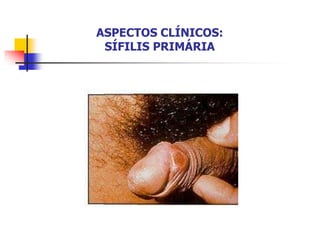
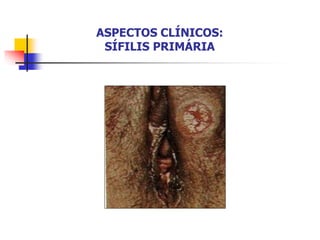
ASPECTOS CLÍNICOS:
SÍFILIS PRIMÁRIA
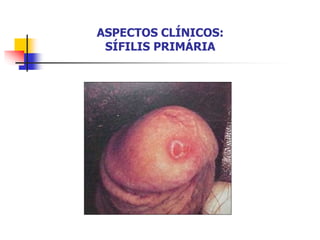
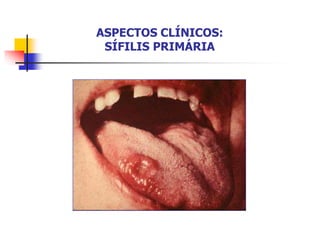
ASPECTOS CLÍNICOS:
SÍFILIS PRIMÁRIA
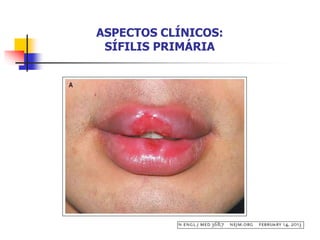
ASPECTOS CLÍNICOS:
SÍFILIS PRIMÁRIA
ASPECTOS CLÍNICOS:
SÍFILIS PRIMÁRIA
ASPECTOS CLÍNICOS:
SÍFILIS PRIMÁRIA
ASPECTOS CLÍNICOS:
SÍFILIS PRIMÁRIA
ASPECTOS CLÍNICOS:
SÍFILIS PRIMÁRIA
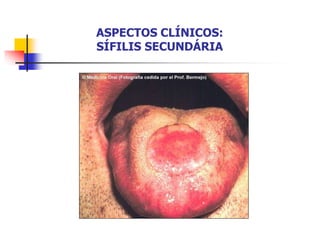
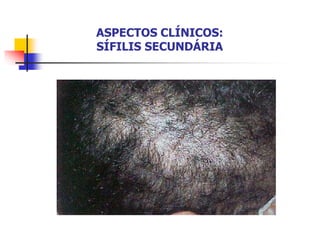
ASPECTOS CLÍNICOS:
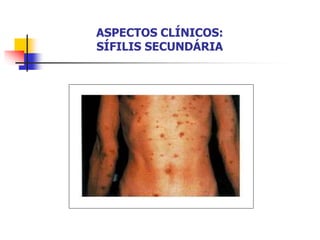
SÍFILIS SECUNDÁRIA
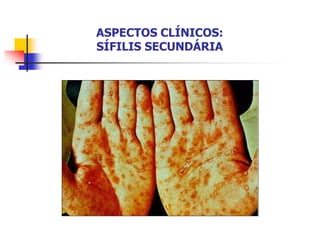
ASPECTOS CLÍNICOS:
SÍFILIS SECUNDÁRIA
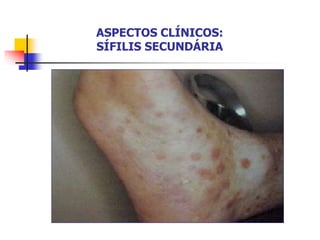
ASPECTOS CLÍNICOS:
SÍFILIS SECUNDÁRIA
ASPECTOS CLÍNICOS:
SÍFILIS SECUNDÁRIA
ASPECTOS CLÍNICOS:
SÍFILIS SECUNDÁRIA
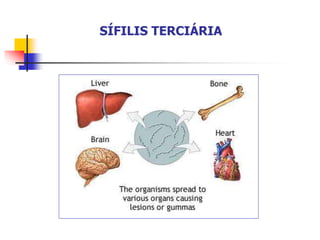
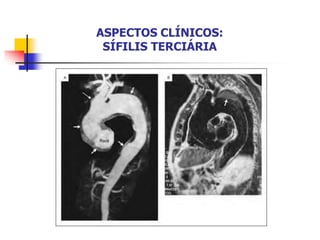
SÍFILIS TERCIÁRIA
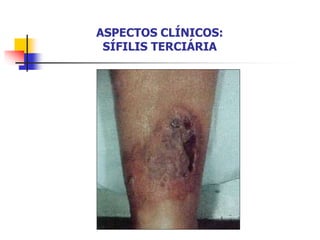
ASPECTOS CLÍNICOS:
SÍFILIS TERCIÁRIA
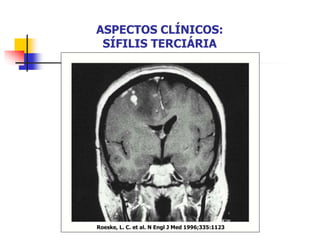
ASPECTOS CLÍNICOS:
SÍFILIS TERCIÁRIA
Roeske, L. C. et al. N Engl J Med 1996;335:1123
ASPECTOS CLÍNICOS:
SÍFILIS TERCIÁRIA
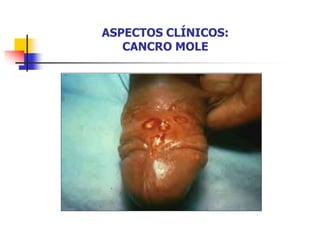
ASPECTOS CLÍNICOS:
CANCRO MOLE
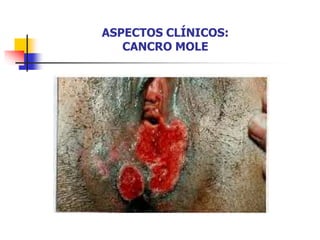
ASPECTOS CLÍNICOS:
CANCRO MOLE
ASPECTOS CLÍNICOS:
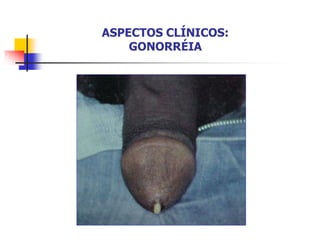
GONORRÉIA
ASPECTOS CLÍNICOS:
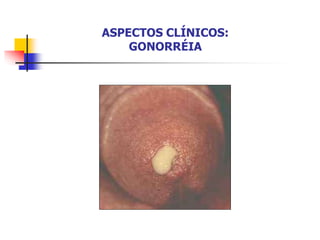
GONORRÉIA
ASPECTOS CLÍNICOS:
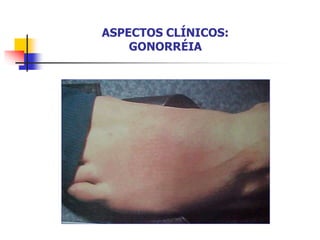
GONORRÉIA
ASPECTOS CLÍNICOS:
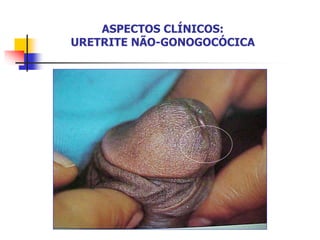
URETRITE NÃO-GONOGOCÓCICA
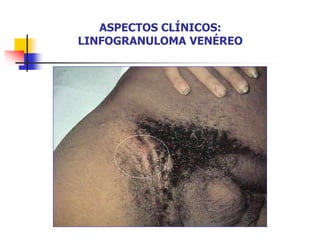
ASPECTOS CLÍNICOS:
LINFOGRANULOMA VENÉREO
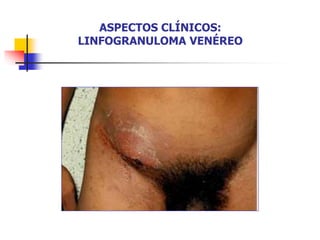
ASPECTOS CLÍNICOS:
LINFOGRANULOMA VENÉREO
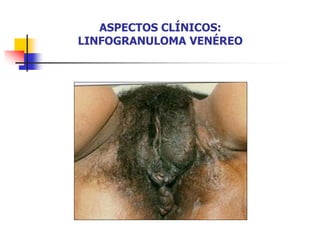
ASPECTOS CLÍNICOS:
LINFOGRANULOMA VENÉREO
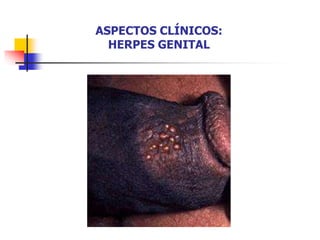
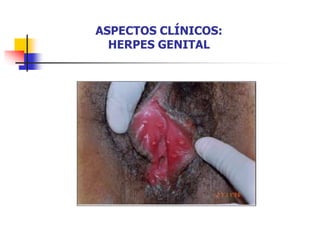
ASPECTOS CLÍNICOS:
HERPES GENITAL
ASPECTOS CLÍNICOS:
HERPES GENITAL
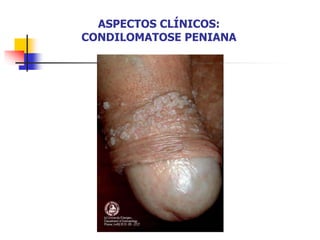
ASPECTOS CLÍNICOS:
CONDILOMATOSE PENIANA
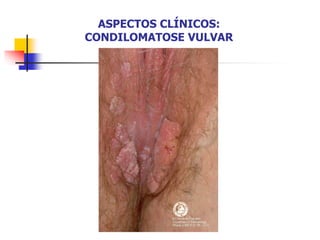
ASPECTOS CLÍNICOS:
CONDILOMATOSE VULVAR
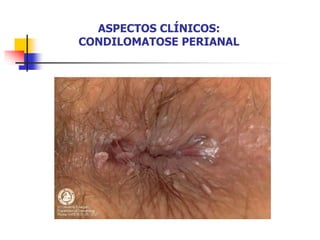
ASPECTOS CLÍNICOS:
CONDILOMATOSE PERIANAL
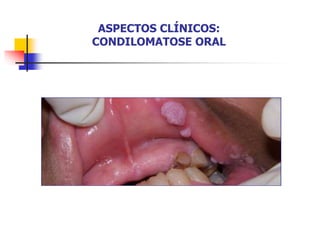
ASPECTOS CLÍNICOS:
CONDILOMATOSE ORAL
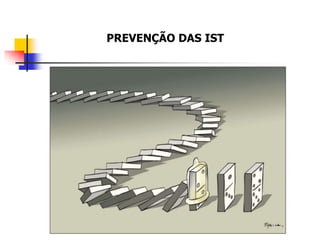
PREVENÇÃO DAS IST
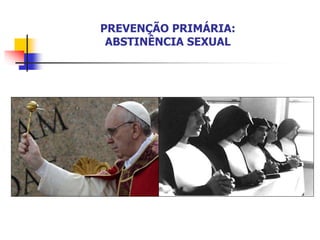
PREVENÇÃO PRIMÁRIA:
ABSTINÊNCIA SEXUAL
PREVENÇÃO PRIMÁRIA:
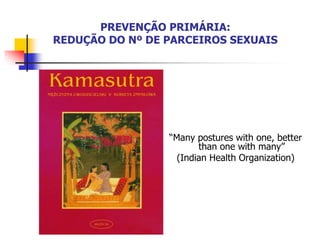
REDUÇÃO DO Nº DE PARCEIROS SEXUAIS
“Many postures with one, better
than one with many”
(Indian Health Organization)
PREVENÇÃO PRIMÁRIA:
REDUÇÃO DO Nº DE PARCEIROS SEXUAIS
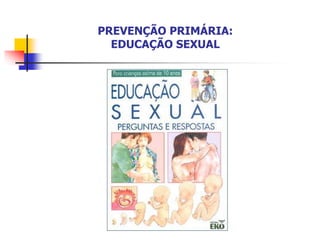
PREVENÇÃO PRIMÁRIA:
EDUCAÇÃO SEXUAL
PREVENÇÃO PRIMÁRIA:
USO CONSISTENTE DE PRESERVATIVOS
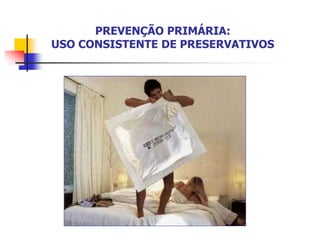
PREVENÇÃO PRIMÁRIA:
USO CONSISTENTE DE PRESERVATIVOS
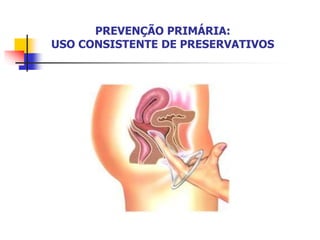
PREVENÇÃO PRIMÁRIA:
USO CONSISTENTE DE PRESERVATIVOS
PREVENÇÃO PRIMÁRIA:
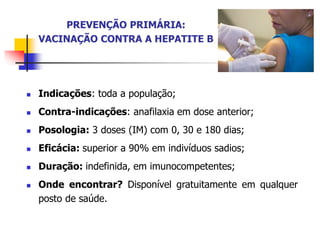
VACINAÇÃO CONTRA A HEPATITE B
 Indicações: toda a população;
 Contra-indicações: anafilaxia em dose anterior;
 Posologia: 3 doses (IM) com 0, 30 e 180 dias;
 Eficácia: superior a 90% em indivíduos sadios;
 Duração: indefinida, em imunocompetentes;
 Onde encontrar? Disponível gratuitamente em qualquer
posto de saúde.
PREVENÇÃO PRIMÁRIA:
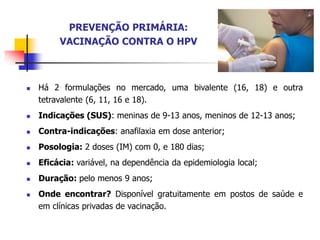
VACINAÇÃO CONTRA O HPV
 Há 2 formulações no mercado, uma bivalente (16, 18) e outra
tetravalente (6, 11, 16 e 18).
 Indicações (SUS): meninas de 9-13 anos, meninos de 12-13 anos;
 Contra-indicações: anafilaxia em dose anterior;
 Posologia: 2 doses (IM) com 0, e 180 dias;
 Eficácia: variável, na dependência da epidemiologia local;
 Duração: pelo menos 9 anos;
 Onde encontrar? Disponível gratuitamente em postos de saúde e
em clínicas privadas de vacinação.
PREVENÇÃO SECUNDÁRIA:
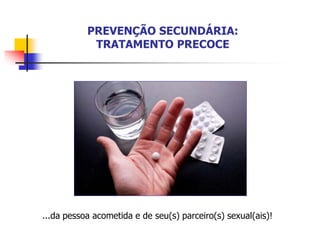
TRATAMENTO PRECOCE
...da pessoa acometida e de seu(s) parceiro(s) sexual(ais)!
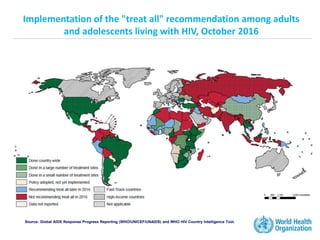
Implementation of the "treat all" recommendation among adults
and adolescents living with HIV, October 2016
Source: Global AIDS Response Progress Reporting (WHO/UNICEF/UNAIDS) and WHO HIV Country Intelligence Tool.
PREVENÇÃO SECUNDÁRIA:
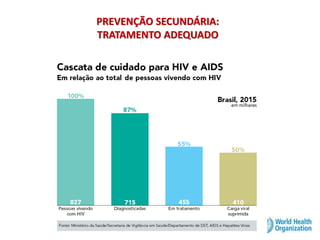
TRATAMENTO ADEQUADO
PREVENÇÃO SECUNDÁRIA:
PESQUISAR CO-INFECÇÕES
CONSIDERAÇÕES FINAIS
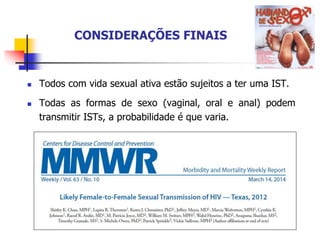
 Todos com vida sexual ativa estão sujeitos a ter uma IST.
 Todas as formas de sexo (vaginal, oral e anal) podem
transmitir ISTs, a probabilidade é que varia.
CONSIDERAÇÕES FINAIS
 O beijo na boca não transmite IST, exceto em
circunstâncias excepcionais, em que haja sangramento ou
feridas intraorais.
 Nem todas as ISTs têm cura definitiva, mas todas têm
tratamento.
 Todos têm direito ao tratamento de forma gratuita, através
do Sistema Único de Saúde.
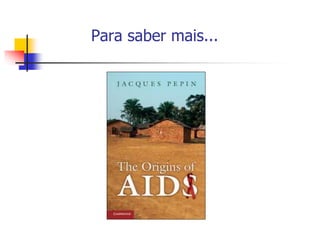
Para saber mais...
DST_FISIO_TO_FONO_2017.ppt

DST_FISIO_TO_FONO_2017.ppt