Adjacent,
Vertical,
Supplementary, and
Complementary Angles
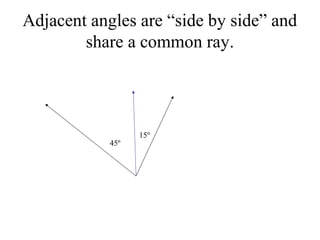
Adjacent angles are “side by side” and
share a common ray.
45º
15º
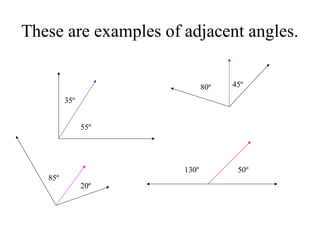
These are examples of adjacent angles.
55º
35º
50º130º
80º 45º
85º
20º
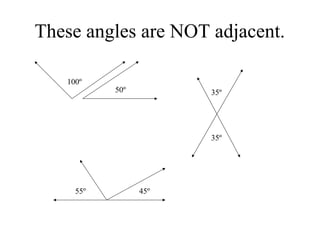
These angles are NOT adjacent.
45º55º
50º
100º
35º
35º
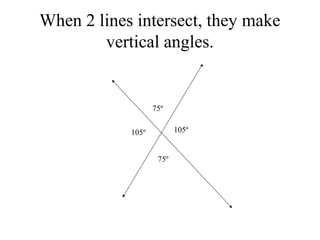
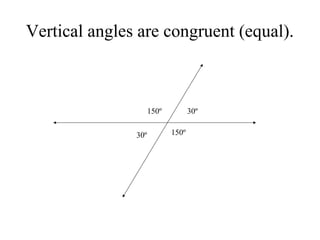
When 2 lines intersect, they make
vertical angles.
75º
75º
105º105º
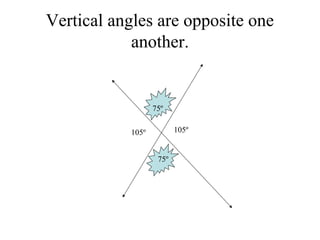
Vertical angles are opposite one
another.
75º
75º
105º105º
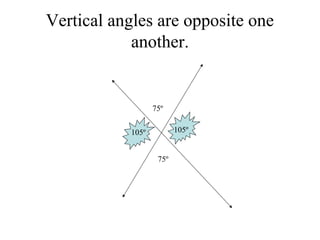
Vertical angles are opposite one
another.
75º
75º
105º105º
Vertical angles are congruent (equal).
30º150º
150º30º
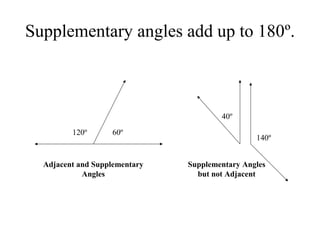
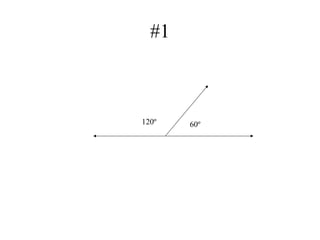
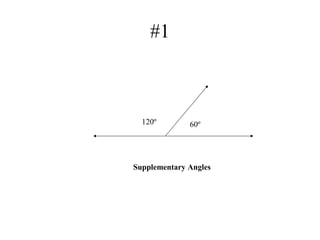
Supplementary angles add up to 180º.
60º120º
40º
140º
Adjacent and Supplementary
Angles
Supplementary Angles
but not Adjacent
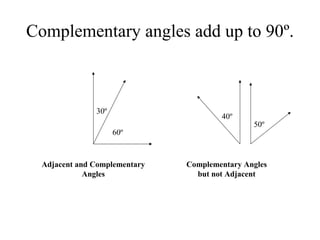
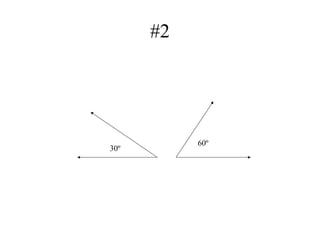
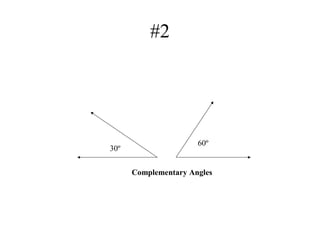
Complementary angles add up to 90º.
60º
30º
40º
50º
Adjacent and Complementary
Angles
Complementary Angles
but not Adjacent
Practice Time!
Directions:
Identify each pair of angles as
vertical, supplementary,
complementary,
or none of the above.
#1
60º120º
#1
60º120º
Supplementary Angles
#2
60º
30º
#2
60º
30º
Complementary Angles
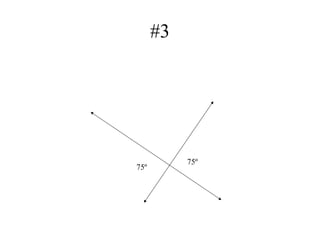
#3
75º
75º
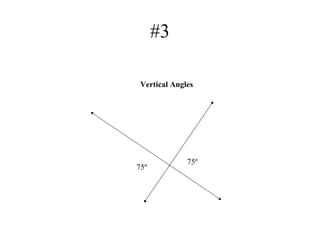
#3
75º
75º
Vertical Angles
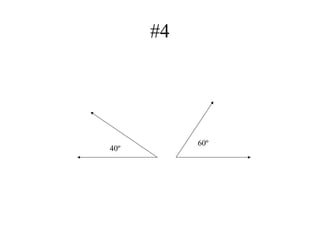
#4
60º
40º
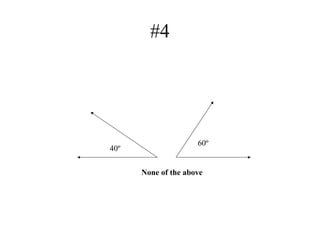
#4
60º
40º
None of the above
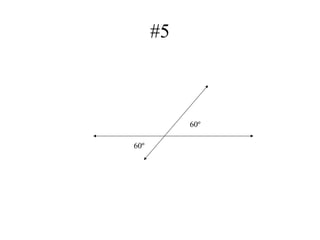
#5
60º
60º
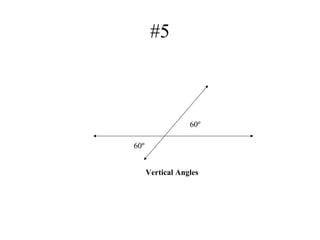
#5
60º
60º
Vertical Angles
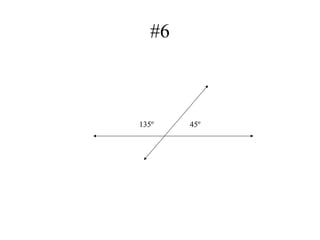
#6
45º135º
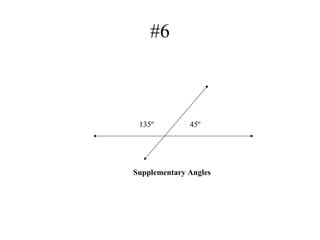
#6
45º135º
Supplementary Angles
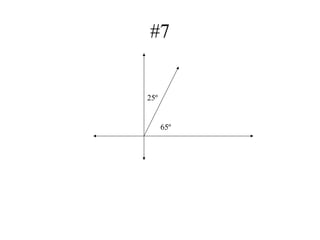
#7
65º
25º
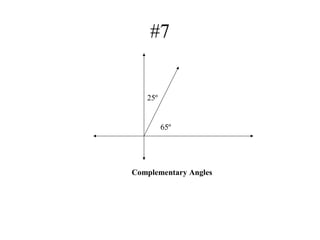
#7
65º
25º
Complementary Angles
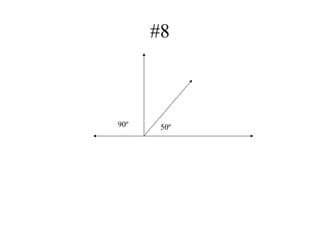
#8
50º90º
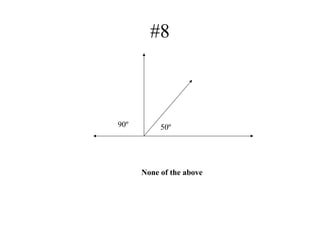
#8
50º90º
None of the above
Directions:
Determine the missing angle.
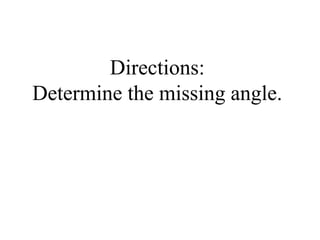
#1
45º?º
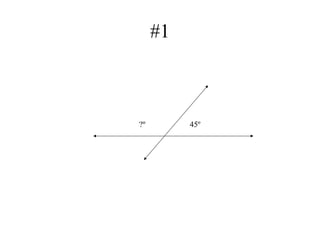
#1
45º135º
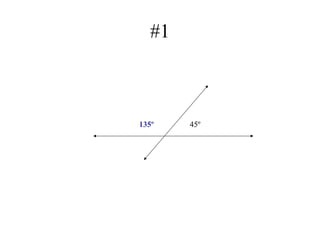
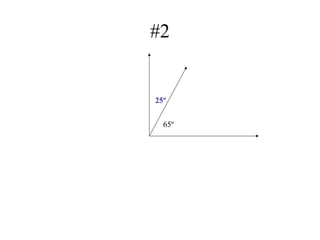
#2
65º
?º
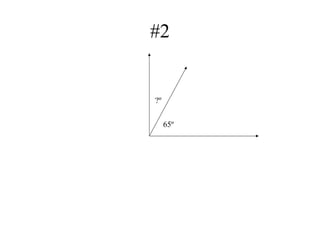
#2
65º
25º
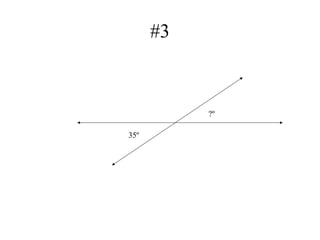
#3
35º
?º
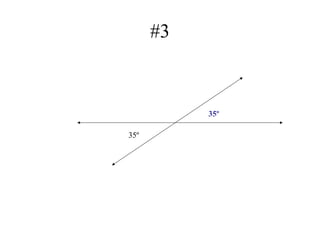
#3
35º
35º
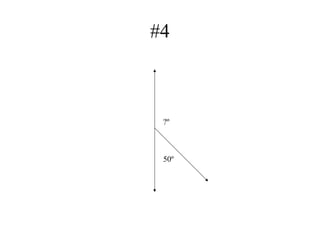
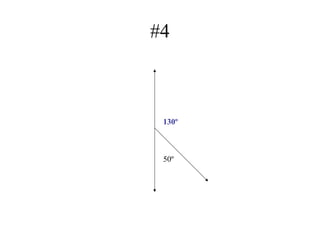
#4
50º
?º
#4
50º
130º
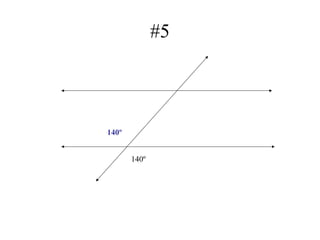
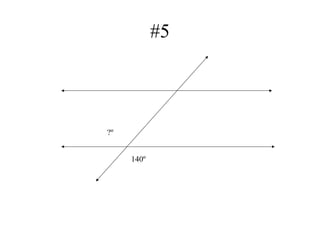
#5
140º
?º
#5
140º
140º
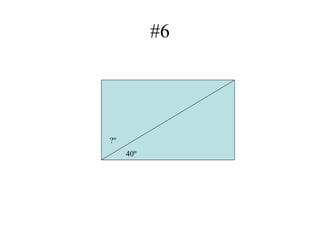
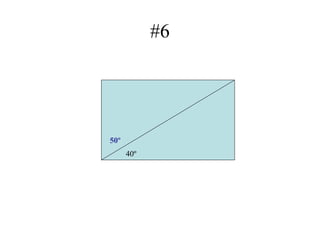
#6
40º
?º
#6
40º
50º

M7 lesson 5 1 angles